
That empty gaze usually has a real cause.
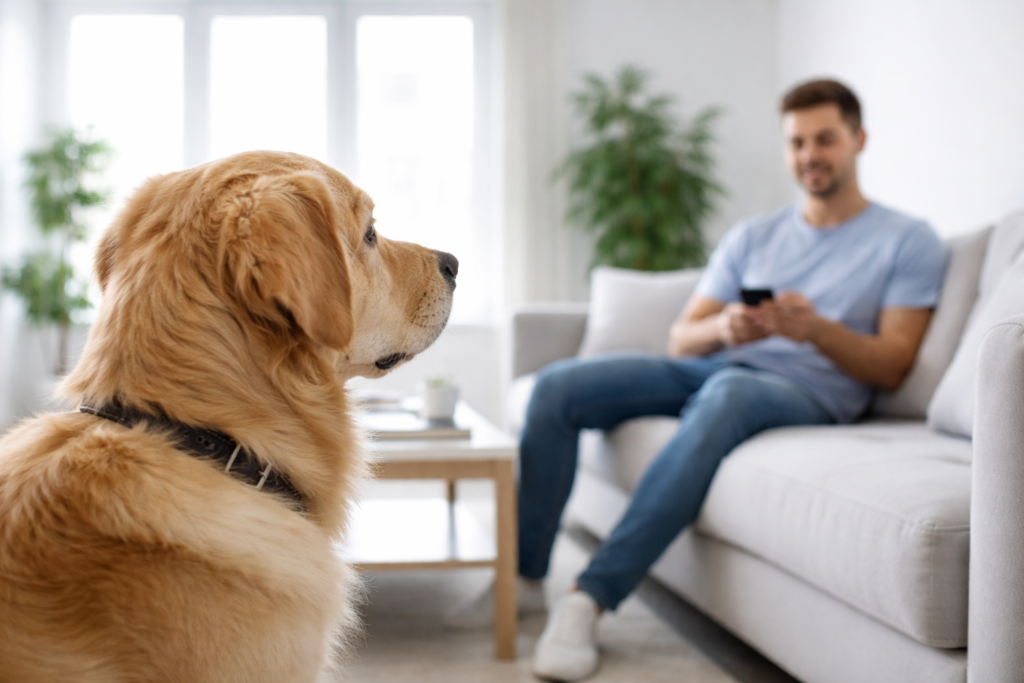
Dog owners notice this behavior everywhere, from living rooms late at night to quiet sidewalks during walks. A dog suddenly stops, locks its eyes on a blank space, and seems fully absorbed. No sound, no movement, nothing obvious to explain it. The moment can feel eerie, but it is usually rooted in how dogs process information. Their senses, memory systems, and emotional regulation work very differently from ours. What looks like nothing to a human is often a meaningful signal to a dog’s brain.
1. Dogs often pause to process subtle sensory input.

Dogs gather information constantly through sound, scent, and vibration. When a dog stares at an empty space, it is often focusing on stimuli that humans cannot detect. Distant electrical noise, faint movement, shifting air currents, or lingering scent trails can all trigger this response. The dog stops moving to concentrate fully, reducing physical distraction while the brain sorts through incoming data.
This behavior is especially common in quiet environments where subtle signals stand out. According to the American Kennel Club, dogs frequently freeze and stare while interpreting sensory information that does not register visually for humans, reflecting concentration rather than confusion or fear.
2. Memory recall can momentarily lock visual attention.

Dogs store memories through sensory association instead of narrative thought. A location, shadow pattern, or familiar scent can trigger recall without any current event happening. When that memory activates, the dog may stare into space while the brain reprocesses past information connected to that spot.
This often happens near doors, hallways, windows, or outdoor views where meaningful events occurred before. The dog is not hallucinating or distracted. As stated by the Cornell Feline Health Center, animals commonly pause physical movement during memory driven processing when environmental cues activate stored associations, causing brief but focused attention shifts.
3. Emotional regulation can appear as fixed staring.

Dogs sometimes stare while managing internal emotional states such as anticipation, uncertainty, or mild anxiety. Instead of pacing or vocalizing, the brain pauses outward behavior to regulate arousal levels. The stare acts as a temporary holding pattern while the nervous system recalibrates.
This type of staring often appears during quiet moments or before routine events like walks or meals. According to the American Veterinary Society of Animal Behavior, dogs may display visual fixation during emotional processing when arousal changes without a clear external trigger, using stillness as a self regulation tool.
4. Sounds beyond human hearing frequently draw attention.

Dogs hear frequencies far above the human range, including high pitched electronics, distant machinery, and subtle environmental vibrations. These sounds may come from outside walls, underground infrastructure, or devices that humans mentally filter out.
When a dog hears something unusual, it may lock its gaze forward while orienting internally through hearing. The eyes stay fixed while the brain localizes sound. Once the stimulus fades, the dog resumes normal activity, leaving humans puzzled by a reaction to something they never perceived.
5. Normal neurological transitions can briefly halt movement.
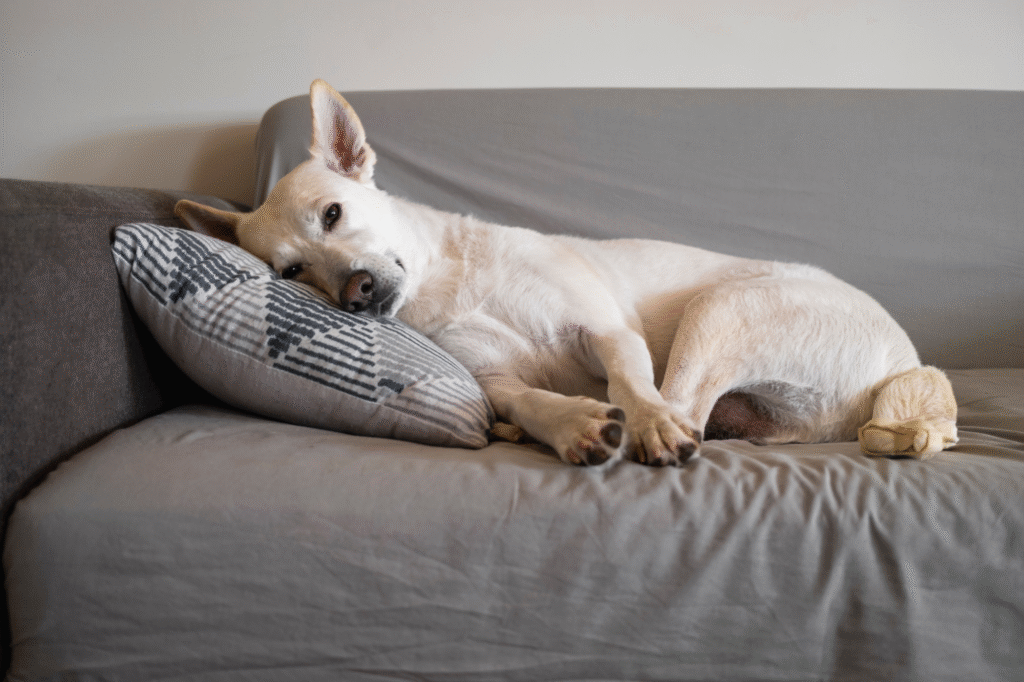
Brief staring episodes sometimes occur during natural shifts between brain states. As dogs move from rest to alertness or between sleep phases, the brain pauses physical output while internal processes realign. The dog appears awake but temporarily still.
This is most common in relaxed environments. The stare ends naturally, often followed by blinking, stretching, or repositioning. It reflects neurological timing rather than attention to an external object, and it does not signal distress when isolated and infrequent.
6. Cognitive aging can slow attention release in seniors.

As dogs age, their brains process information more slowly, especially when switching focus. Senior dogs may stare longer because it takes extra time to interpret sensory input, orient themselves, or decide what to do next. Familiar spaces can still require mental effort as cognitive flexibility declines, even when vision and hearing remain intact.
This kind of staring is usually calm rather than tense. It often happens during transitions, such as standing up, entering a room, or waking from rest. The pause reflects processing time, not confusion. When paired with gentle movement afterward, it signals normal aging rather than neurological disease.
7. Internal discomfort can narrow outward awareness briefly.
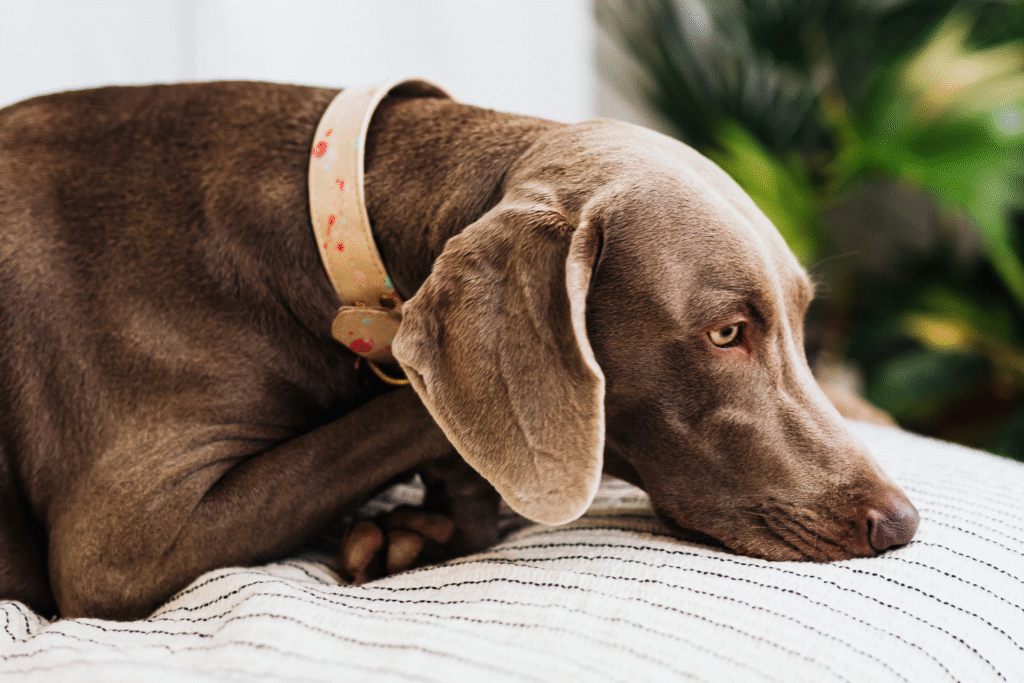
When dogs feel discomfort inside their bodies, attention often turns inward. Gastrointestinal upset, joint stiffness, or transient pain can cause a dog to pause and stare while assessing sensation. Movement stops as the brain gathers information before adjusting posture or behavior.
These moments are usually short. The dog may shift position, stretch, or walk away afterward. Repeated staring paired with other changes, such as appetite loss or stiffness, deserves attention. Occasional episodes alone often reflect internal monitoring rather than distress or environmental focus.
8. Learned anticipation can hold visual focus in place.

Dogs learn patterns quickly. When something important usually happens in a specific spot, attention locks there in expectation. A dog may stare at a doorway before walks, a counter before feeding, or a window before an owner returns.
The brain predicts what comes next and waits. This staring looks empty, but it is future oriented. The dog is mentally rehearsing an outcome. Once the expected event passes or changes, attention releases and behavior shifts without confusion or alarm.
9. Deep focus states occur during healthy mental activity.

Dogs experience focused mental states similar to human daydreaming. The brain remains active while the body stays still. Attention turns inward, processing memory, sensation, or emotion without external engagement.
These moments often occur during calm periods. The dog appears peaceful, not tense. When focus ends, behavior resumes smoothly. This type of staring reflects cognitive richness rather than absence, showing that dogs, like people, sometimes pause outward motion while their minds remain quietly busy.