
Shared homes reshape social rules in subtle ways.
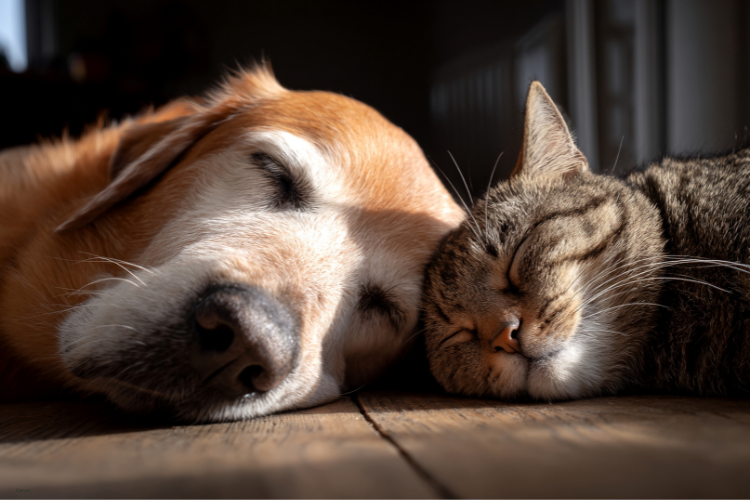
In mixed pet households across the US, dogs and cats negotiate tiny treaties every day. A puppy learns fast that a cat’s patience has limits, and a cat learns which dog manners feel safe. Over months, that constant feedback changes how the dog greets, plays, waits, and even relaxes. None of it looks dramatic, but owners notice the difference when that dog meets other animals or navigates a busy home. The result is a dog with a slightly different social toolkit, tuned by feline boundaries.
1. They hesitate first, then approach more politely.
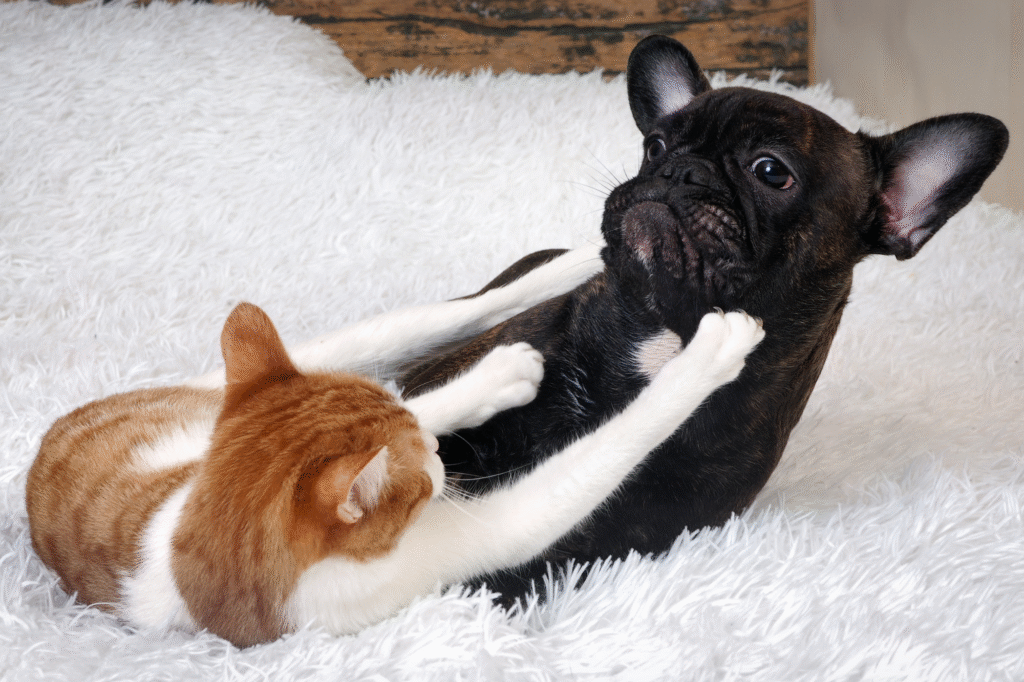
A cat rarely rewards rushing, so cat raised dogs learn to pause at the edge of an interaction and gather data. You will see a brief stop, a softened posture, and a slower step in, like the dog is asking permission with its body. That moment often prevents conflict because it gives everyone time to read intent.
This habit transfers to humans and dogs too, especially in tight spaces like hallways or doorways. The dog looks away, turns its head, or freezes for a beat, which matches calming signals described by the American Kennel Club in its dog body language guidance.
2. Their sense of personal space gets unusually sharp.

Cats communicate discomfort with small cues, and dogs living with them learn to notice the first hint of tension. The dog starts giving a wider berth, stepping around a resting cat, or choosing a different route rather than pushing through. That spatial awareness can look like gentleness, but it is really learned respect for boundaries.
Over time, this dog becomes less grabby with faces, paws, and bodies, which changes how it interacts with people and visiting pets. Early exposure to other animals during the sensitive window is emphasized by the AVSAB puppy socialization position statement, as reported by AVSAB.
3. Their play style shifts into short bursts.
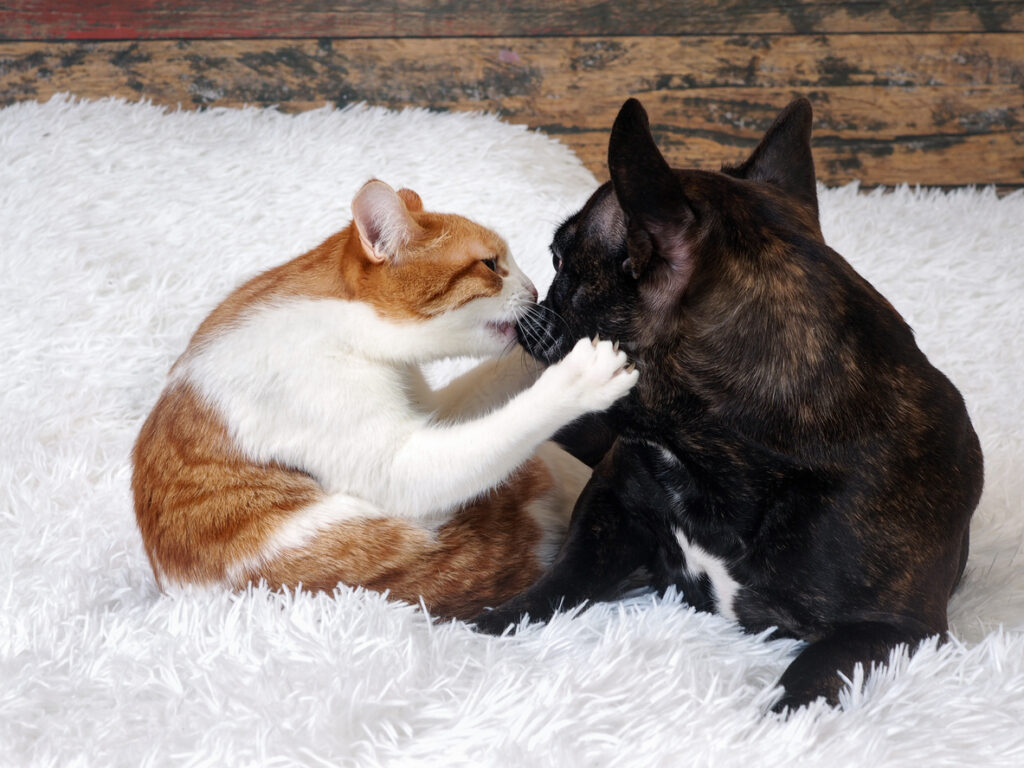
Cats tend to play in quick sprints and then stop, and dogs raised with that rhythm often adopt it. Instead of nonstop wrestling, you get a burst of chase, a pause, then another burst, almost like the dog is checking whether the other animal is still in the game. That pacing reduces overstimulation and makes play easier to end.
Owners often describe these dogs as more self controlled around excited dogs at parks, because they already learned stop and go rules at home. Mixed species household research has linked relationship quality to species specific behaviors, according to a 2018 study in the journal Behaviour by Thomson and colleagues.
4. They use smaller, softer social signals.

A cat does not always respond well to big bouncy greetings, so the dog learns to communicate with subtler gestures. You may see slower tail movement, curved approaches, and a tendency to angle the body rather than charge head on. It is a style of communication that reduces misunderstandings.
This can make the dog seem calmer in new places, like a busy Ventura sidewalk or a crowded living room during guests. The dog is still social, but it chooses low intensity signals that keep interactions stable and less likely to escalate.
5. Grooming behaviors show up in surprising contexts.

Some cat raised dogs start licking their paws or shoulders more, and some even groom a cat or another dog in a gentle, social way. This is not a perfect copy of feline grooming, but it can become a learned comfort routine that shows up when the dog is settling down or trying to ease tension.
Owners sometimes notice this after minor conflicts, like a toy dispute or an accidental bump. The licking looks like a reset button, and it often helps the dog self regulate before rejoining the group without drama.
6. They walk away sooner during tension.

Cats enforce consequences fast, so dogs in that environment learn that disengaging works. When energy spikes, the dog often backs off, looks away, or leaves the room instead of pressing the issue. That choice can look like submission, but it is often a practical strategy learned through experience.
This habit becomes useful in multi dog settings too. At a dog park, the dog may avoid piling onto a tense greeting or skip a conflict over space. The dog learned that keeping peace is sometimes as simple as stepping out of the blast zone.
7. Silence becomes comfortable, not uncomfortable.

Cats spend long stretches existing near others without demanding interaction, and dogs raised with them often become good at quiet companionship. They settle nearby without whining for attention, and they seem less bothered by long calm afternoons when humans are working or reading.
This shows up in real homes as fewer attention bids and less pacing during downtime. The dog still enjoys play and affection, but it does not treat silence like a problem to solve. That ability to rest in shared space is a social skill, not laziness.
8. Eye contact turns briefer and more careful.
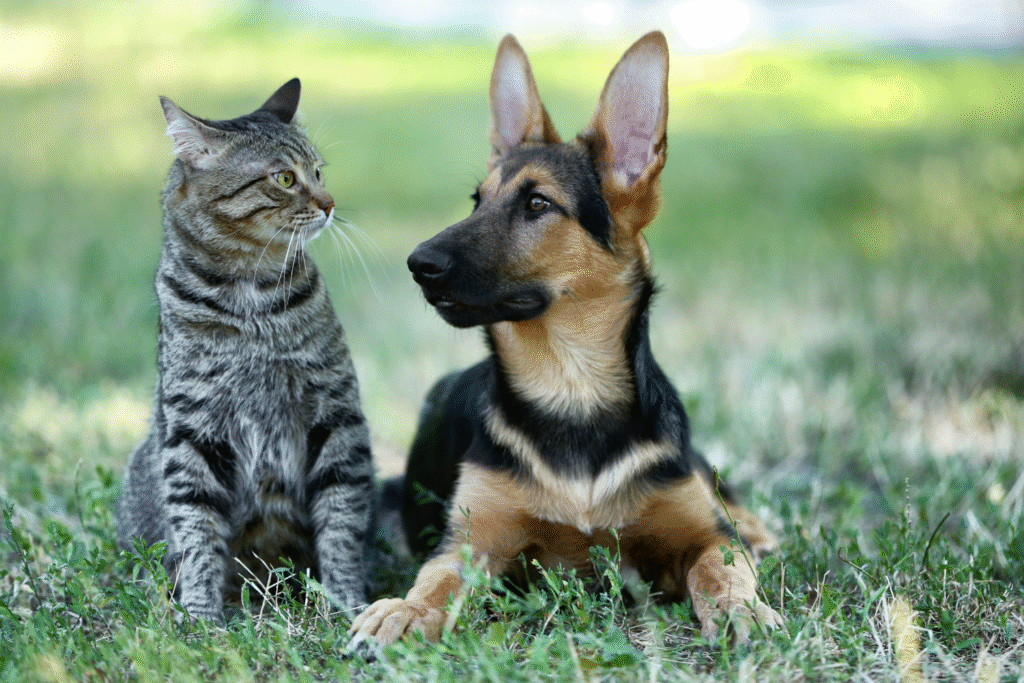
Cats can interpret staring as pressure, so dogs learn to soften their gaze. Instead of locking eyes, they glance, then look away, then check back in, a pattern that keeps the vibe relaxed. This can reduce friction with both cats and dogs who do not love intense face to face attention.
Owners often notice it around strangers too. The dog may look at a new person, then avert its eyes, which can come off as polite. In reality, the dog is using a low conflict approach that worked well in a cat ruled household.
9. They become experts at reading micro moods.

Living with a cat teaches a dog to notice tiny shifts, a tail flick, a freeze, a slight lean away. Dogs that master those details often become more emotionally observant with humans too. They react quickly to tension in voices, changes in routine, or an unfamiliar energy in the room.
This can look like empathy, but it is also pattern recognition. The dog learned early that small signals predict what happens next. In busy households, that skill helps the dog avoid trouble, pick good moments to approach, and retreat when the room feels overstimulating.
10. Independence grows without losing attachment.

Cats model independence, and dogs raised alongside them often learn that closeness is optional, not required. They may nap alone in a different room, choose their own resting spot, and return when they feel like it. That does not mean they love you less. It often means they feel secure enough to separate.
Owners sometimes notice fewer shadowing behaviors and less separation stress in these dogs. They can enjoy companionship while still having a strong internal off switch. The cat taught them that belonging does not require constant contact.
11. They adapt faster when routines change suddenly.

Cats move unpredictably, and their schedules do not always match human clocks. A dog raised in that environment gets practice adjusting without spiraling. When dinner is late, when guests arrive, or when the furniture shifts, the dog is more likely to watch, wait, and recalibrate.
This flexibility shows up during travel or life transitions, like adding a baby gate or changing work hours. The dog learned early that unpredictability is normal, not a crisis. That makes them easier to live with during the messy weeks when homes change.
12. Patience becomes their most noticeable social habit.

If one trait rises above the rest, it is patience. Cats reward waiting and punish pushing, so the dog learns to pause before acting. That can show up as waiting at doorways, sitting back during greetings, or choosing not to chase a fleeing cat.
Owners often describe these dogs as thoughtful, but it is really learned emotional timing. The dog knows that good things happen when you wait for the right moment. In the long run, that patience reshapes nearly every interaction, making the dog feel steady even in chaotic spaces.