
Backyard ecosystems quietly reshape canine surveillance habits.
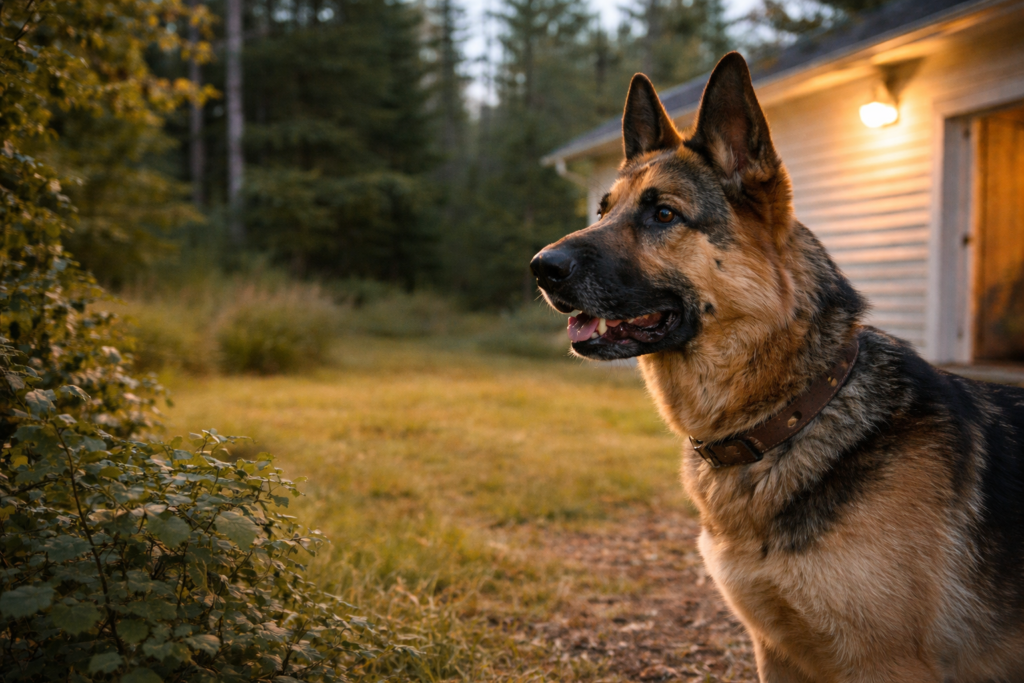
Dogs do not guard space in a vacuum. Their patrol patterns evolve alongside animals moving through nearby yards, alleys, drainage corridors, and greenbelts. Coyotes, raccoons, deer, feral cats, and rodents leave constant scent and sound cues that dogs track unconsciously. What looks like random barking or pacing is often careful environmental monitoring. As wildlife increasingly overlaps with suburban and urban neighborhoods, dogs adapt their territorial behavior in precise ways that reflect ancient instincts operating inside modern landscapes.
1. Wildlife scent trails redraw how dogs define boundaries.
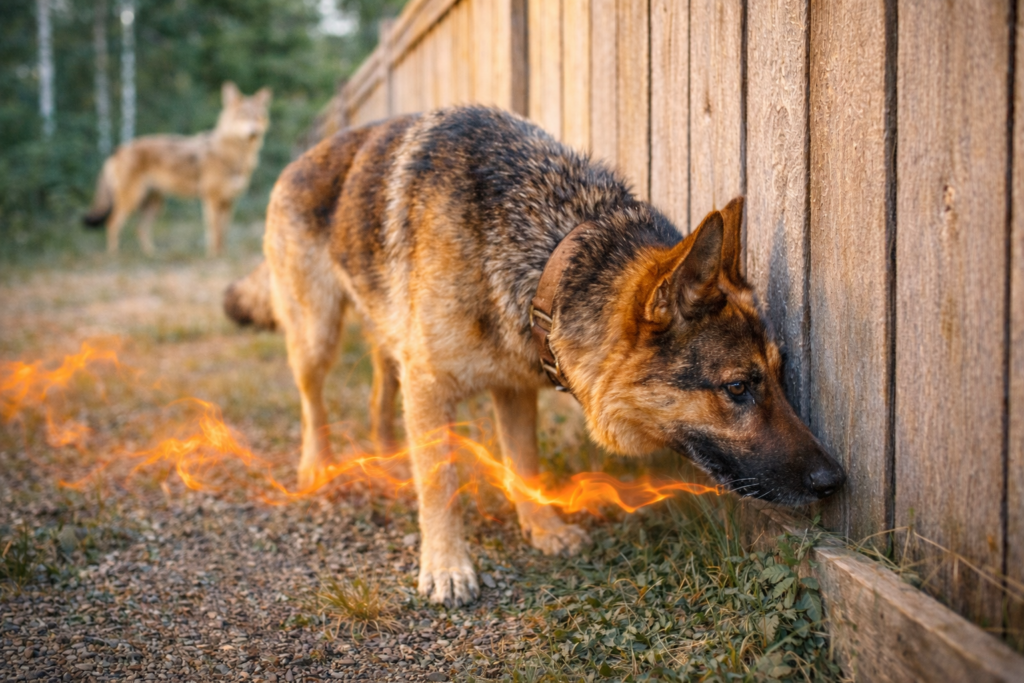
Dogs build territorial maps primarily through scent rather than sight. When wildlife repeatedly crosses a yard, fence line, or sidewalk, those scent trails become new boundary markers. Coyotes, raccoons, and foxes leave chemical signals that linger long after they pass.
Over time, dogs adjust patrol routes accordingly. Certain fence sections receive more attention, while others fade in importance. According to the National Wildlife Research Center, predator scent alone can significantly alter domestic dog movement patterns, increasing boundary checking without any direct visual encounter.
2. Night active animals reshape canine patrol timing.
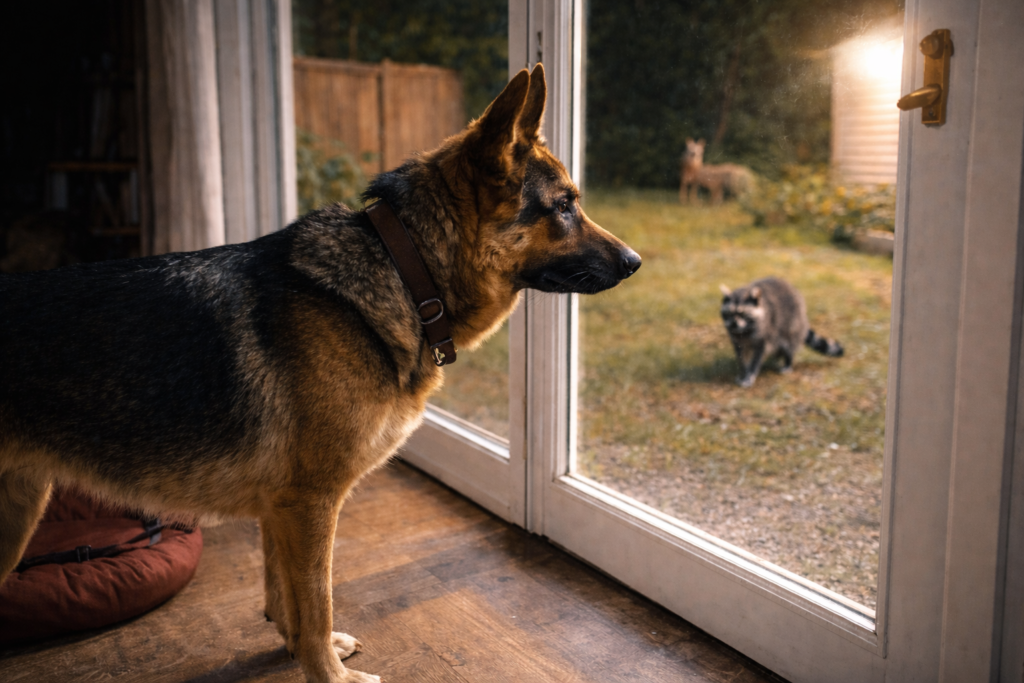
Many neighborhood animals move almost exclusively at night. Raccoons, skunks, and opossums create sound and scent activity during hours when human presence drops. Dogs register these changes even while resting.
As a result, patrol behavior shifts toward nighttime vigilance. Dogs may wake abruptly, reposition themselves near doors or windows, or pace familiar routes after dark. As reported by the Urban Wildlife Institute, domestic dogs living near nocturnal wildlife corridors show elevated nighttime alert behavior tied to environmental monitoring rather than fear or separation distress.
3. Prey animals trigger surveillance instead of aggression.
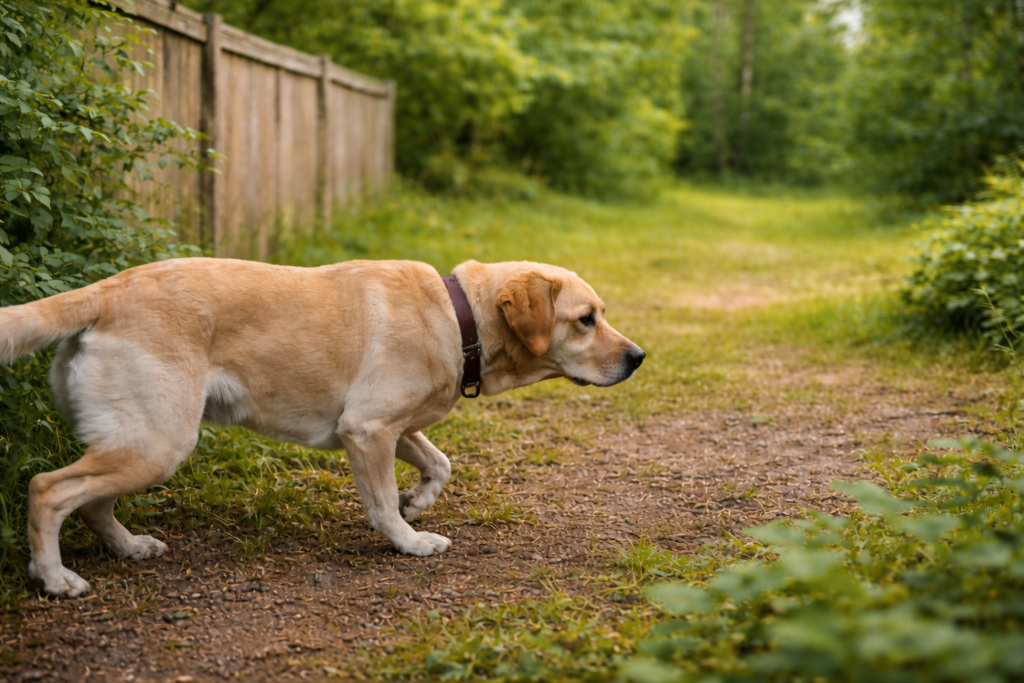
When dogs detect prey species such as rabbits, squirrels, or deer, their patrol strategy changes. Movement becomes slower and more deliberate. The dog scans entry points rather than charging boundaries.
This response reflects energy conservation and situational awareness. Dogs recognize physical barriers and adjust behavior accordingly. As stated by researchers with the University of California Cooperative Extension, domestic dogs often shift from active defense to observational tracking in areas with high prey density, prioritizing information gathering over pursuit.
4. Predator traffic intensifies focus on specific locations.
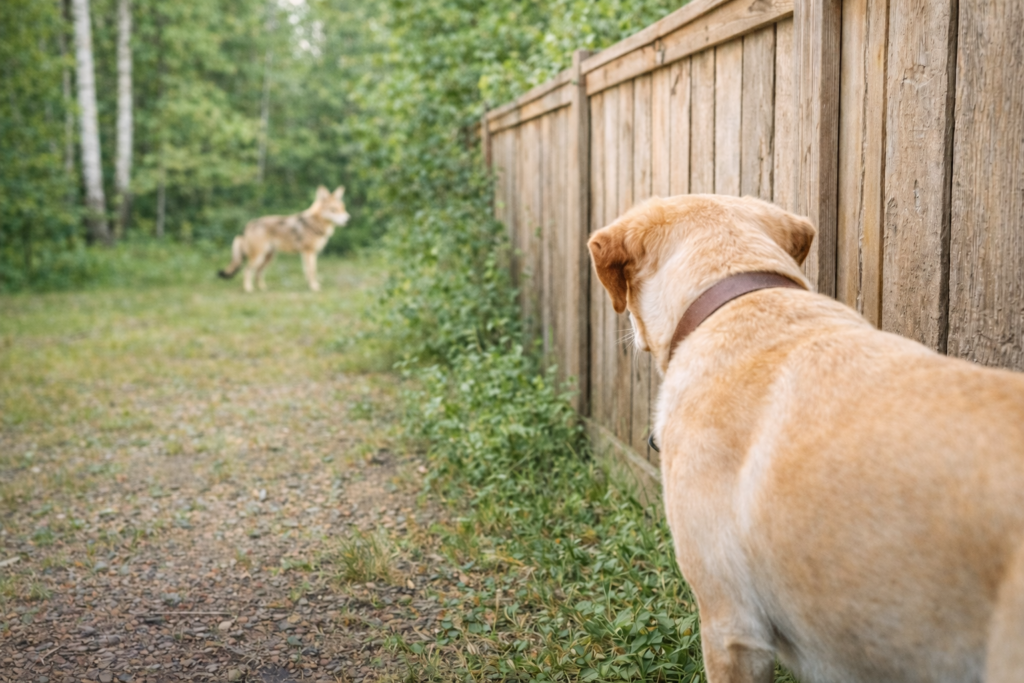
Larger wildlife such as coyotes or bobcats produces a different response than prey animals. Dogs often fixate on precise fence lines, hedges, or corners where predators repeatedly pass.
This focused patrol behavior reflects threat assessment, not obsession. The dog concentrates attention where risk appears highest. Repeated predator traffic can permanently reshape patrol routes, causing dogs to ignore large portions of their territory while intensely monitoring a few critical access points.
5. Seasonal wildlife movement alters patrol intensity patterns.
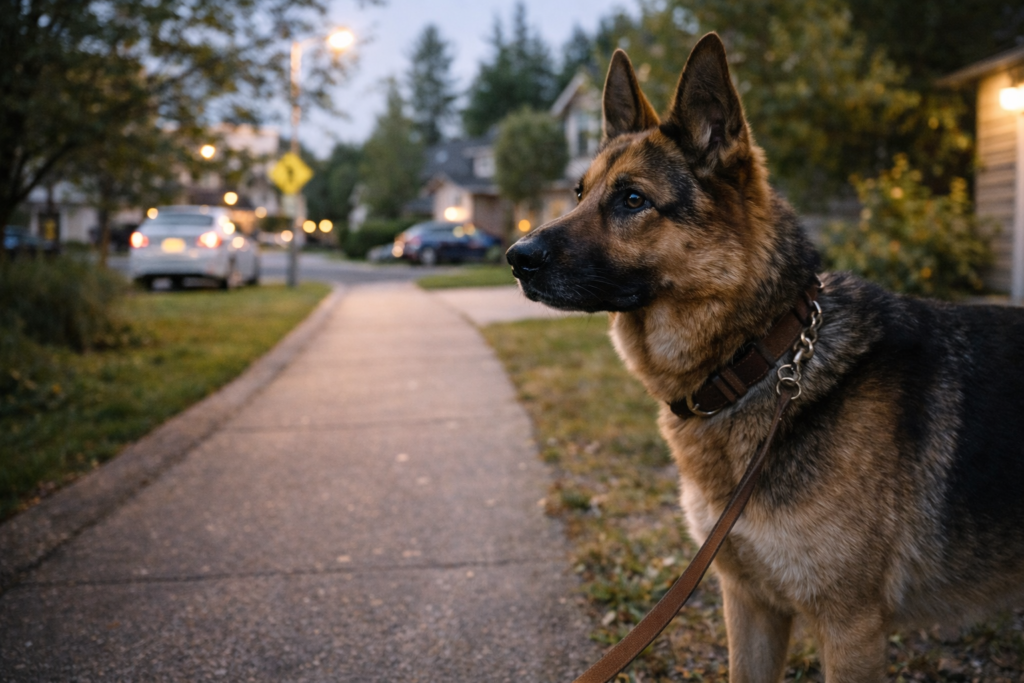
Wildlife behavior shifts with seasons due to breeding, migration, and food availability. Spring and fall often bring increased animal movement through residential areas, while winter and midsummer may be quieter.
Dogs track these changes closely. Patrol frequency and alert behavior rise during high activity seasons, then subside naturally. Owners may perceive inconsistency, but the dog is responding logically to environmental data gathered daily, adjusting effort to match changing wildlife pressure.
6. Visual wildlife encounters lock patrol routes in memory.
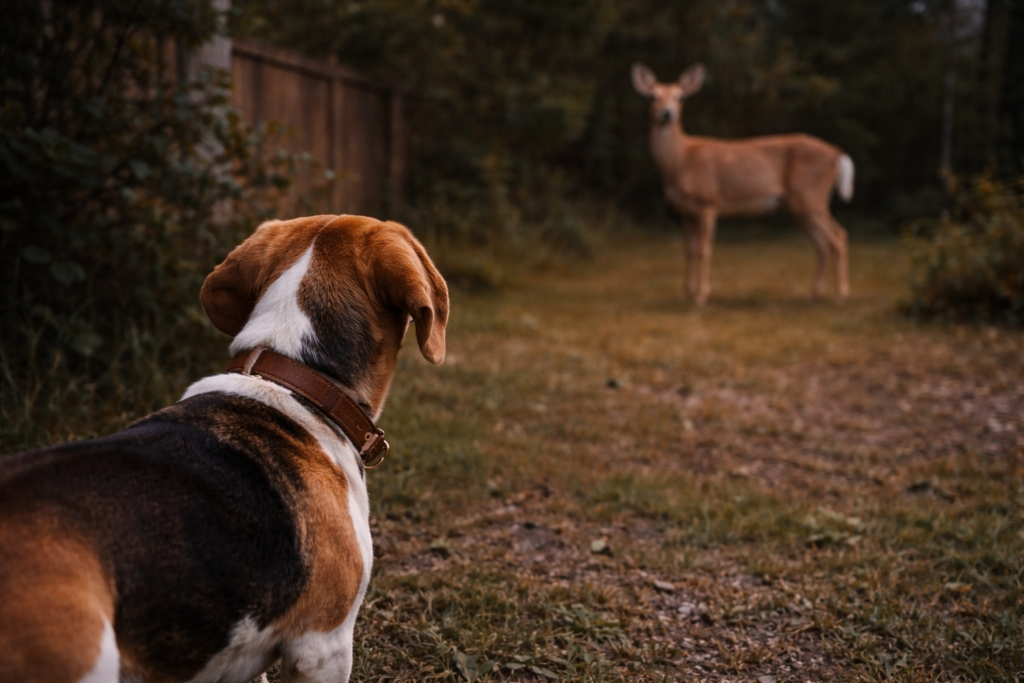
When dogs visually encounter wildlife, even briefly, it reinforces the importance of that location. Sight combines with scent to create a durable memory that signals unfinished business. A deer crossing at dusk or a raccoon scrambling over a fence can anchor attention for weeks.
Afterward, dogs revisit the spot repeatedly, checking for updates. This is not fixation but information gathering. The dog treats the area as an active node within its territory, returning until the environment confirms the threat or presence has truly passed.
7. Smaller dogs adjust patrol strategy through elevation.
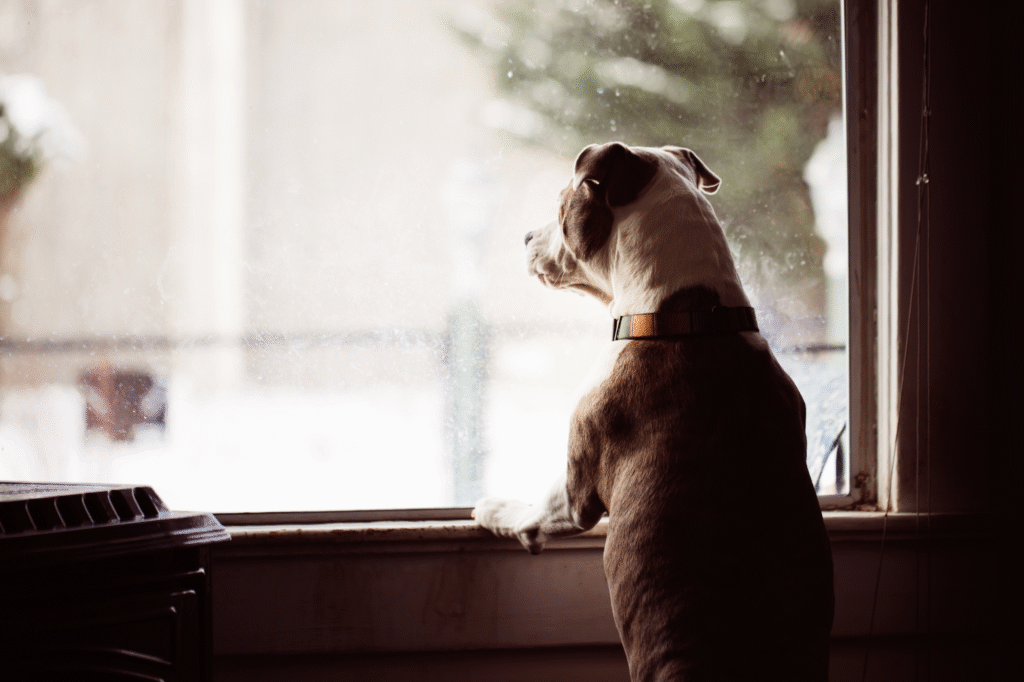
In neighborhoods with frequent wildlife activity, smaller dogs often shift how they patrol rather than how often. Instead of ground level pacing, they rely more on windowsills, decks, stairs, and furniture that provide visual advantage.
This adjustment reduces physical risk while preserving awareness. Elevation offers early detection without confrontation. What owners interpret as nervous window watching is often a calculated response, allowing the dog to monitor movement beyond fences while staying safely within perceived territorial limits.
8. Repeated wildlife traffic teaches selective territorial focus.
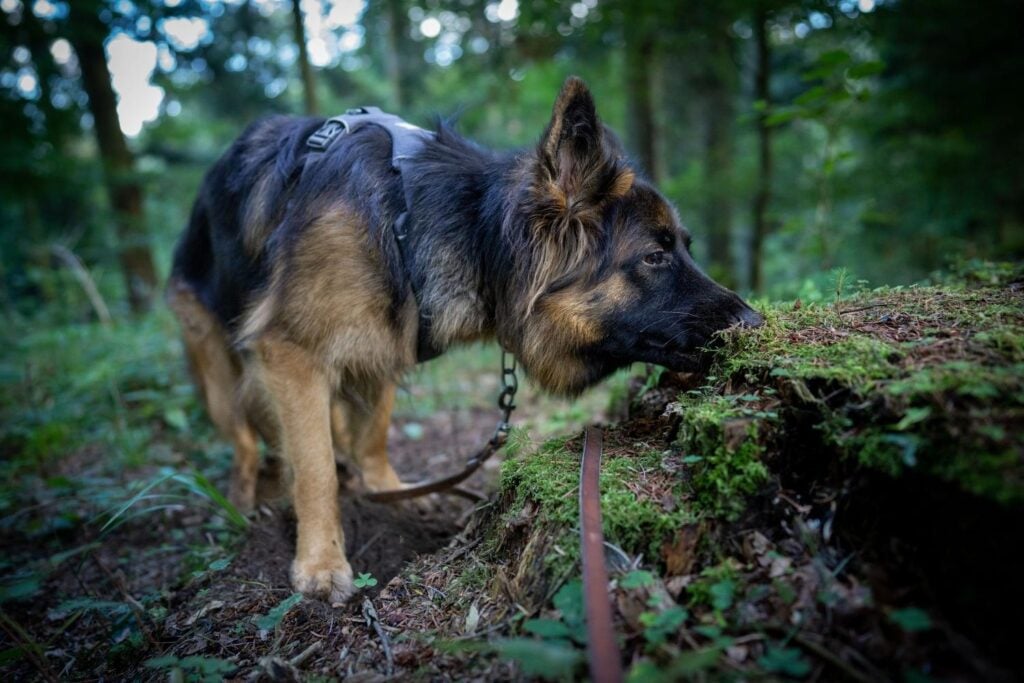
Over time, dogs exposed to consistent wildlife movement learn that not all territory requires equal attention. Patrol routes narrow, concentrating on corridors where animals reliably pass rather than human defined property edges.
This selectivity reflects learning, not surrender. The dog conserves energy while maintaining readiness. Areas with little activity receive minimal attention, while high traffic zones become priority checkpoints, demonstrating adaptive efficiency shaped by environmental feedback.
9. Long term exposure reshapes a dog’s sense of normal.

Dogs living near active wildlife corridors eventually recalibrate what normal territory feels like. Persistent animal presence becomes expected rather than alarming, reducing reactive behaviors while maintaining structured patrol habits.
This adaptation lowers chronic stress. The dog learns where vigilance matters most and where it does not. Territory becomes defined by living patterns rather than static boundaries, blending instinct with experience to create a stable, functional patrol routine.