
Trust forms quietly through repeated, easily missed moments.

Cats do not give trust all at once. It accumulates through small decisions made daily, often unnoticed until something shifts. A cat choosing to stay instead of leaving, to watch instead of hiding, or to sleep nearby instead of elsewhere signals a change already underway. These moments carry weight because trust, once broken, is difficult to rebuild. What creates it is rarely dramatic. The tension lies in how easy it is to undo progress without realizing it, especially inside shared homes where routines and reactions shape feline judgment constantly.
1. Move slowly around your cat during daily routines.

Quick footsteps or sudden turns can fracture a calm moment instantly. A cat reading the room may stiffen, retreat, or quietly leave without warning. These reactions accumulate internally, shaping future distance and hesitation long after the moment passes, even when nothing obvious seems wrong at the time itself then later.
Slower movement reduces the need for constant vigilance. When your body becomes predictable, the cat spends less energy monitoring you. Over time, safety replaces alertness. That shift allows trust to grow quietly, because nothing about your presence requires preparation, anticipation, or defense anymore, even during busy household moments daily routines.
2. Let the cat choose when contact begins.

Reaching toward a cat feels friendly to humans, yet it introduces pressure. The cat must decide quickly whether to accept touch or escape it. That moment of forced choice carries emotional cost and uncertainty, shaping future willingness to approach again later during calm moments without obvious warning signs appearing first.
Waiting removes the dilemma entirely. When the cat initiates, control stays intact and confidence rises naturally. Interaction becomes voluntary, not negotiated. Over repeated experiences, the cat associates you with autonomy instead of intrusion. Trust forms through absence of demand, allowing closeness to develop without pressure, hesitation, or defensive calculation later.
3. Keep feeding times consistent, even on busy days.

Cats track time with remarkable precision. A late meal creates quiet stress long before hunger becomes visible. The bowl stays empty, routines wobble, and expectation stretches thin. That uncertainty lingers, shaping mood and behavior across rooms, naps, and interactions throughout the day, even when nothing else seems changed yet internally.
Predictable feeding restores emotional balance gradually. When food arrives reliably, anxiety fades into background calm. The person responsible becomes associated with stability rather than suspense. Trust builds as the cat learns needs are met without negotiation, protest, or reminder, reinforcing confidence in the shared environment over time through repetition alone.
4. Use a steady voice when your cat startles.

Sudden noises test emotional safety immediately. A cat startled by sound freezes, scans, and tracks reactions closely. Raised voices or sharp responses amplify fear and stretch recovery longer than expected. The moment becomes memorable, filed away for future reference during quieter times when vigilance quietly returns again later unexpectedly often.
A calm voice shortens stress cycles quickly. Tone communicates outcome before meaning registers. Over repeated disruptions, your response becomes a cue that nothing dangerous follows chaos. This reassurance allows the nervous system to settle faster each time, letting trust form during moments when confidence is most exposed, fragile, and tested.
5. Respect when your cat ends an interaction.
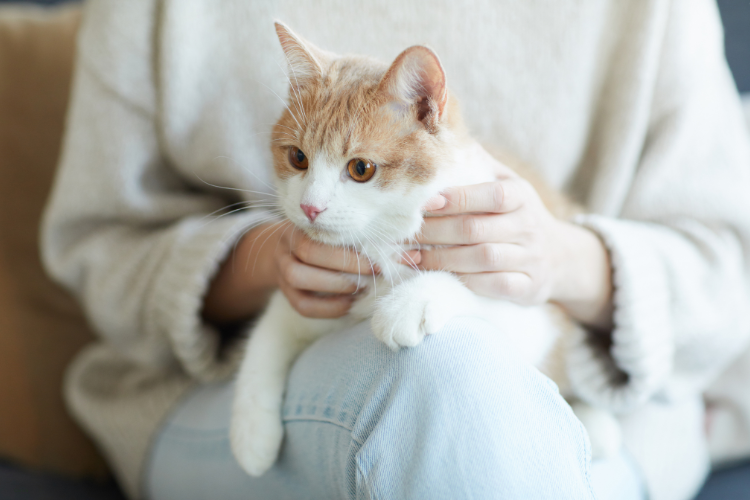
Disengagement signals arrive quietly but clearly. A flicking tail, stiffening body, or pause marks a limit reached. Ignoring those cues forces escalation, either through escape or defense. That push damages confidence quickly, teaching the cat that comfort must be protected alone through distance rather than cooperation or trust forming naturally.
Stopping immediately changes the lesson entirely. The cat learns boundaries will be honored without consequence. Safety replaces vigilance. Over time, this assurance encourages return instead of retreat. Trust grows because withdrawal is unnecessary, comfort stays protected, and closeness remains optional, predictable, and safe across repeated interactions without conflict or stress.
6. Sit at the cat’s level without staring.
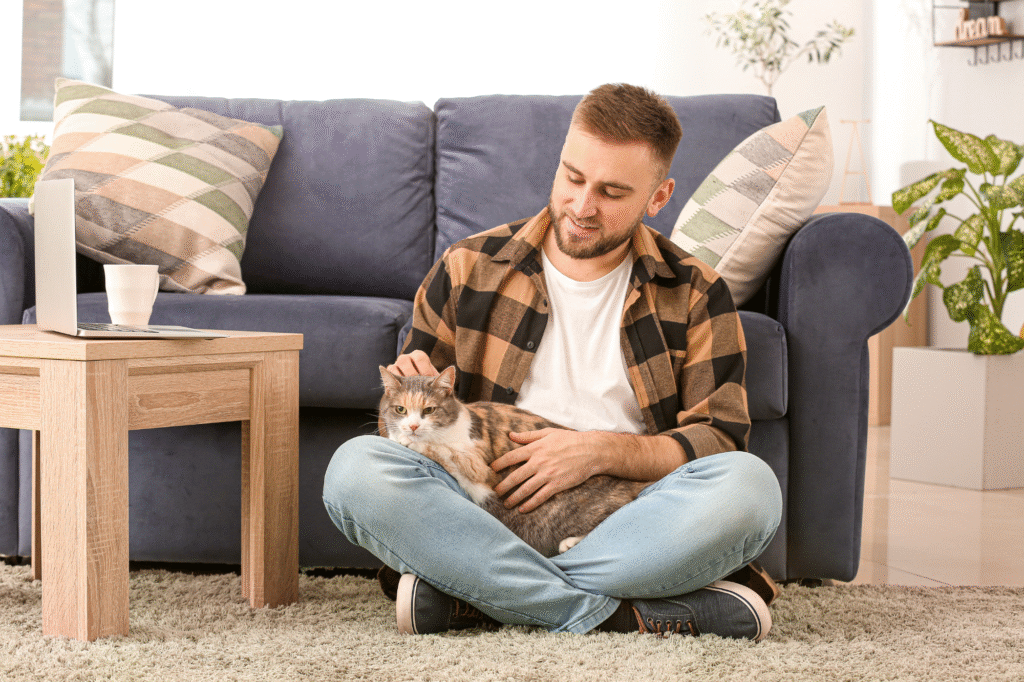
Height differences shape perception instantly. Standing bodies dominate space, casting movement and shadow downward. Direct eye contact intensifies attention, even without intention. A cat measures risk through posture first, storing impressions rapidly before curiosity has time to intervene or soften reactions later during calmer shared moments indoors together again quietly.
Lowering yourself changes the equation. Sitting quietly reduces pressure and invites approach without demand. Looking away intermittently signals neutrality, not avoidance. Over time, shared space becomes peaceful rather than charged. Trust strengthens through coexistence that asks nothing, allowing the cat to choose proximity freely, comfortably, and repeatedly without evaluation or fear.
7. Keep your scent familiar and predictable.

Cats map safety through scent constantly. Sudden changes disrupt recognition, creating hesitation without visible cause. Strong fragrances or unfamiliar smells rewrite emotional geography overnight. The cat pauses, sniffs, and reassesses, unsure whether comfort still exists nearby. Distance grows subtly, even while routines remain unchanged, signaling internal uncertainty rather than rejection.
Consistency anchors comfort quietly. Familiar clothing, furniture, and bedding restore orientation quickly. When your scent remains stable, the cat relaxes faster and lingers longer nearby. This sensory continuity supports trust without effort, reinforcing belonging through repetition rather than interaction, allowing connection to deepen gradually across days, seasons, and shared spaces.
8. Stay present even when the cat avoids you.

Avoidance often tests reliability rather than rejection. When a cat withdraws, it watches closely. Leaving confirms uncertainty, teaching absence follows hesitation. That lesson lingers, shaping future distance and delaying return longer each time space opens too wide. The risk grows quietly, not through conflict, but through disappearance during moments needing reassurance.
Remaining calmly nearby communicates availability without pressure. Presence without pursuit changes the outcome. Over time, the cat recalibrates, shortening distance cautiously. Trust builds through persistence, proving safety does not vanish when connection pauses. Eventually, approach resumes by choice, grounded in consistency, patience, and confidence shaped by steady behavior alone over time.