
Poaching pressure is reshaping elephant biology and behavior.
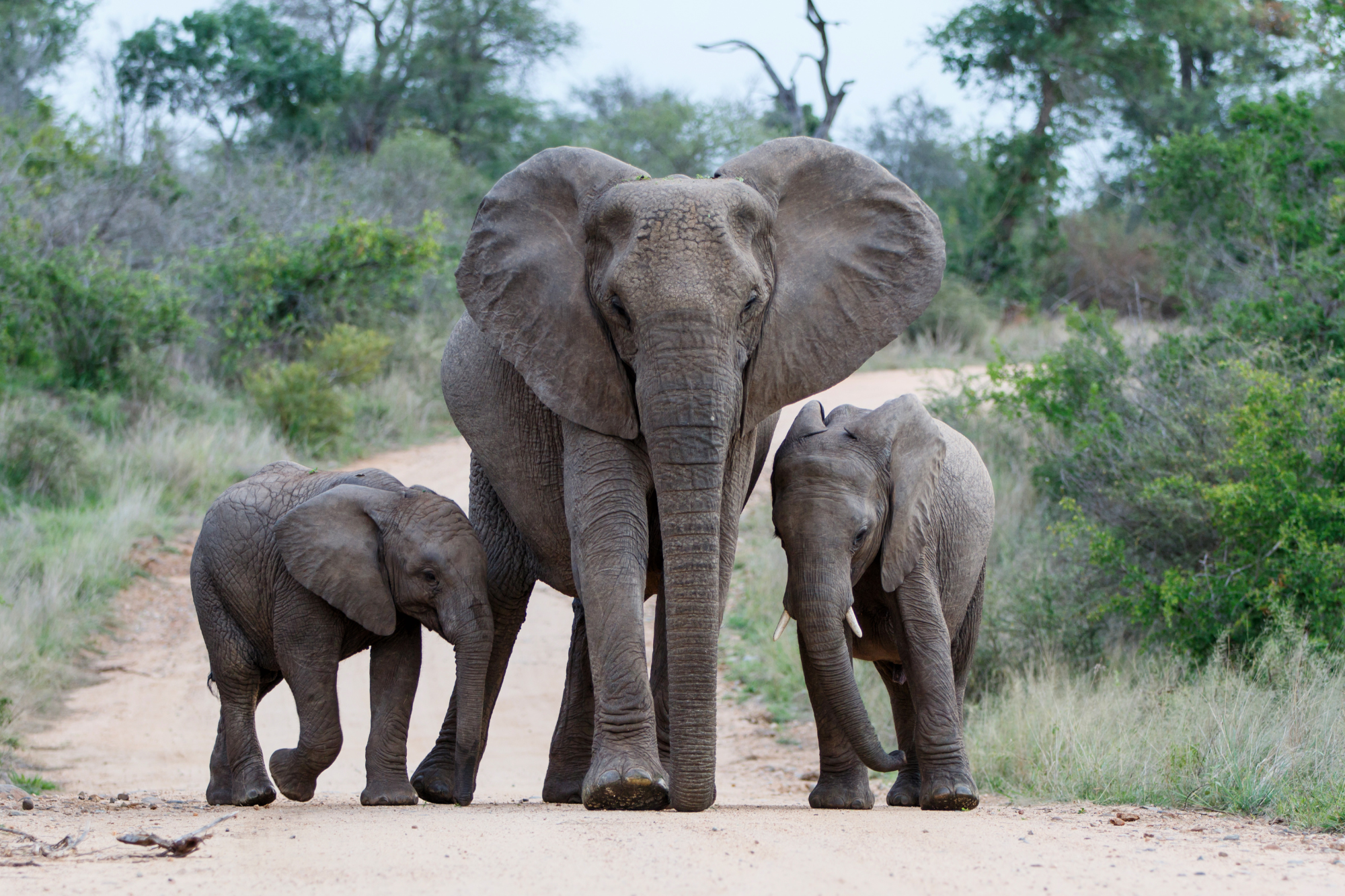
In several regions of Africa, elephants are being born without tusks at rates never recorded before. Biologists say this is not a natural trend unfolding slowly over millennia, but a rapid response to intense human pressure. Decades of poaching have made tusks a lethal liability, favoring elephants that lack them entirely. Researchers are now tracking how this forced shift is affecting feeding behavior, social dynamics, and long-term survival, raising difficult questions about how wildlife adapts when evolution is driven by human threat rather than environment alone.
1. A civil war in Mozambique accidentally created a new tuskless generation.

During Mozambique’s 15-year civil war, elephants around Gorongosa National Park were heavily hunted for ivory by both poachers and armed groups. By the time peace returned, researchers noticed something unusual. A large share of surviving female elephants no longer had tusks, a pattern later reported by the BBC. The shift was not accidental, but the result of intense selection pressure during the conflict.
Females without tusks were less likely to be killed, allowing the trait to spread rapidly. What was once rare became common in a single generation. Scientists now say tusklessness is altering feeding behavior, social dynamics, and ecosystem roles, showing how human conflict can permanently reshape wildlife populations.
2. Tuskless elephants struggle to dig for water during dry seasons.

In many dry regions of Africa, elephants rely on their tusks to dig into dry riverbeds and reach underground water. That skill can sustain entire herds during drought. Without tusks, the task becomes far more difficult. Tuskless elephants are left scraping with their feet or depending on others who still have tusks, a pattern documented by National Geographic.
As tuskless individuals increase, access to water concentrates among fewer elephants or vanishes altogether. Researchers warn this can alter herd dynamics, increase stress, and push elephants closer to human settlements in search of water.
3. Entire forest ecosystems are being reshaped because tusks aren’t there to do the work.

Elephants play a critical role as ecological engineers, a term used by the African Wildlife Foundation. In forested regions, their tusks help strip bark, uproot shrubs, and carve paths through dense vegetation. These actions limit plant overgrowth, create space for smaller species, and maintain habitat diversity that many animals rely on to survive.
As tusklessness increases, those processes weaken. Forests grow denser, shrubs spread unchecked, and species that depended on elephant-cleared pathways lose access to food and movement corridors. What began with ivory trafficking is now quietly reshaping entire forest ecosystems.
4. Mothers without tusks face new dangers from predators and other elephants.

Tusks once played a critical role in defense. Mother elephants used them to protect calves from predators and to push back during aggressive encounters with other elephants. Without tusks, those moments become far more dangerous. Physical strength alone cannot always compensate, especially when threats escalate quickly.
Tuskless mothers often depend on positioning or group support, but that protection can fail under stress, as reported by NPR. In fragmented herds, calves may face higher risks, not from neglect, but from delayed defense. What ivory removed was not just tusks, but a vital protective advantage.
5. Mating dynamics have changed now that tusks aren’t part of male competition.

In elephant society, large tusks once signaled dominance. Males used them in sparring, displays of strength, and competition for mates. In many regions, tusked males are now so rare that these signals are fading. Traditional markers of status no longer shape hierarchy the way they once did.
As a result, tuskless or partially tusked males are entering mating competition more often. Researchers say this shift is altering female choice and could influence future generations. Traits once tied to dominance may slowly lose relevance.
6. Young elephants are missing out on learning critical tusk-based skills.

Elephants don’t just act on instinct. They learn by watching. Young elephants observe their elders using tusks to break branches, strip bark, dig for salt, and protect themselves. These are generational behaviors. But when the tusks disappear, so do those lessons.
In tuskless herds, calves never see those actions modeled. They grow up without those techniques in their behavioral toolbox. That gap doesn’t just affect individuals, it alters herd culture. Traditions built around foraging, migration, and food access start slipping away, and there’s no clear replacement behavior for many of them.It’s strange to think of elephants having cultural loss, but that’s what this is. Entire ways of being are vanishing. Not because they weren’t useful, but because there’s no one left to teach them.
7. Tuskless elephants are expanding into more human-dominated spaces to compensate.

Without tusks to dig or break through brush, elephants need to find other ways to get what they need. That often means moving into farmlands or near villages where food and water are easier to access. And that sets the stage for conflict, again.
Crop raids spike. Tensions rise. And elephants, often labeled as aggressive or destructive, are pushed out or worse. What looks like bad behavior is usually just desperation. These animals are navigating a world where their usual survival tools are gone. So they try new routes, even if those routes put them face-to-face with danger. There’s a tragic irony to all of this. Tusklessness was supposed to help them avoid humans. Instead, it’s funneling them into even more dangerous proximity.
8. Tourists still expect tusks, which distorts conservation priorities.

People still associate tusks with “real” elephants. That expectation shapes tourism, photography, and even fundraising for conservation. In places where elephants are tuskless, there’s sometimes less attention, less money, and less political will to protect them, even though they’re often the survivors of the worst traumas.
Conservation isn’t just biology, it’s branding. Tusked elephants make for better posters. But that means tuskless populations, which are now widespread in some regions, get sidelined. They’re not the face of the species. They’re treated more like an unfortunate glitch in the system.But this isn’t a glitch. It’s the future. And if we don’t start reframing our expectations, we’re going to miss the chance to protect the elephants who’ve already adapted the hard way.
9. Behavioral stress is rising in tuskless herds dealing with scarcity and change.

Stress in elephants isn’t just physical. It’s behavioral, psychological, and communal. When tusks disappear, it’s not just a cosmetic change. It reshapes how elephants interact, what they can do, and how safe they feel. And that stress builds up, quietly and persistently.
You’ll see more aggressive posturing. More erratic movement. Fewer deep rest periods. These things aren’t random. They’re the outcome of living in a body that wasn’t supposed to navigate this kind of world. Elephants evolved with tusks for a reason, and taking them away isn’t like trimming fat off a design. It’s like losing a limb and being expected to walk the same trail.Over time, that stress erodes more than just health. It chips away at relationships, learning, and trust within the herd. And the most haunting part is that none of it is their fault.
10. We caused the shift, but elephants are the ones paying for the adaptation.

The change in tusk growth isn’t a hopeful story about nature being clever. It’s a brutal one about what happens when survival means shedding your most iconic feature. Elephants didn’t evolve without tusks because it made them better. They did it because they were hunted into silence.
And now, those adaptations are locked in. Generations of elephants will be born without something their ancestors relied on for centuries. They’ll have to find new ways to eat, defend, dig, and play. And every one of those changes carries consequences, both seen and unseen.This isn’t a new era of elephants. It’s a forced compromise. And it’s on us to ask what kind of world made tusklessness the better option. Because for elephants, the cost of adapting has never been higher.