
Physicists are questioning assumptions once thought permanently settled.
For most of modern science, reality has been described using four dimensions, three of space and one of time. That framework still explains much of what we observe, but it leaves stubborn gaps. Gravity behaves oddly, cosmic expansion accelerates without a clear cause, and quantum mechanics refuses to fully align with relativity. In response, physicists across research centers in Europe, the United States, and Asia have returned to an idea once considered fringe. What if an additional dimension exists, not visible, yet quietly shaping how the universe behaves.
1. Physicists revisited extra dimensions to fix gravity problems.
Gravity is the outlier among fundamental forces. It is dramatically weaker than electromagnetism or nuclear forces, a discrepancy that has puzzled physicists for generations. Even advanced models struggle to explain why gravity behaves so differently.
Some theories suggest gravity is not weak at all, but diluted. If it spreads into an additional spatial dimension, its apparent weakness in our universe would make sense. According to CERN research summaries, higher dimensional models allow gravity to operate across a broader framework while remaining consistent with known equations. These ideas persist because conventional physics still cannot fully reconcile gravity with quantum theory.
2. Particle experiments hinted at unseen spatial influence.
High energy particle collisions often produce clean, predictable results. Occasionally, however, detectors record missing energy that cannot be accounted for within known dimensions. These anomalies attract intense scrutiny.
Physicists have proposed that energy may escape into extra dimensions during collisions. As reported by Scientific American, some models predict that particles interacting with hidden dimensions would leave detectable gaps in energy conservation. While no definitive proof exists, the persistence of these anomalies keeps extra dimensional theories under serious consideration within particle physics communities.
3. Cosmic expansion raised new dimensional possibilities.

Astronomers discovered that the universe is expanding faster over time, a finding that challenged long held assumptions. Dark energy was introduced to explain this acceleration, but its nature remains unknown.
Some cosmologists argue that extra dimensions could influence large scale gravity, producing effects that resemble dark energy. As stated by NASA astrophysics researchers, certain higher dimensional models can reproduce observed expansion rates without invoking unknown energy fields. These theories remain speculative, yet mathematically consistent, offering alternatives where traditional explanations fall short.
4. String theory depends on hidden dimensions to function.

String theory proposes that fundamental particles are tiny vibrating strings rather than points. For its equations to work, additional dimensions are required. Without them, the mathematics collapses.
In these models, extra dimensions are compact and tightly folded, far beyond direct observation. Their presence would influence particle properties, force strengths, and fundamental constants. While string theory lacks experimental confirmation, it remains influential because it offers one of the few frameworks capable of unifying gravity with other forces.
5. Mathematics continues to drive dimensional exploration.

Physicists often follow mathematics where intuition fails. In many cases, equations describing reality only remain stable when additional dimensions are included.
These dimensions are not added arbitrarily. They emerge as solutions to inconsistencies between quantum mechanics and general relativity. A fifth dimension provides flexibility that prevents infinities and logical breakdowns. Even skeptics acknowledge that mathematically elegant solutions deserve exploration when existing theories reach their limits.
6. Precision gravity experiments search for subtle deviations.
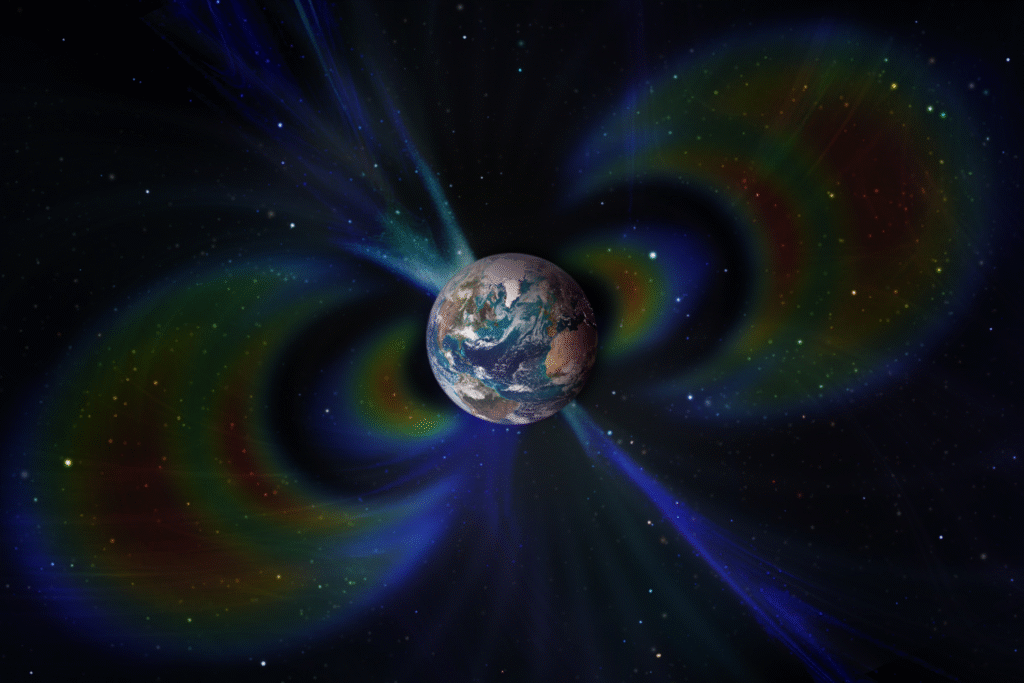
Laboratories worldwide test gravity at extremely small distances, looking for deviations from established laws. Any anomaly could hint at extra dimensions influencing gravitational behavior.
So far, results align with expectations, but experimental sensitivity continues to improve. Physicists caution that extra dimensions could exist just beyond current detection limits. Their effects might be subtle, influencing gravity without producing dramatic, easily observed signatures.
7. Black holes may reveal higher dimensional behavior.
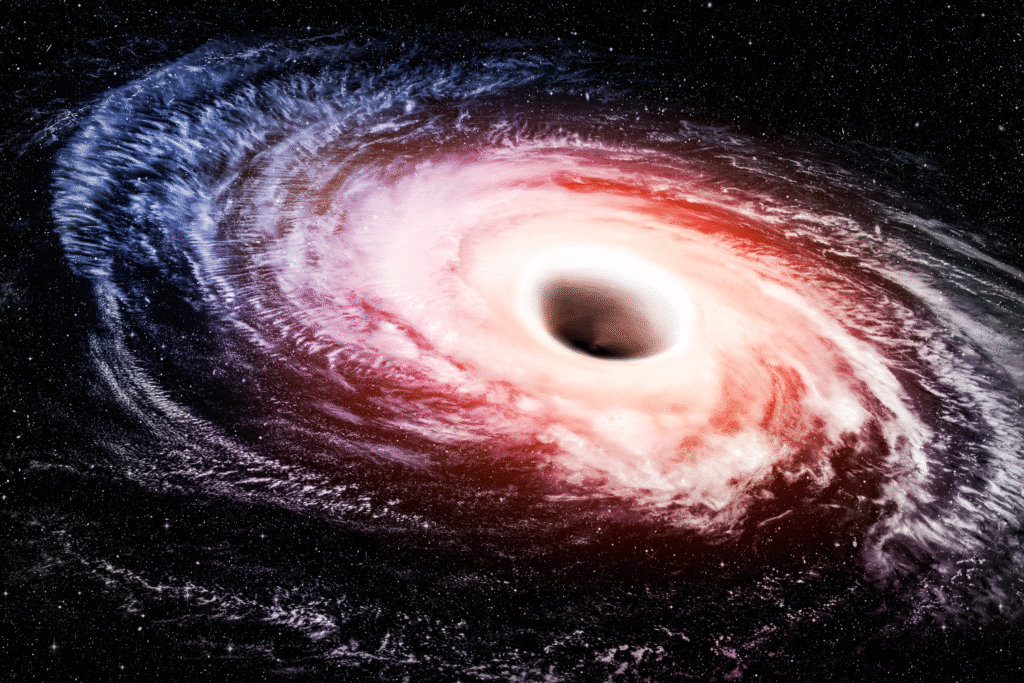
Black holes concentrate gravity to extremes, making them natural laboratories for testing fundamental physics. If extra dimensions exist, black holes might behave differently than predicted by four dimensional models.
Some theories suggest altered evaporation rates or distinctive gravitational wave patterns. Astrophysicists analyze merger data for deviations that could signal higher dimensional effects. Current observations match standard predictions, but increasing precision may eventually probe deeper possibilities.
8. Time itself could be shaped by higher dimensions.

Some theories propose that time may emerge from higher dimensional structures rather than existing independently. This challenges basic assumptions about causality and temporal flow.
Physicists explore whether the one way direction of time could result from interactions across dimensions. While controversial, these ideas attempt to explain why time behaves asymmetrically, a mystery unresolved by existing physics.
9. Philosophical consequences extend beyond equations.

A fifth dimension would force reconsideration of what is observable and what is real. Human perception would represent only a slice of a larger structure.
Philosophers of science note that extra dimensions blur boundaries between empirical evidence and theoretical necessity. Accepting them would reshape how scientific knowledge is defined, especially regarding unobservable yet influential aspects of reality.
10. Theories endure because fundamental questions remain open.

Extra dimensional models persist not because they are proven, but because current theories leave critical questions unanswered. Physics advances by exploring uncomfortable possibilities.
Until experiments definitively rule them out, fifth dimension theories remain part of serious scientific inquiry. Their significance lies in expanding how scientists think about space, reality, and the limits of human understanding.