
Daylight fox encounters can quietly signal rising risk.
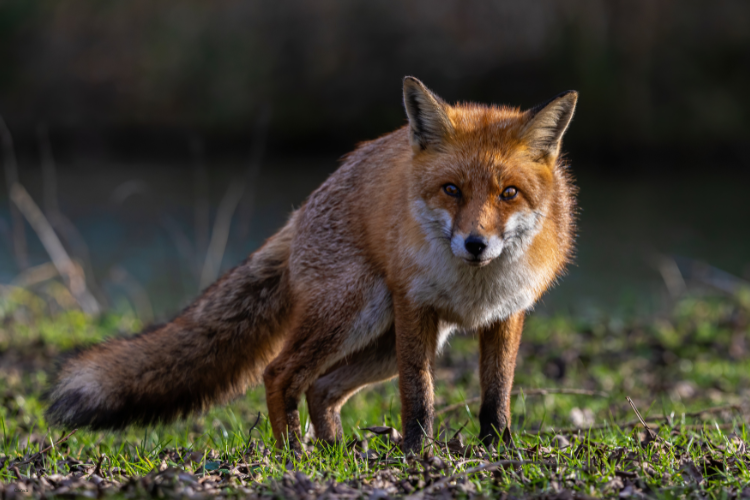
An adult fox moving toward a person in full daylight breaks an unspoken rule of the wild. These animals are typically cautious, crepuscular, and quick to vanish. When that instinct falters, something has already shifted. Across neighborhoods, parks, and rural roads, daylight fox sightings are increasing, and not always for comforting reasons. Timing, distance, and behavior matter more than species charm. This moment, brief as it seems, can carry layered meaning tied to health, food pressure, and human expansion. The explanation is rarely simple, and the stakes can escalate faster than expected.
1. A fox approaching calmly in daylight is unusual.
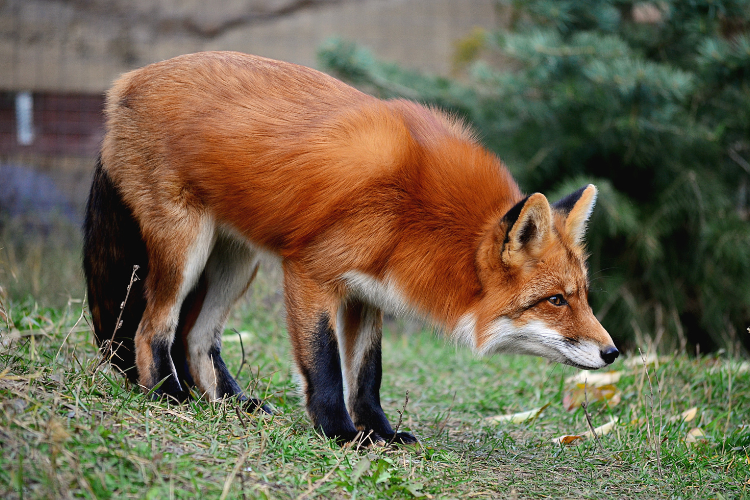
Foxes usually thread their lives through early mornings and dusk, skirting human schedules with careful precision. When one walks directly toward a person at noon, it interrupts that pattern. The stillness, eye contact, or steady pace can feel oddly intentional, raising questions before answers arrive.
Behavioral researchers note that healthy foxes avoid direct human approach whenever possible. When this avoidance erodes, underlying causes deserve attention, according to the Centers for Disease Control and Prevention. Disrupted fear responses, illness, or learned dependence on people can all play roles, each carrying different implications that are not immediately visible.
2. Rabies are rare, but daylight behavior raises flags.

Most foxes will never encounter rabies, yet the disease quietly shapes how wildlife officials interpret strange encounters. A fox active during the day is not proof, but it is one of several behavioral clues that trigger caution. The risk lies in what cannot be seen.
Neurological diseases can alter movement, awareness, and fear processing long before obvious symptoms appear. These changes sometimes present as curiosity rather than aggression, which can mislead observers. Wildlife guidance often emphasizes distance during such encounters, as stated by the California Department of Fish and Wildlife. Subtle behavior shifts can precede sudden escalation without warning.
3. Food conditioning changes how foxes perceive people.
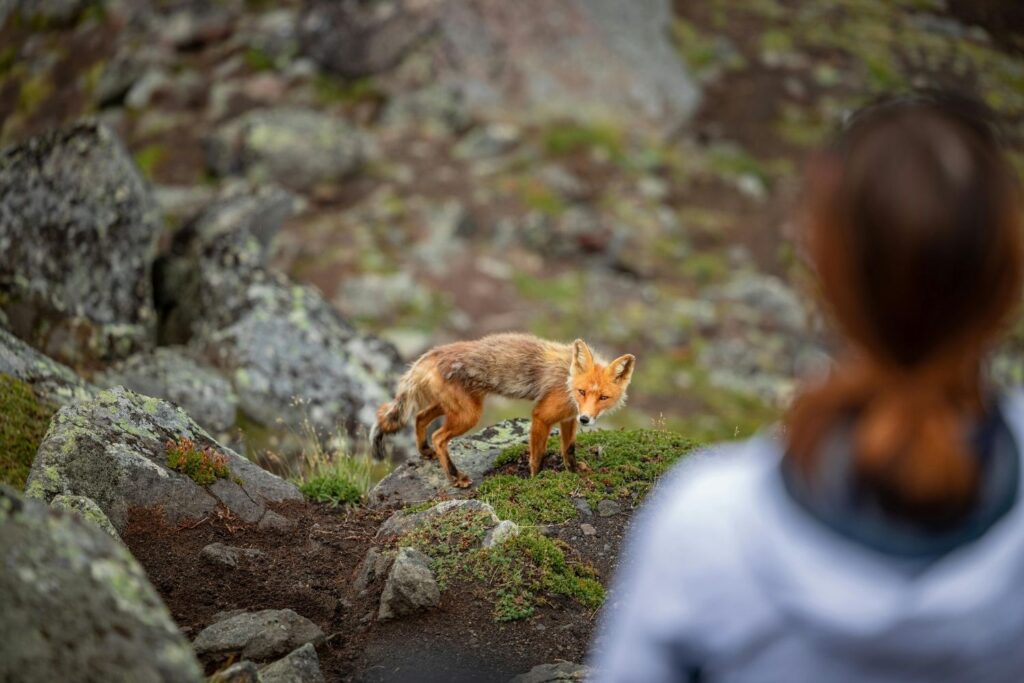
Urban foxes learn quickly. A few successful meals near humans can rewrite survival strategies built over generations. When food appears predictable, caution erodes, and daylight becomes less relevant than opportunity.
This conditioning does not require hand feeding. Overflowing trash, pet food, or compost can teach foxes that humans signal calories. Over time, approach distance shrinks. Studies on urban wildlife adaptation show these patterns emerging worldwide, as reported by the Humane Society of the United States. Once learned, this behavior spreads rapidly within local fox populations, complicating coexistence efforts.
4. Young foxes sometimes misjudge danger during dispersal.
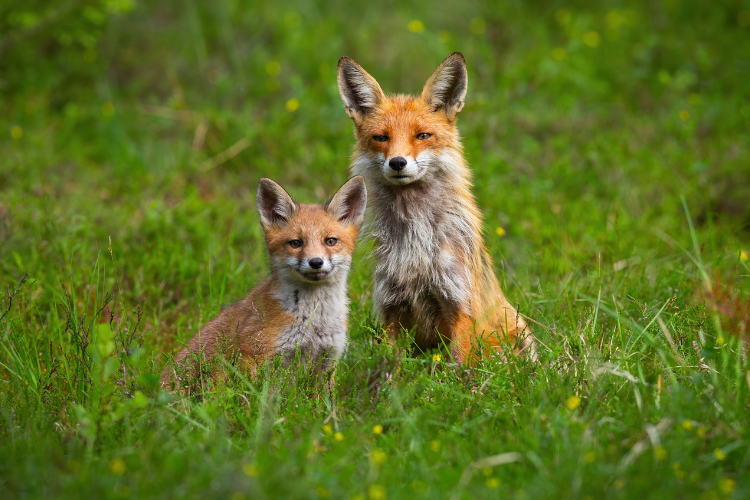
Late spring and early summer push juvenile foxes into unfamiliar territory. These young animals lack experience, confidence, and refined threat assessment. Their movements can appear bold when they are actually uncertain.
A dispersing fox may approach people simply because it has not learned otherwise. Hunger, fatigue, and curiosity intersect during this phase. While many juveniles retreat after brief exposure, some linger too long. That hesitation can place them in risky proximity to humans, pets, and traffic, setting the stage for conflicts that neither side intends or anticipates.
5. Illness other than rabies can alter fox behavior.

Not all abnormal behavior traces back to rabies. Mange, parasites, and viral infections can sap energy, impair senses, or dull reactions. A fox struggling physically may move during daylight because night hunting becomes harder.
Mange, in particular, forces foxes to conserve warmth and seek easier food sources. Hair loss and skin damage often follow, though early stages can be subtle. These animals may appear calm or slow rather than aggressive. The danger lies in misreading weakness as harmlessness, when stress and disease can still provoke unpredictable responses under pressure.
6. Urban development squeezes foxes into closer contact.
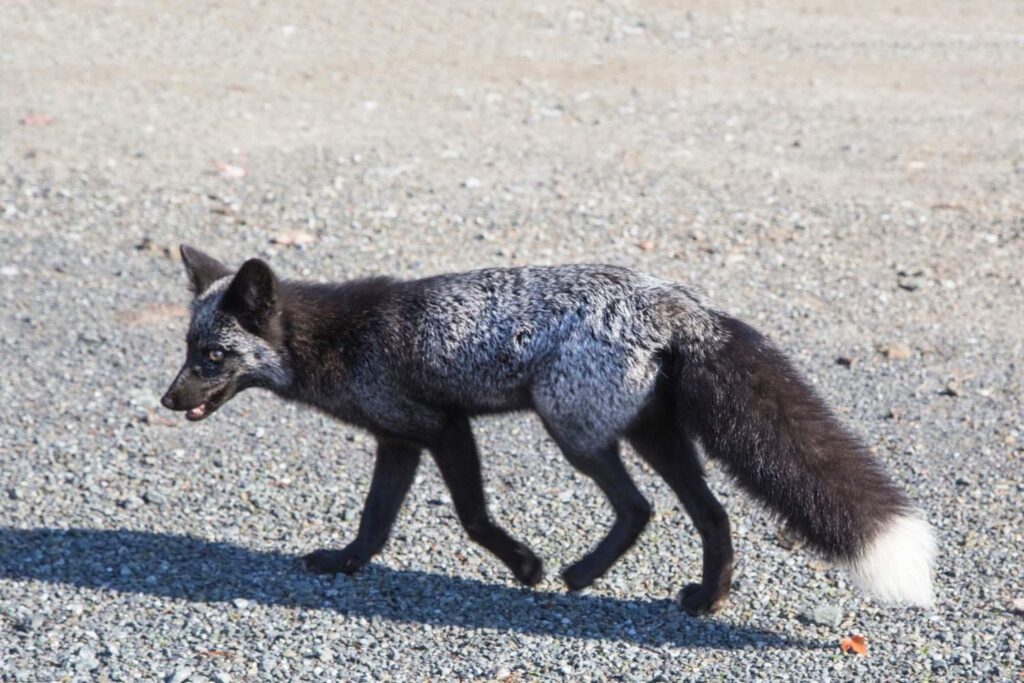
As green spaces fragment, fox territories compress. Trails, yards, and parking lots become connective tissue between shrinking habitats. Daylight travel increases simply because safe corridors disappear.
In many regions, foxes now cross human paths out of necessity rather than choice. Proximity does not equal comfort, but repeated exposure can blunt fear responses over time. This gradual shift can culminate in a fox that neither flees nor charges, hovering in a behavioral gray zone that feels unsettling precisely because it resists easy interpretation.
7. Breeding season heightens boldness and distraction.

Winter mating season reshapes fox priorities. Hormones sharpen focus on territory and rivals, sometimes at the expense of caution. A fox may approach humans while tracking scents or scanning for competitors.
During this period, attention narrows. The animal’s awareness of people can register late, after distance has already closed. While not inherently aggressive, a fox preoccupied with breeding pressures may react defensively if startled. Timing matters, and daylight encounters during breeding season often reflect distraction rather than intent.
8. Habituation creates foxes that test human boundaries.
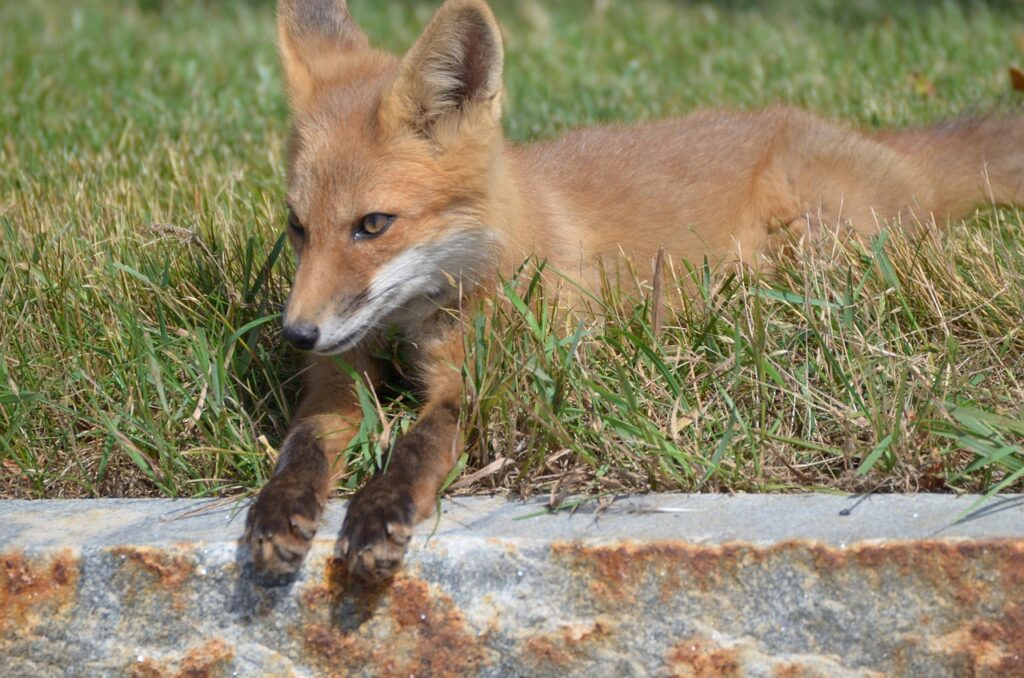
Repeated neutral encounters teach foxes that humans are neither threat nor reward. This middle ground can be dangerous. A fox that stands its ground is experimenting, not trusting.
Boundary testing often precedes escalation. If approach yields no negative consequence, confidence grows. Over months, this can produce foxes comfortable within arm’s length. The shift is subtle and cumulative. Each ignored encounter reinforces the next, until proximity feels normal to the fox, even as it raises risk for people, pets, and the animal itself.
9. Pet safety becomes a concern during close encounters.
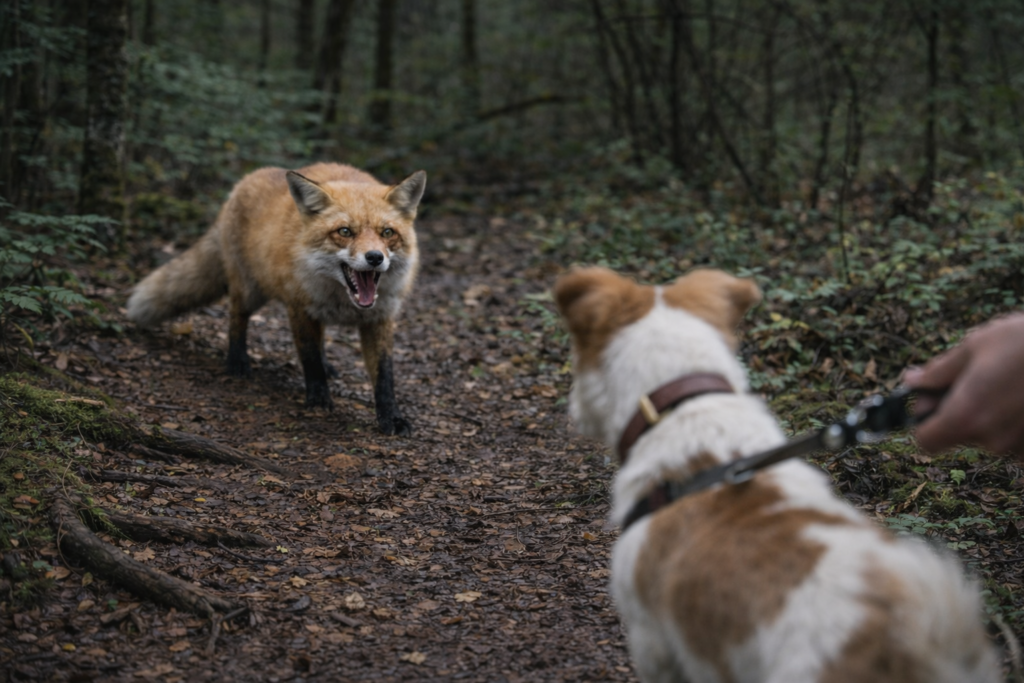
Small dogs and outdoor cats fall within a fox’s prey size range. A fox approaching a person may also be assessing nearby animals. Daylight does not remove predatory calculus.
Even well fed foxes may chase when opportunity arises. The presence of humans does not always deter this behavior, especially in habituated individuals. Leashes, secure yards, and supervision matter most during periods of increased fox activity. The risk is situational, shaped by space, timing, and the fox’s prior experiences near people.
10. Human reactions influence what happens next.

How a person responds can shape future encounters. Calm distance communicates boundaries without reward. Approaching, feeding, or lingering teaches the opposite.
A fox that learns humans are predictable may adjust its schedule and routes accordingly. This feedback loop can entrench daylight encounters in specific neighborhoods. Individual moments ripple outward, affecting broader behavior patterns. While a single fox may seem inconsequential, the collective impact of repeated interactions can quietly redefine how wildlife and people share increasingly crowded landscapes.