
A cosmic explosion brighter than anything ever recorded.
Without warning, space briefly lit up with a flash so powerful that satellites across Earth’s orbit struggled to measure it. Instruments designed to watch the violent universe suddenly flooded with radiation, forcing astronomers to piece together what had happened after the glare subsided. The source was unimaginably distant, yet the signal arrived with staggering intensity. Scientists soon realized they were witnessing something unprecedented, a cosmic blast that outshone nearly every event ever detected. The explosion came from the collapse of a massive star billions of light years away. What researchers uncovered in the data is now challenging long held ideas about the limits of stellar destruction.
1. The burst originated from a collapsing massive star.
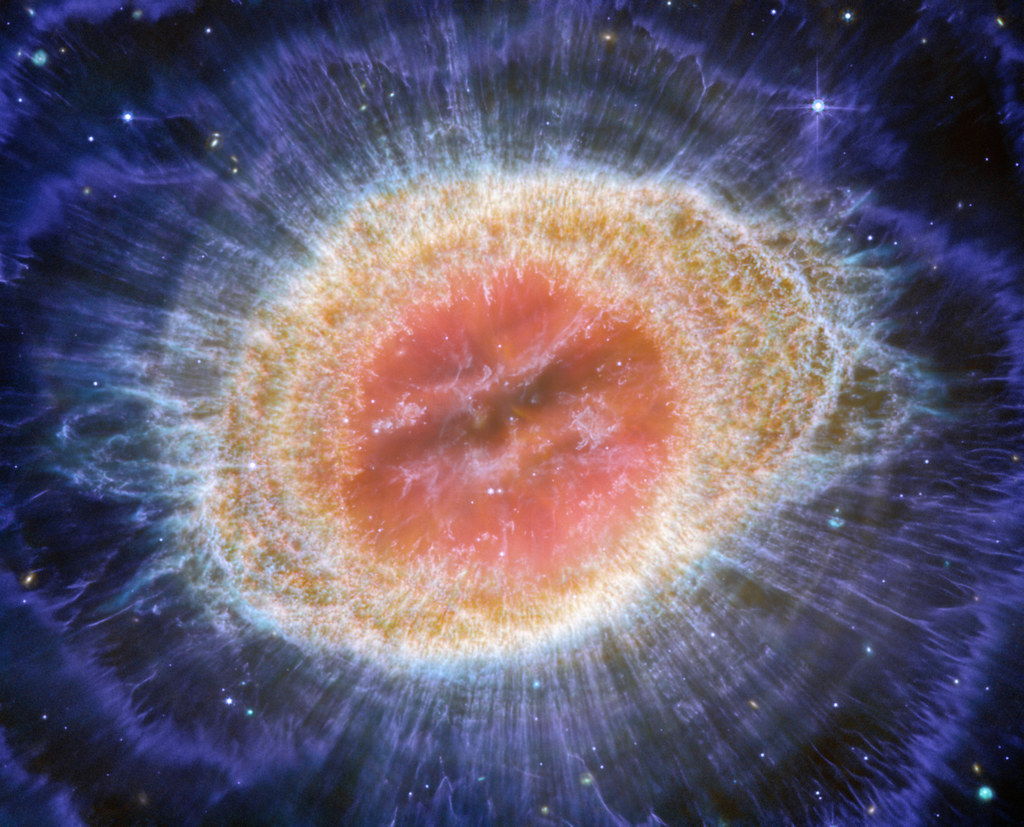
Astronomers determined that the gamma-ray burst came from a massive star undergoing collapse into a black hole. As stated by NASA’s Goddard Space Flight Center, the event unleashed jets of ultra-energetic particles traveling near the speed of light. These narrow beams pierced through the dying star’s outer layers, releasing gamma radiation so intense it overwhelmed multiple space telescopes. The star’s final act sent shockwaves across galaxies, marking both an end and a beginning in cosmic terms, a death so powerful it illuminated half the universe.
2. Its brightness broke nearly every detection record ever set.
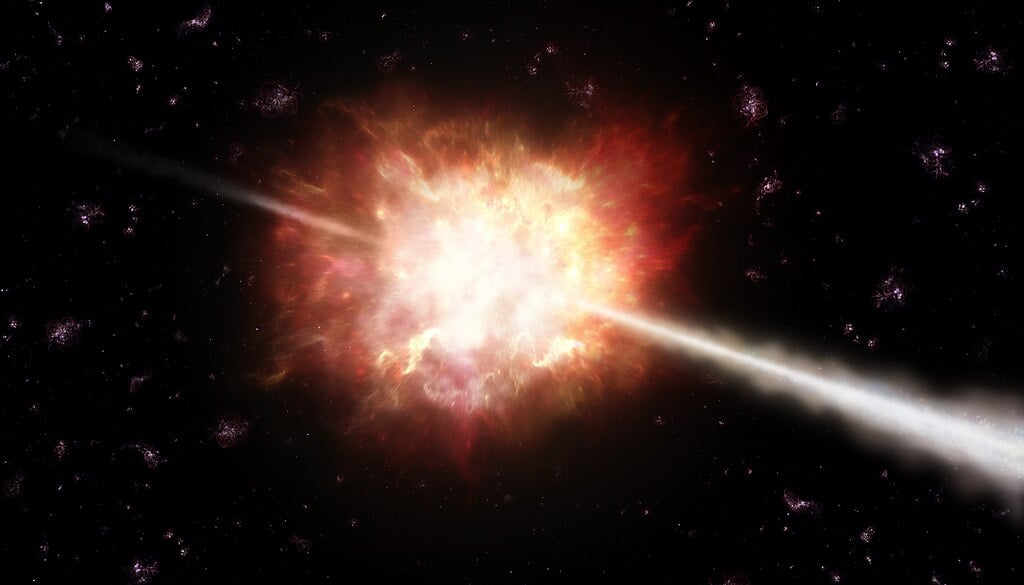
This single burst was estimated to be two billion times brighter than the Sun and ten times more luminous than any previous gamma-ray event, as reported by Science. The signal saturated the sensors on several orbiting observatories, forcing researchers to reconstruct the data using partial readings. That unprecedented brightness has puzzled astrophysicists because it challenges current models of how energy escapes collapsing stars. The numbers didn’t just bend expectations, they shattered the ceiling of what’s considered physically possible for stellar explosions on record.
3. The light traveled nearly two billion light-years to reach us.
Despite its unimaginable power, the explosion happened nearly two billion years ago, its light only now reaching Earth. According to findings published by the European Space Agency, the delay gives scientists a rare time capsule into early cosmic evolution. Each photon that struck NASA’s detectors carried data from an era when galaxies were still young and the universe was reshaping itself. Observing it today is like opening a cosmic postcard sent before humans even existed, written in radiation instead of ink.
4. Earth’s atmosphere actually shimmered from the radiation wave.
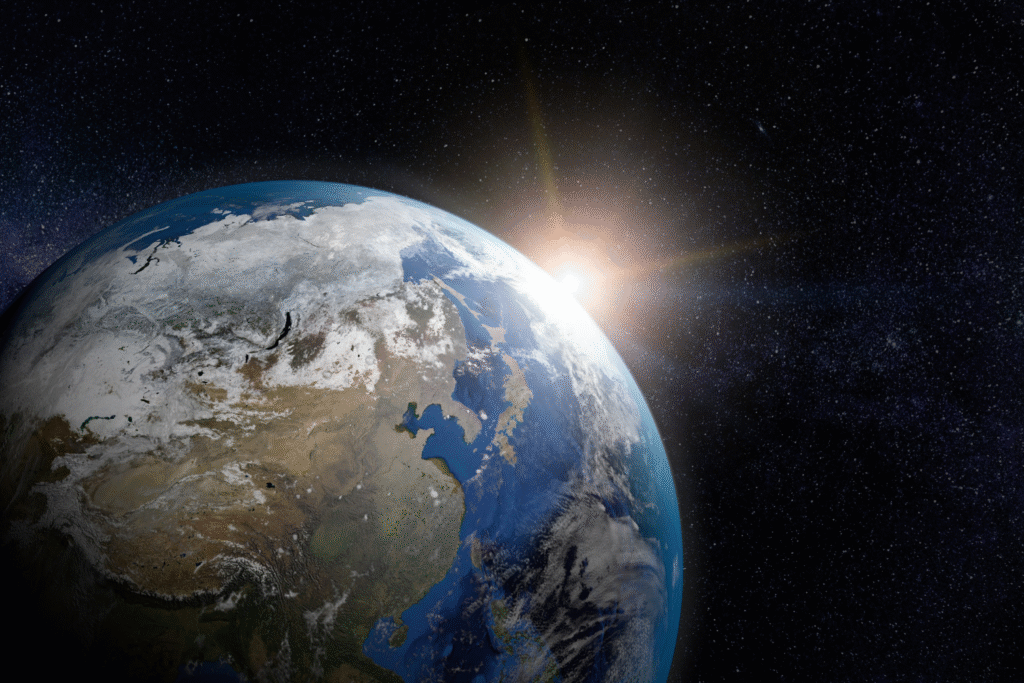
The sheer strength of the burst briefly ionized parts of our planet’s upper atmosphere. Satellites recorded temporary disturbances similar to those caused by solar flares, but this time the source was far beyond our galaxy. The energy that arrived was harmless to humans on the ground but measurable by radio instruments. It’s rare for events so distant to have a direct, physical signature on Earth, a reminder that space, vast as it is, still manages to touch us in unexpected ways.
5. Astronomers named it the BOAT for good reason.
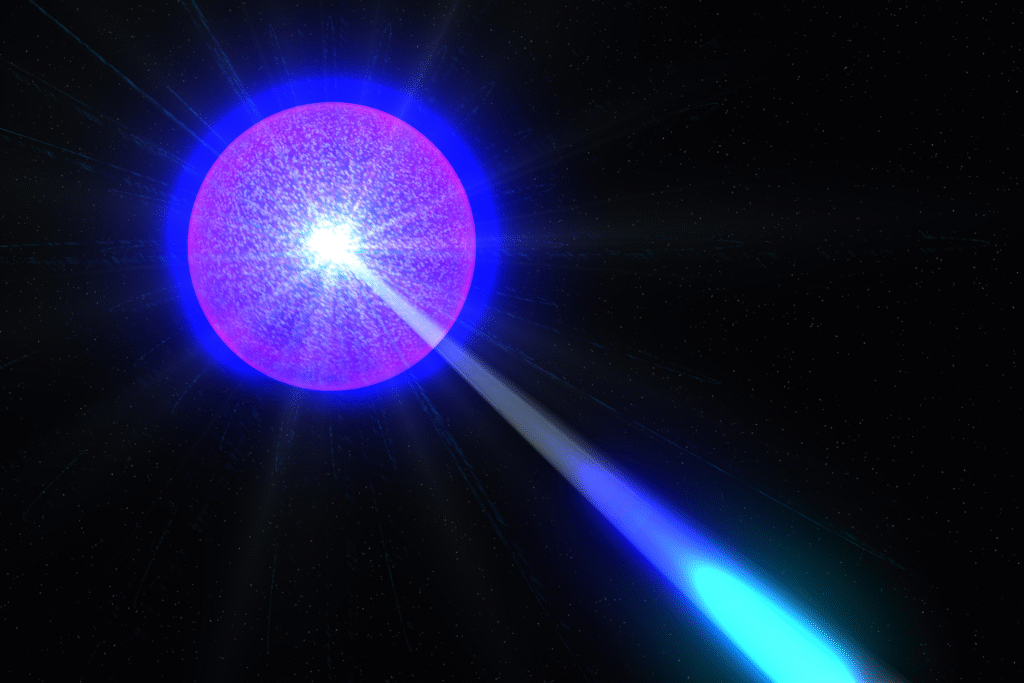
After data poured in from dozens of observatories, scientists nicknamed GRB 221009A the “brightest of all time.” It’s not hyperbole; in five decades of monitoring, no other burst has even approached this intensity. Researchers compared it to a cosmic lighthouse, its beam perfectly aligned with Earth by chance. That alignment made the signal look even more explosive, amplifying its brightness to record-breaking levels. The term “BOAT” stuck because nothing else captures the sheer absurdity of its power.
6. X-ray echoes are still rippling through space.
Even months after the explosion, orbiting observatories continued detecting echoes, waves of X-ray light scattering off interstellar dust. These aftershocks allow scientists to map the space between stars, turning the burst into an accidental probe of galactic structure. The fading light acts like sonar, tracing distances across regions that would otherwise remain invisible. It’s a cosmic encore, revealing that even after the initial flash fades, its fingerprints remain scattered across the void like glowing dust trails.
7. The explosion’s jets may have been perfectly aligned with Earth.
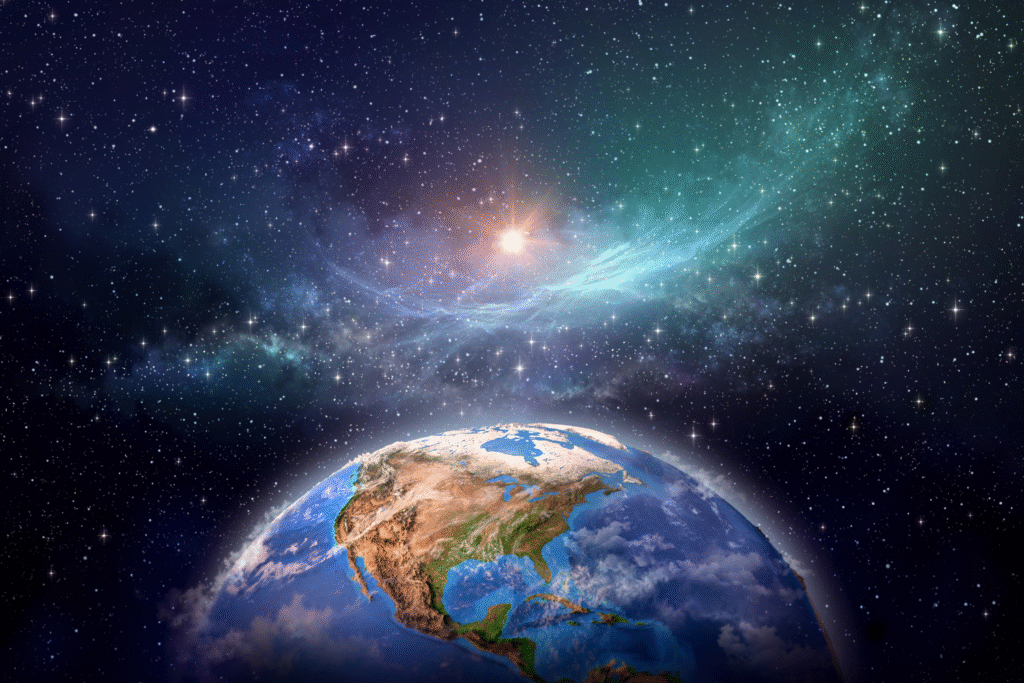
Gamma-ray bursts release their power in narrow jets rather than full-sphere explosions. In this case, one of those jets was aimed almost directly at us. That alignment multiplied the perceived brightness, like staring straight down a flashlight beam instead of seeing it from the side. Such precision is rare, which is partly why GRB 221009A appears so extraordinary. It wasn’t just bright, it was aimed at exactly the right angle to make it unforgettable on a cosmic scale.
8. Scientists think it may create a new black hole.
At the heart of this explosion lies a collapsing core dense enough to form a black hole or a magnetar, a super-magnetic neutron star. Either way, the event represents one of the universe’s most extreme transformations. If a black hole did form, it would now be devouring the remaining stellar debris, shaping the surrounding region for eons to come. What looks like destruction from Earth’s view is, at its core, creation, the birth of a new cosmic object out of a dying one.
9. Some galaxies may have briefly lit up in response.
When such bursts occur, their radiation can reflect off dust clouds and nearby galaxies, causing temporary flashes detectable by sensitive instruments. In the days following the event, telescopes noticed faint light reverberations across the surrounding region of space. These echoes offer more than spectacle, they help measure cosmic distances and refine estimates of how energy disperses across the intergalactic medium. It’s a ripple effect that turns one star’s collapse into a universal illumination.
10. The burst may rewrite how we understand stellar deaths.
Before this discovery, most models of gamma-ray bursts underestimated how concentrated and violent they could be. GRB 221009A showed that even a single supernova can unleash far greater power than predicted. Researchers are now rethinking how jets form, how magnetic fields channel them, and what limits truly exist. The event was a one-in-ten-thousand-year cosmic spectacle, but more importantly, it’s reshaping the story of how stars die, and how their deaths light up everything we know about the universe.