
These landscapes confuse the eye before the brain catches up.

At first glance these landscapes feel staged. Colors look exaggerated. Shapes appear intentional. Depth seems edited. Yet each formed through pressure chemistry erosion and heat over immense spans of time. Some sit beside roads. Others require permits or long hikes. What unites them is the moment when perception hesitates. Standing there people pause recalibrating assumptions about what the planet quietly builds without witnesses. Science eventually explains them but explanation rarely removes the unease completely that lingers long afterward for visitors.
The rock spires of Cappadocia rise deliberately.
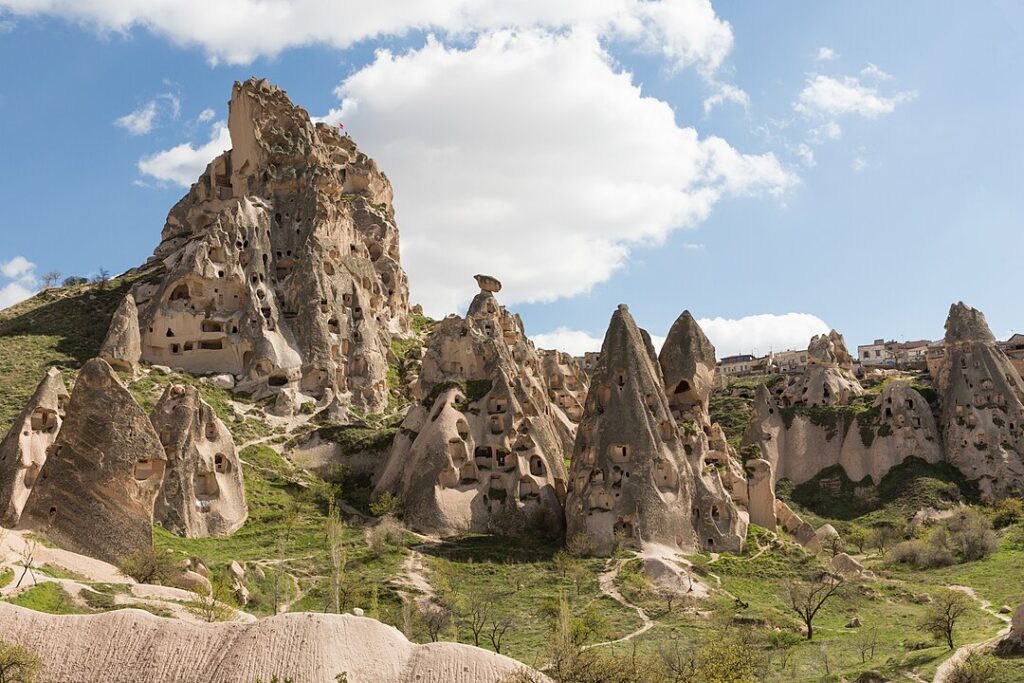
In central Turkey the Cappadocia region holds towering stone spires shaped from ancient volcanic ash. Wind rain and time carved softer layers away while harder caps resisted erosion.
People later carved homes churches and storage chambers directly into these pillars using simple tools. The formations endure because erosion works unevenly rather than uniformly. According to the Geological Society of London repeated eruptions followed by slow weathering created this landscape gradually instead of through sudden collapse.
2. Stones slide across Racetrack Playa without witnesses.
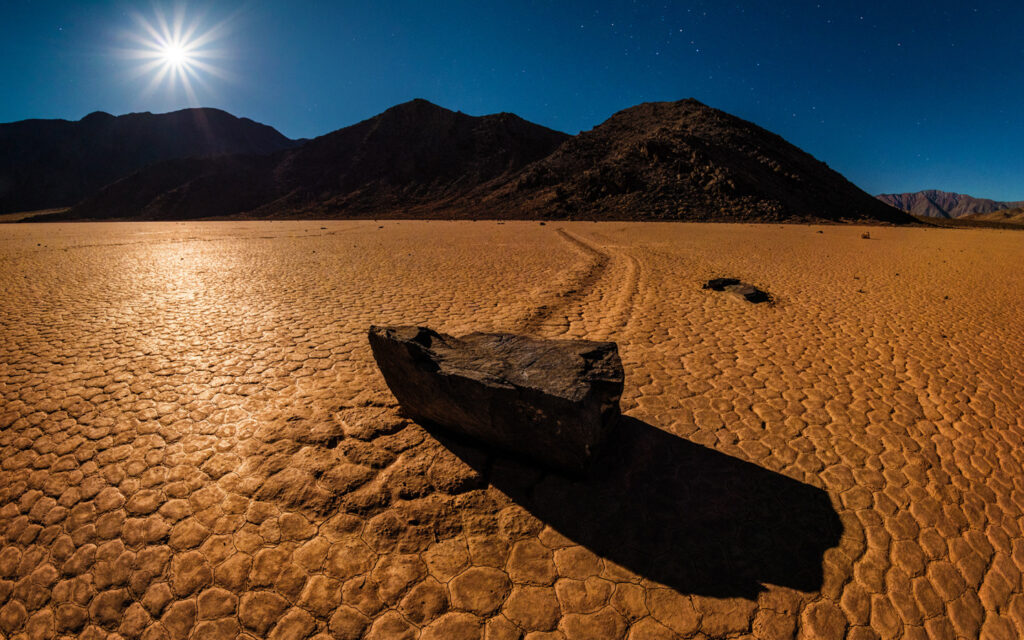
Racetrack Playa lies within Death Valley California appearing flat empty and lifeless. Its surface breaks into cracked geometric plates that record long straight tracks behind heavy stones.
During rare winter conditions shallow water freezes overnight into thin sheets. Wind pushes the ice carrying stones slowly across wet clay. Their movement was documented through field experiments and GPS tracking as reported by the United States Geological Survey.
3. Giant’s Causeway stacks stone with unnatural precision.
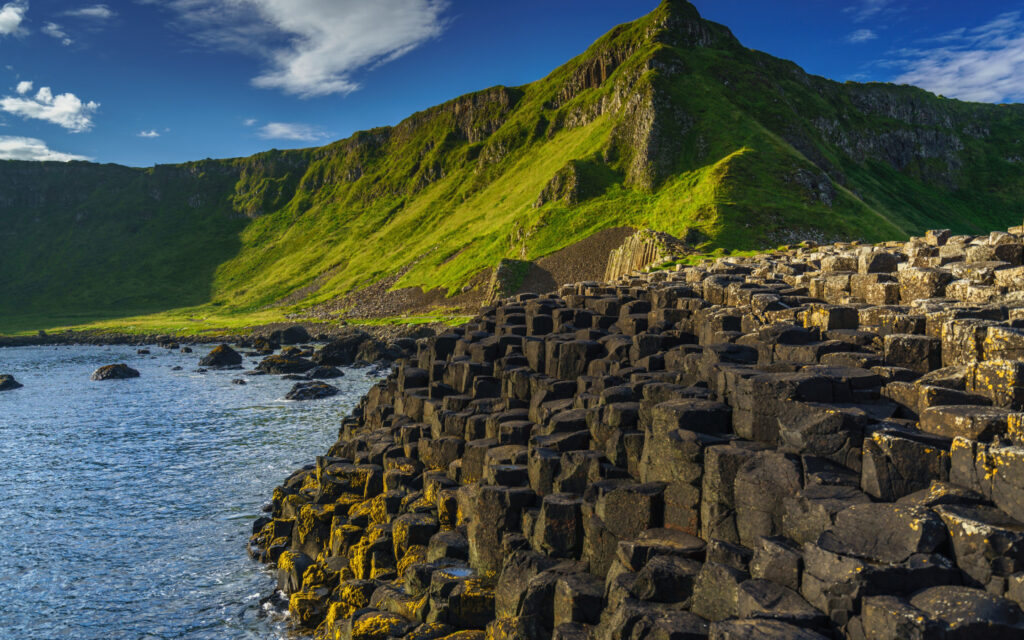
Along Northern Ireland’s northern coast the Giant’s Causeway stretches outward into the Atlantic. Thousands of hexagonal basalt columns interlock with striking regularity.
The structure formed when lava cooled slowly and evenly allowing rock to contract in repeating patterns. Stress fractures created the shapes without guidance or design. As stated by National Geographic these columns represent a predictable physical response during cooling rather than an unusual geological anomaly.
4. Hills appear brushed with layered color.
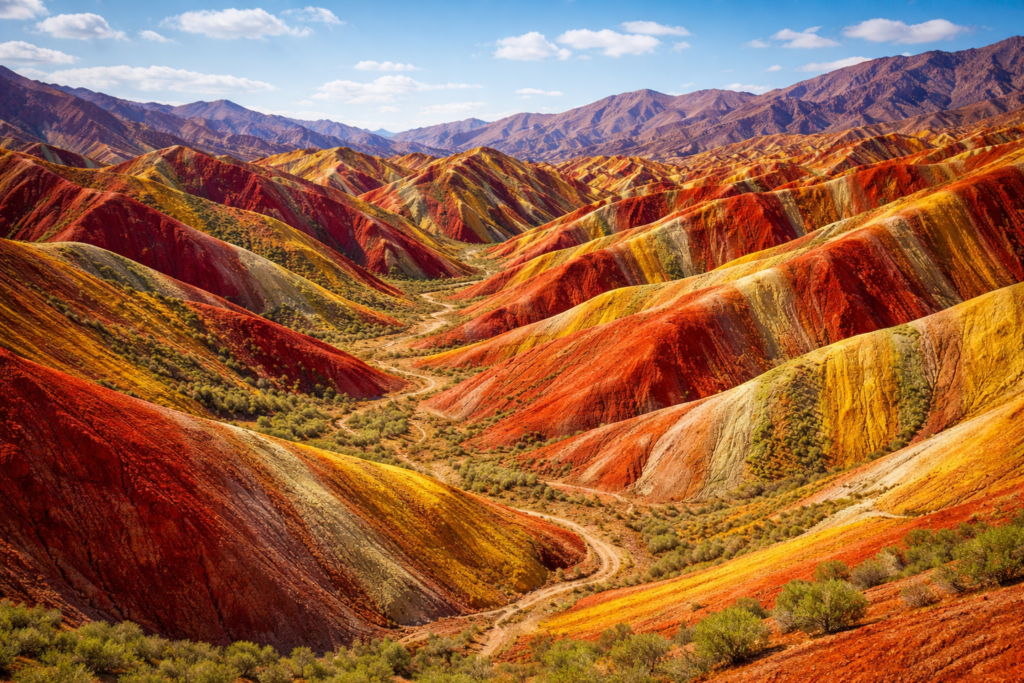
In China’s Gansu Province, the Zhangye Danxia Landform features rolling hills marked by bands of red, yellow, and green that intensify under direct sunlight. The colors appear painted rather than naturally deposited.
Mineral rich sediments accumulated slowly over millions of years before tectonic forces lifted and tilted the layers upward. Later erosion sharpened the bands instead of blending them together. The result looks like frozen motion, revealing how slow geological processes can create startling visual complexity.
5. Azerbaijan’s mud volcanoes release gas quietly.

Across Azerbaijan broad plains host hundreds of mud volcanoes rising only a few feet high. Thick gray slurry bubbles steadily releasing gas from deep underground.
These features form where pressurized methane and mineral rich fluids escape through weak crustal zones. Activity continues quietly for decades without dramatic eruptions. Their constant motion offers a reminder that geological forces often operate persistently rather than explosively.
6. Cenotes open suddenly into clear blue depths.
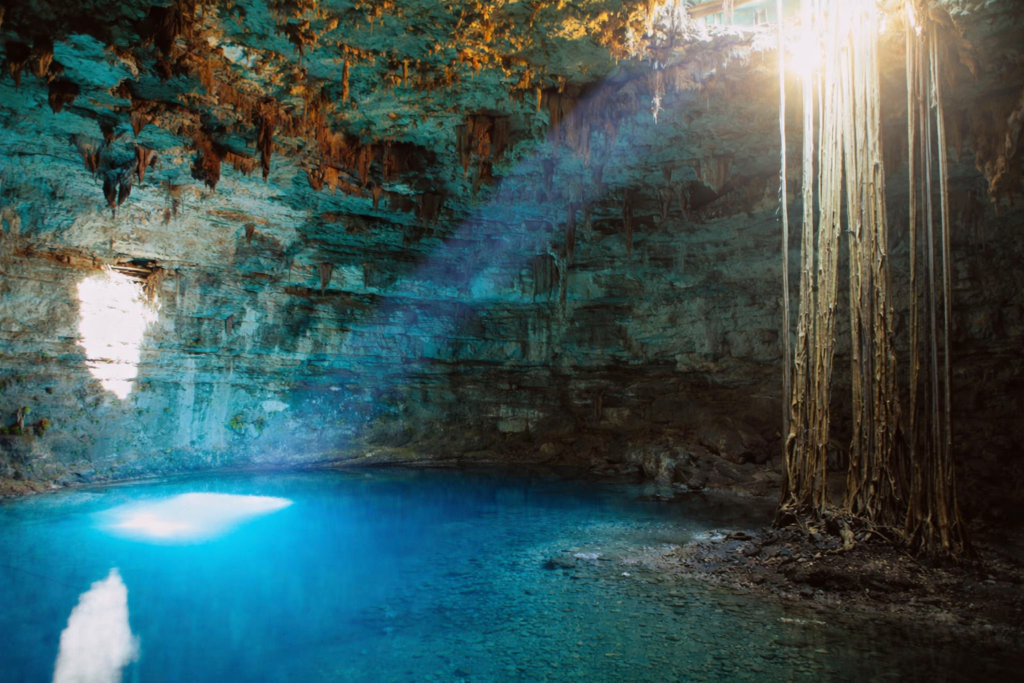
Across Mexico’s Yucatán Peninsula, cenotes interrupt forests without warning. Solid ground gives way to circular openings that plunge into still blue water below.
Rainwater slowly dissolved limestone bedrock over thousands of years, hollowing caverns beneath the surface. When ceilings collapsed, groundwater was exposed. These pools became vital to ancient Maya communities for drinking water and ritual use. Today their clarity distorts depth perception, making swimmers feel suspended rather than submerged. Light bends strangely through mineral rich water, erasing shadows and distance. The calm surface hides complex cave systems below, where passages stretch far beyond visible limits and challenge human orientation and scale.
7. Zhangjiajie stone pillars rise from forested valleys.
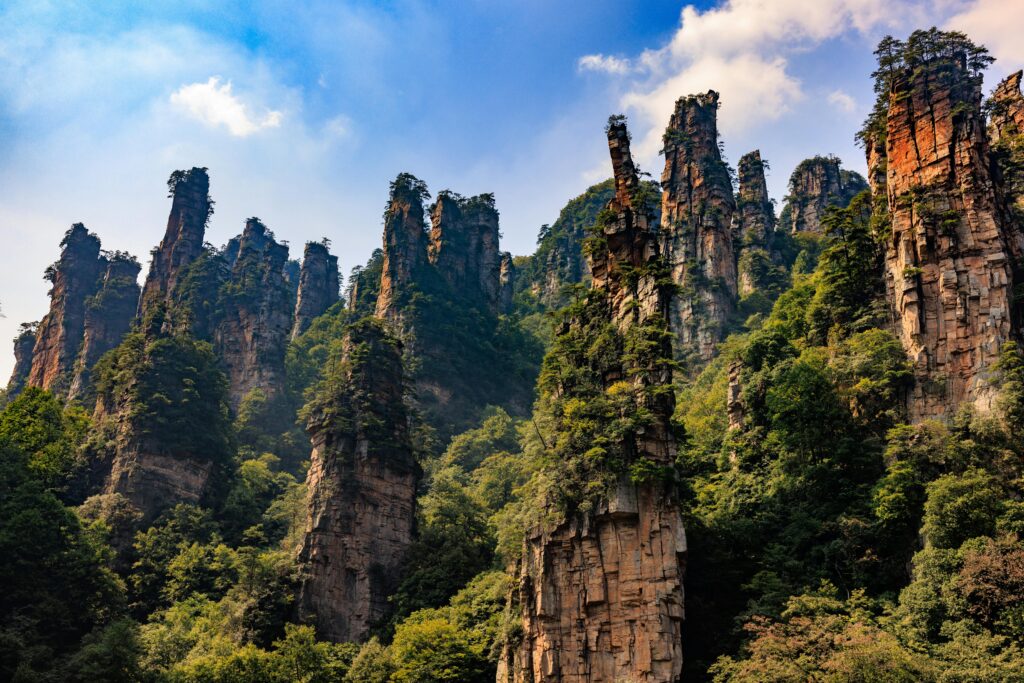
In Zhangjiajie, China, narrow sandstone pillars soar straight upward from dense forest floors. Many reach heights exceeding two thousand feet.
Erosion gradually isolated each tower from surrounding rock, carving away softer material while leaving harder quartz sandstone intact. Vegetation clings to ledges barely wide enough to stand on. Morning mist often conceals their bases, exaggerating height and separation. Without clear reference points, the landscape feels disjointed. Visitors struggle to judge distance or scale. The result is a terrain that appears assembled rather than eroded, where gravity seems secondary to vertical repetition and visual confusion.
8. Salar de Uyuni mirrors the sky endlessly.
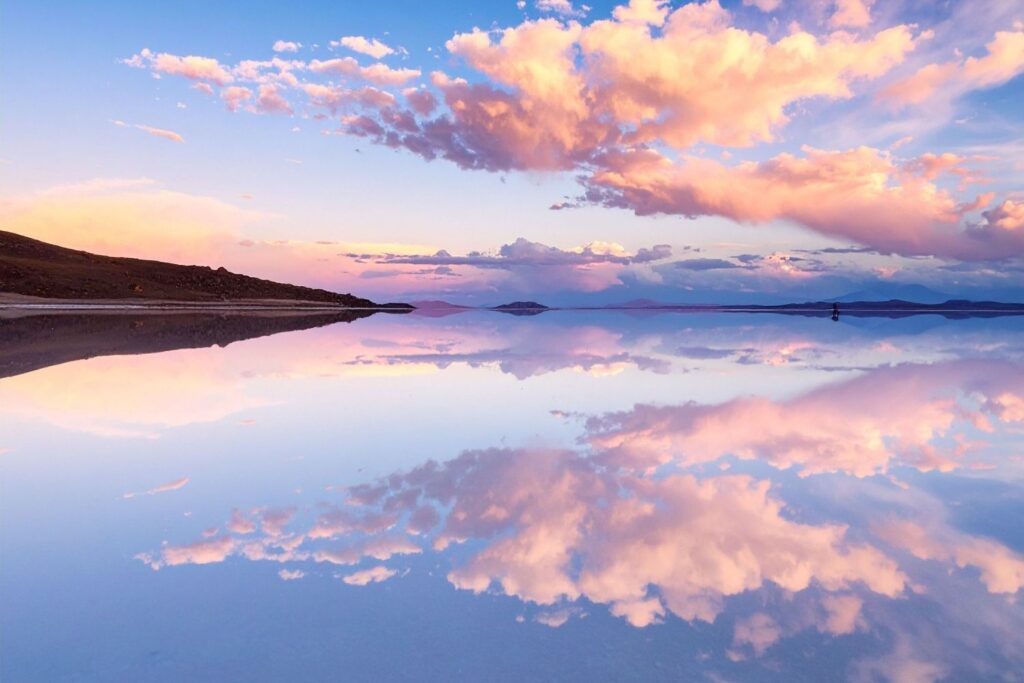
Salar de Uyuni in Bolivia forms the world’s largest salt flat, stretching across the Altiplano. During dry months it appears cracked and blindingly white.
After seasonal rains, a thin layer of water transforms the surface into a perfect reflective plane. Sky and ground merge seamlessly. Beneath the crust lies mineral rich brine containing vast lithium reserves. Evaporation cycles create repeating geometric salt patterns. With horizons erased, travelers lose orientation entirely. Vehicles seem to float. Footsteps vanish. The flatness overwhelms human depth perception and replaces it with disorienting symmetry.
9. Waitomo Caves glow with living light.

In New Zealand’s Waitomo caves, thousands of glowworms emit soft blue light across dark ceilings. Reflections shimmer in underground streams below.
These insects use bioluminescence to attract prey, not to illuminate caverns. Still, the effect resembles a star filled sky. The darkness amplifies the glow, erasing sense of enclosure. Silence deepens the illusion. Visitors often speak in whispers without realizing why. The biological process feels cosmic. What appears decorative is purely functional, yet the result transforms ordinary limestone chambers into environments that feel detached from surface geography and time.
10. Devils Marbles balance with unsettling ease.
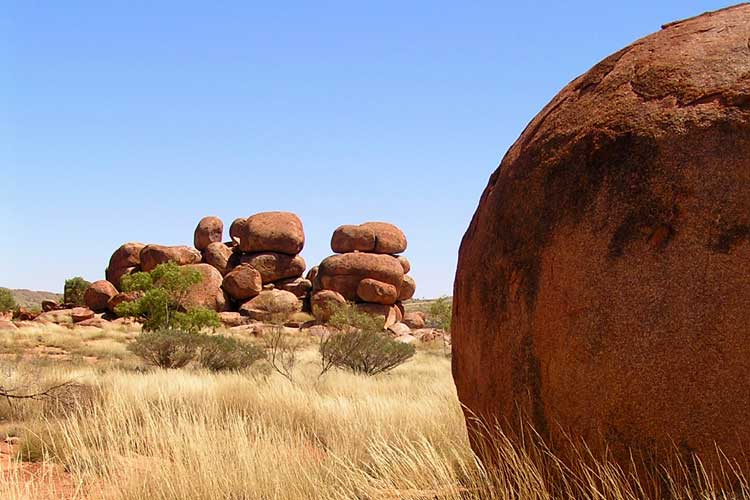
At Devils Marbles in Australia’s Northern Territory, rounded granite stones rest atop one another in improbable positions. Some touch at points no wider than a hand.
Granite formed underground and fractured as it cooled. Over time erosion removed surrounding material, exposing smooth boulders. Gravity gradually settled them into balanced arrangements. Though they appear unstable, many have remained unchanged for thousands of years. Wind and temperature shifts rarely disturb them. The formations challenge instinctive expectations about weight and balance, creating tension between visual fragility and geological permanence.
11. Antelope Canyon twists like folded fabric.
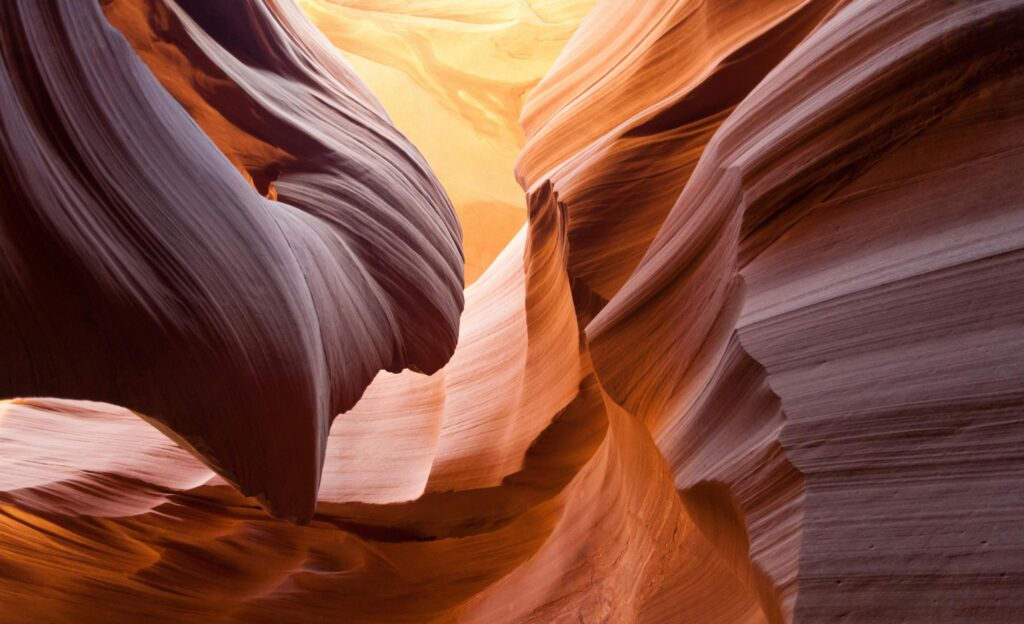
Antelope Canyon in northern Arizona curves through sandstone in smooth flowing waves. The narrow passage shifts color as sunlight filters from above.
Flash floods carved the canyon suddenly and repeatedly. Water carrying sand scoured rock surfaces, smoothing edges instead of fracturing them. Each flood reshaped curves incrementally. Light enters through narrow openings, creating shifting bands of orange red and purple. Movement feels implied even in stillness. The canyon appears soft despite its hardness. Visitors sense motion frozen mid flow, as if the walls might continue folding once water returns.
12. Kelimutu crater lakes change color unpredictably.

On Indonesia’s Mount Kelimutu, three crater lakes sit side by side yet rarely share the same color. One may appear turquoise while another turns black.
Volcanic gases rise through lake beds altering mineral content and acidity. Chemical changes shift light absorption, transforming colors unpredictably. Transitions can occur within months. Local traditions interpret changes spiritually. Scientific monitoring tracks gas composition instead. Despite analysis, timing remains uncertain. The lakes resist stable classification. Their constant transformation unsettles expectations of consistency in nature and highlights how dynamic chemistry can reshape appearance without altering form.
13. The Wave freezes sandstone in motion.

At Coyote Buttes along the Arizona Utah border, layered sandstone curves into smooth arcs known as The Wave. Colors ripple across the surface from cream to rust.
Wind and rain eroded softer layers while harder bands resisted. Over time this selective erosion created flowing shapes. Access is tightly limited to protect fragile rock. Standing there suggests movement paused rather than completed. Lines guide the eye continuously without beginning or end. The stone seems caught between solid and fluid states, challenging assumptions about how landscapes should behave under gravity and time.