
Subtle cues expose what horses truly notice.

Horses watch people far more closely than most riders realize. Long before a human reaches out a hand or tightens a lead rope, the horse has already formed an impression through small cues we barely register. Researchers studying herd communication found that horses assess intent, energy and reliability by observing signals so faint they often pass as background noise. Those instincts were shaped by survival, and they still shape how horses decide who to trust.
1. Ear movement helps them read human intent.
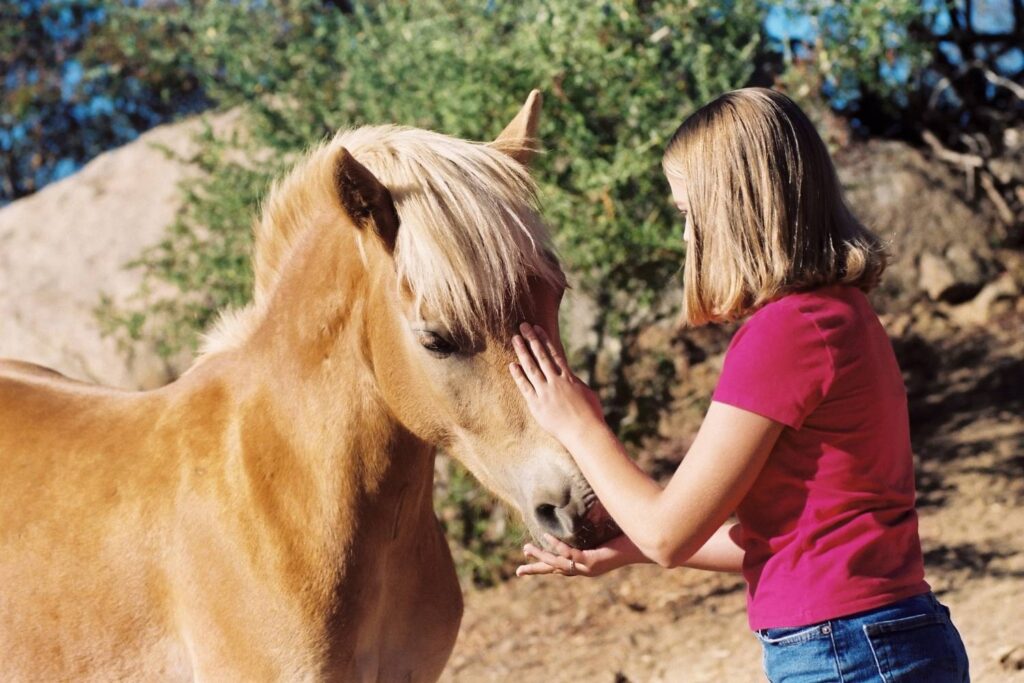
Researchers studying equine perception noted that horses track ear direction to interpret emotional tone, and they apply the same instinct to humans who approach them, as reported by National Geographic. When a person walks toward a horse with neutral body language but inconsistent focus, the animal detects the mismatch and hesitates. The ears flick rapidly as the horse gathers information about the person’s confidence and direction.
This behavior creates a quick internal assessment. Horses rely on the tiny alignment of a human’s gaze and posture to decide if the interaction will feel predictable. Even slight tension in the person’s shoulders can change the horse’s interpretation and slow trust building.
2. Breathing patterns reveal how calm a person truly is.

Studies on equine stress responses have shown that horses synchronize with human breathing rhythms during close contact, as stated by Smithsonian Magazine. If a rider’s breathing becomes shallow or erratic, the horse often mirrors the shift before the person realizes they changed. Horses evolved in environments where the breath of herd mates signaled danger or safety.
When a human’s breath steadies, horses respond with lowered heads and slower blinking. The animal interprets calm breathing as a sign that the person is grounded. This subtle exchange quickly informs the horse whether the human can be trusted during unexpected moments.
3. Horses monitor microexpressions to detect emotional honesty.

Behavioral researchers observed that horses react more strongly to genuine emotional expressions than forced ones, as discovered by BBC News. A tense jaw or slight narrowing of the eyes signals internal conflict, prompting the horse to remain guarded. Even if the person speaks gently, the microexpressions provide more accurate data for the horse.
These reactions help the horse differentiate between stable handlers and individuals masking uncertainty. When the person’s face relaxes naturally, the horse shifts its weight and softens its eye, sensing the change instantly. The animal looks for congruence between expression and action.
4. Subtle steps tell them if a human is confident.
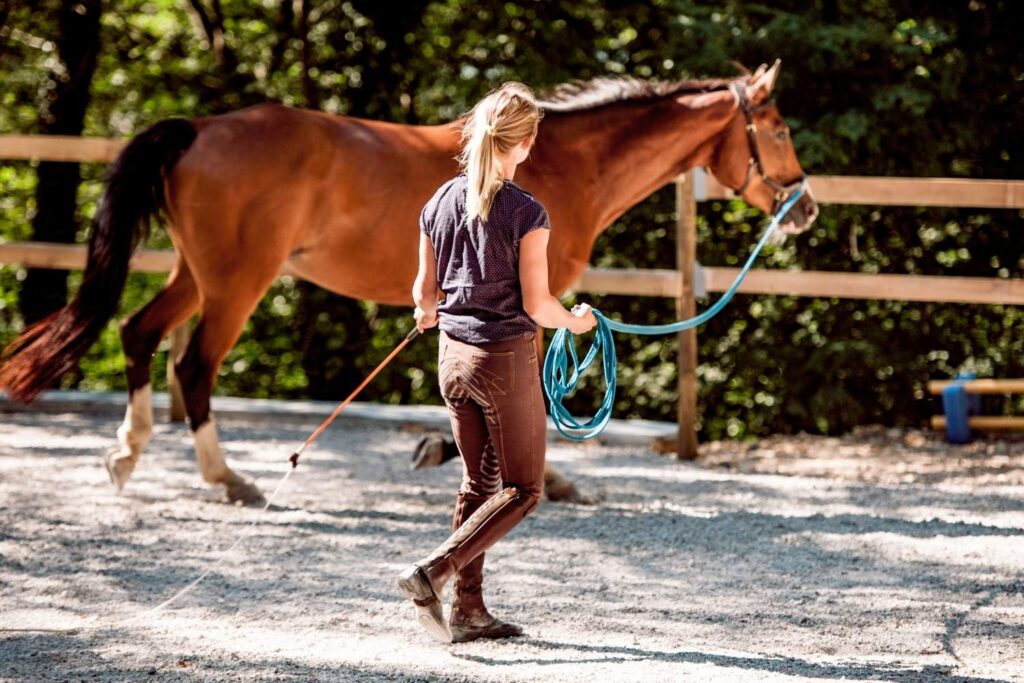
Horses study the rhythm of a person’s walk long before contact. A slow, uneven approach reads as uncertainty, while a steady pace signals reliability. These interpretations come from life in herds, where gait predicts intent. Horses use that instinct to gauge whether the approaching person will make abrupt decisions or handle situations with consistency.
Once the horse decides the person walks with clarity, it adjusts its stance. The animal becomes more willing to follow and less likely to brace. Footwork, even more than voice, communicates the human’s internal balance.
5. Stillness becomes a tool for judging pressure.

Horses sense when a person uses stillness deliberately versus when they freeze from uncertainty. The horse detects tension through the person’s center of gravity and instantly forms an assessment. Experienced handlers use calm stillness to show they are neither rushed nor reactive.
A horse treats controlled stillness as a sign of leadership. It encourages the animal to release tension because the person’s posture offers stability. Sudden immobility, however, makes the horse tighten, interpreting it as hesitation.
6. Touch reveals how consistent a human’s intentions are.
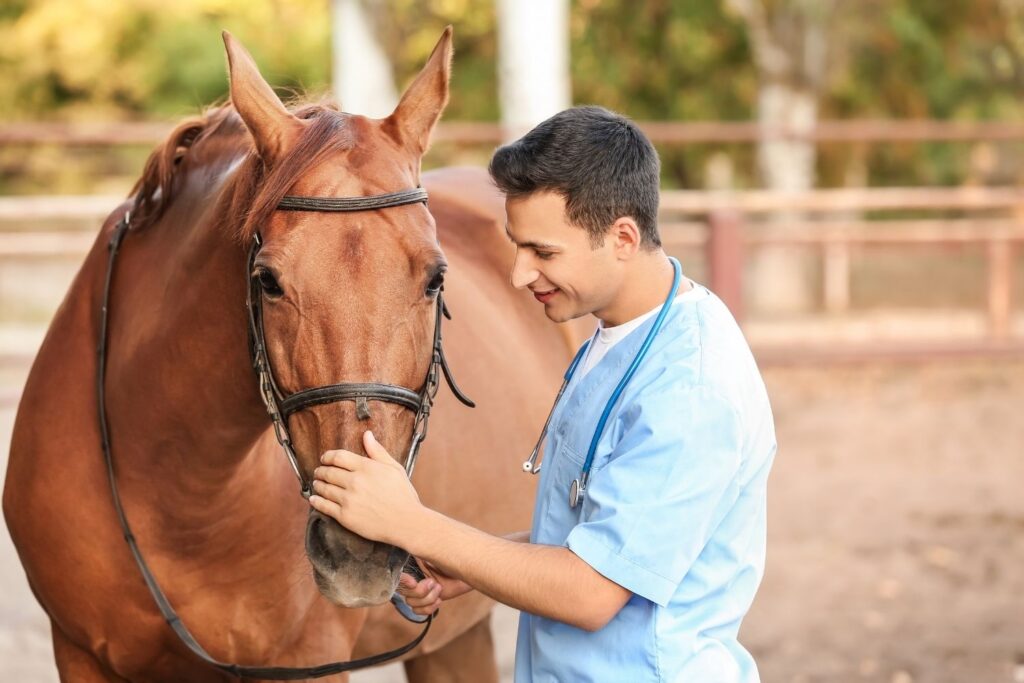
When a person makes contact, the horse measures pressure, timing and release. Horses value consistency more than strength, so unpredictable touch signals unreliability. A steady hand helps the horse understand boundaries without confusion.
As the person continues to touch the horse with rhythm and intention, the animal learns what to expect. This mutual understanding shapes trust quickly. Touch becomes a language that reflects the handler’s internal state.
7. Horses evaluate voice tone far more than specific cues.

A soft tone with even cadence signals safety, while abrupt shifts in pitch alert the horse to mixed emotions. The horse does not interpret human words so much as the patterns in vocal vibration. These vocal details reveal stress levels that handlers often miss.
When tone remains stable, the horse lowers its head or softens its stance. A wavering tone creates uncertainty that takes time to resolve. Horses scan for vocal steadiness as proof that the person can stay composed.
8. Their distance choice shows what they sense in us.
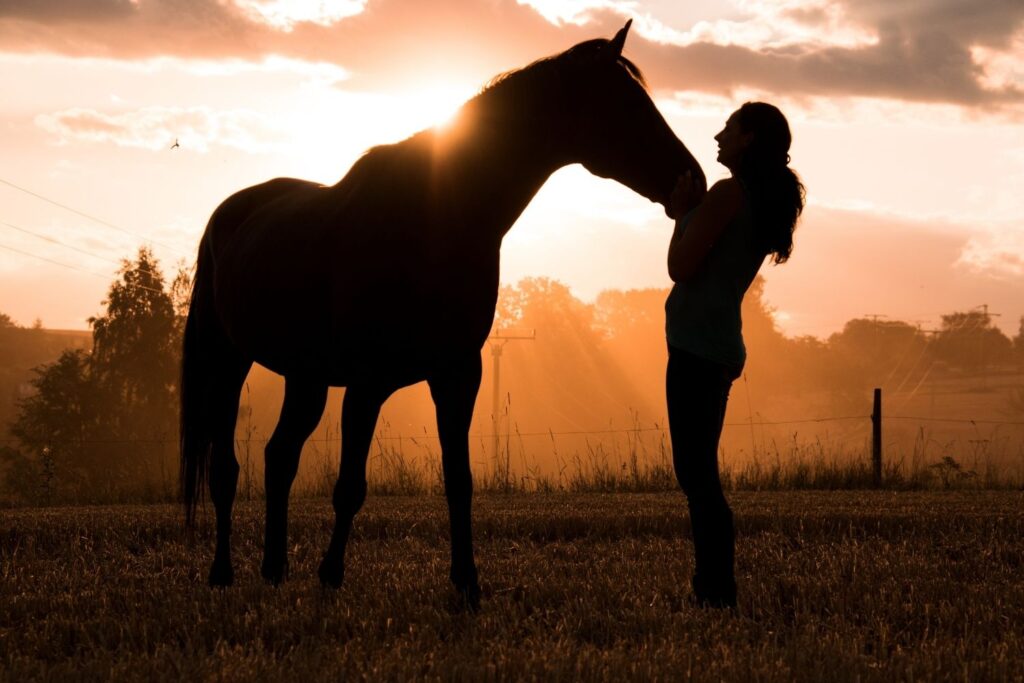
Horses constantly adjust their distance to the person approaching them. A step back conveys caution, while a step forward signals curiosity and willingness. These shifts are not arbitrary. They represent a calibrated reading of human energy and intention.
If the person slows down and softens their focus, the horse often moves closer. The adjustment reflects the animal’s comfort with the person’s emotional state. Distance becomes one of the clearest measures of how a horse judges character.
9. Weight shifts help them identify human predictability.
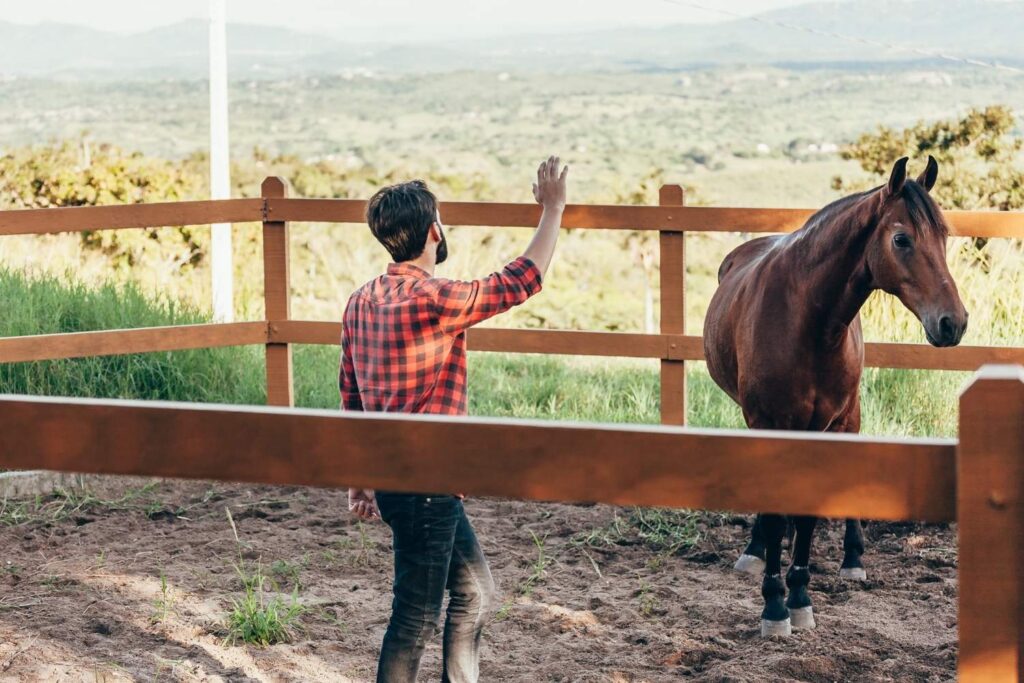
Horses sense tiny changes in how a person distributes weight. Even on the ground, a shift to one side reveals anticipation or hesitation. Horses evolved to detect subtle posture changes within their herd, and the same instinct applies to humans.
A balanced stance reassures the horse that the person is aware and steady. Uneven or abrupt shifts tell the horse the human may respond unpredictably. These judgments influence how willingly the horse follows commands.
10. Eye softness tells them who they can trust.

Horses recognize when a human’s eyes remain sharp and fixed versus relaxed and observing. A soft eye signals calm intention. A hard stare signals tension or dominance. Horses learned long ago that predators stare directly and intensely, so they pay attention to this trait immediately.
When a person’s gaze softens, the horse mirrors the behavior. Its head lowers and muscles relax. This creates a loop of trust shaped by something as simple as how the human looks at the world.