
Their senses build maps when light disappears.

Horses often move confidently through fields and barns long after the sun slips away. Riders and caretakers describe watching them pick their way across uneven ground with a steadiness that feels almost supernatural. Yet the explanation is rooted in biology refined over thousands of years. Every sense a horse carries becomes sharper in darkness, allowing it to assemble a moving landscape from details humans rarely detect. What looks effortless is actually a coordinated sensory system working in real time.
1. Their night vision adapts quickly to low light changes.
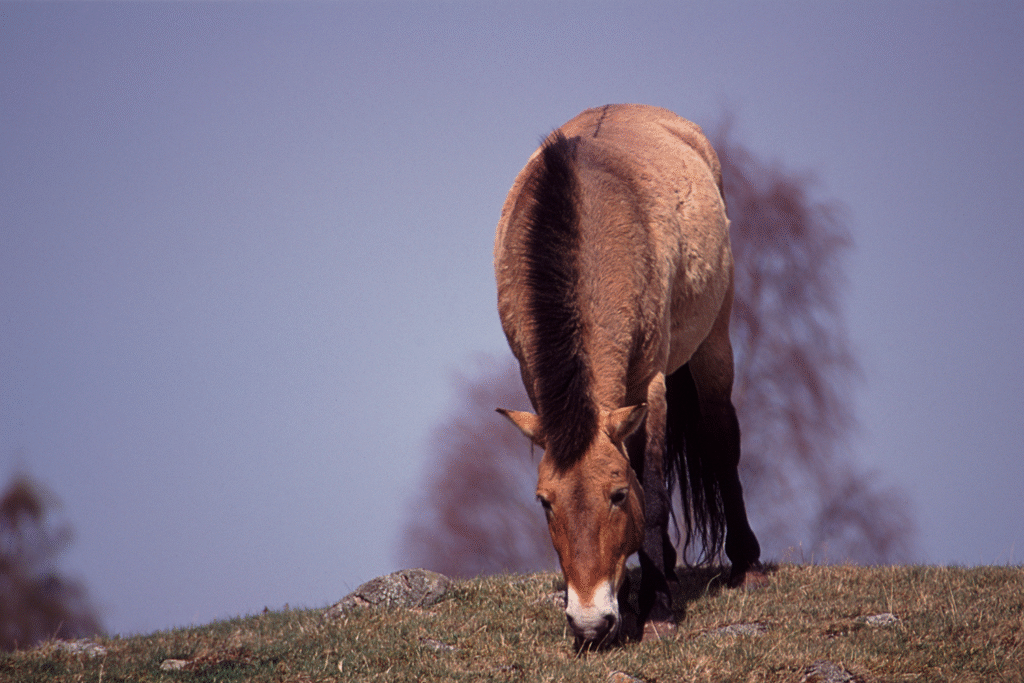
Horses evolved as prey animals on open plains, and their eyes are built to absorb every trace of ambient light. Their large pupils and reflective tapetum layer give them impressive low light sensitivity described in veterinary ocular studies, as reported by the American Association of Equine Practitioners. Even when the environment looks pitch black to humans, horses extract enough visual contrast to map shapes and movement.
This adaptation allows them to identify obstacles, slopes and herd members long after daylight fades. While the view is not sharp, it is detailed enough to guide steady movement. Their visual system shifts into a mode optimized for safety rather than clarity, helping them navigate with confidence.
2. Environmental memory gives horses a mental map of terrain.
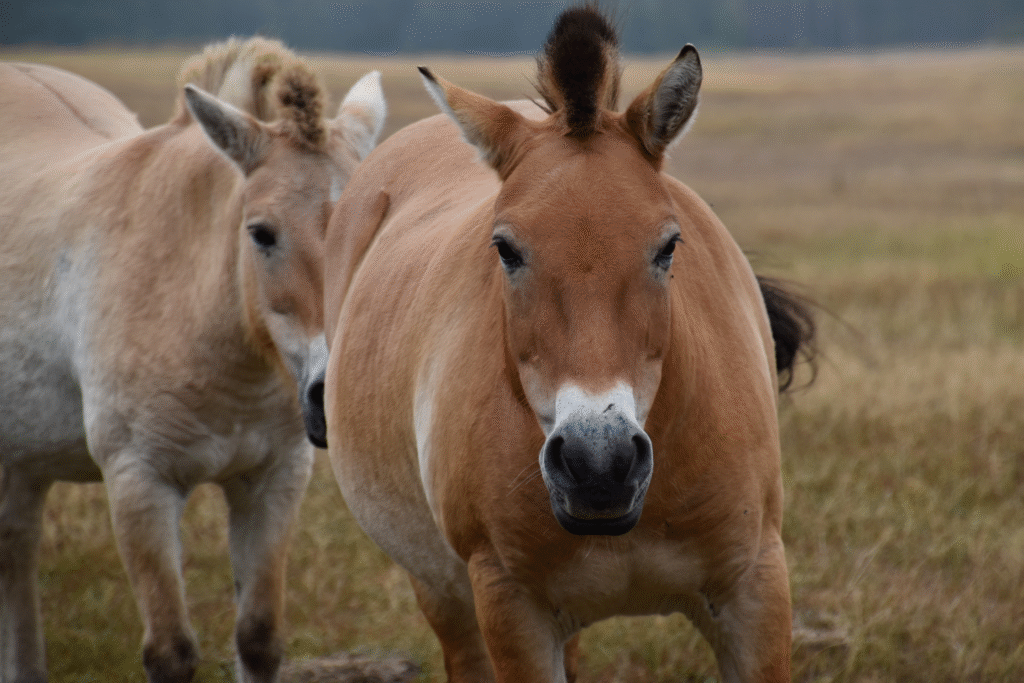
Researchers studying equine cognition have documented strong spatial memory abilities according to the University of Pennsylvania School of Veterinary Medicine. Horses memorize distances, ground textures and familiar paths during daylight, then rely on these memories at night. Once a route becomes embedded, they recall footing patterns with surprising precision.
This memory allows them to walk trails or pasture edges with almost no hesitation. Even when conditions change slightly, they adjust based on what they expect to encounter. That internal map becomes a guide when visual cues fade, reducing the need for constant sensory confirmation.
3. Vibrational sensitivity helps them detect ground changes instantly.

Studies examining equine hoof mechanics note that horses sense subtle shifts in ground density through specialized receptors in their lower limbs, as stated by the University of Kentucky’s Gluck Equine Research Center. These receptors interpret vibration patterns that reveal whether the surface ahead is soft, hard, unstable or hollow.
When visibility drops, this vibrational feedback becomes crucial. Horses adjust stride length, weight distribution and speed based on how the ground transmits energy back through their legs. This system gives them a real time impression of terrain changes even before they encounter a risk.
4. Their hearing expands awareness beyond visible space.
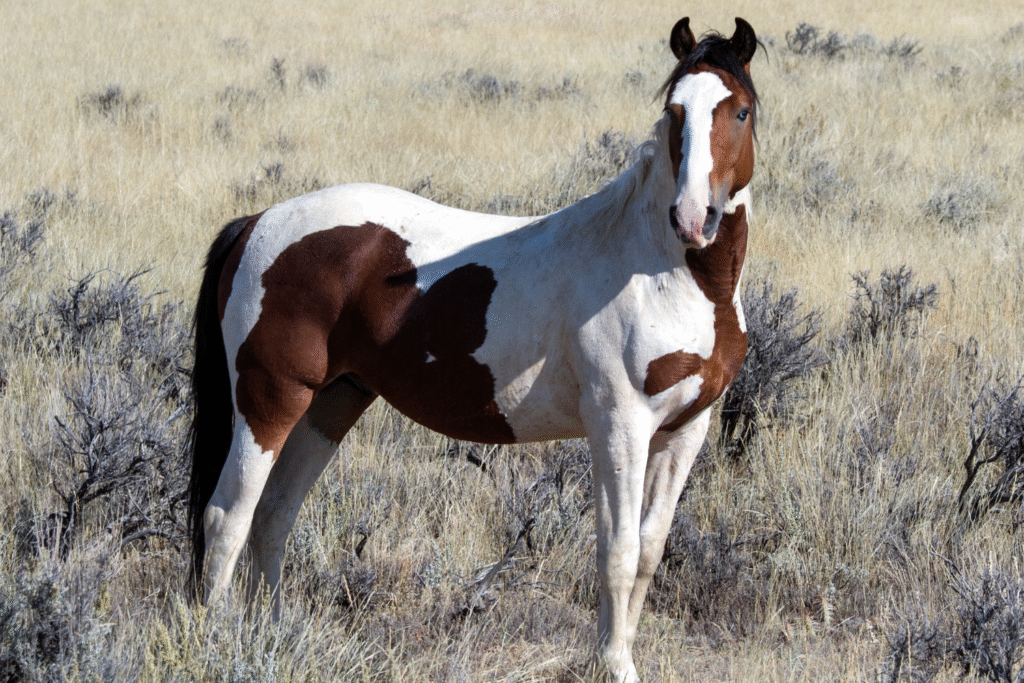
Horses rotate their ears independently to pinpoint sound sources across wide arcs. In darkness, sound becomes a primary navigation tool. They listen for wind patterns, hoof impacts from herd mates and distant movement that hints at obstacles or open areas.
These layered sound cues help them orient their bodies toward safer routes. A single shift in echo or footfall tells them whether a path stays level or begins to slope. Even subtle acoustics in enclosed barns guide their steps.
5. Their sense of smell identifies location cues others miss.
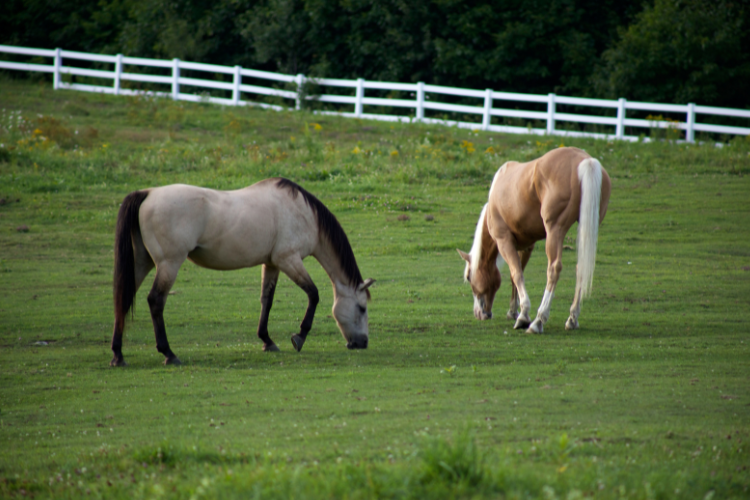
Horses detect scent traces from grass, soil, water and even fence posts. These olfactory signals help them confirm whether they are near familiar boundaries or approaching new terrain. In wild herds, smell marks safe travel corridors used repeatedly over generations.
At night, scent recognition supplements fading visual details. Horses follow familiar smells with confidence, using them like invisible markers placed throughout their environment. Each cue reinforces the mental map built earlier in the day.
6. Herd movement creates shared navigation in darkness.

When horses travel as a group, they rely on collective movement rather than individual certainty. The most confident or experienced horse often sets the pace, and others pick up on subtle shifts in body language and hoof rhythm. This shared awareness acts like a distributed guidance system.
If one horse senses uneven ground or an obstacle, the herd adjusts almost instantly. This collective intelligence becomes especially powerful in open areas where individual senses may be limited by darkness or distance.
7. Whiskers provide tactile details that support navigation.
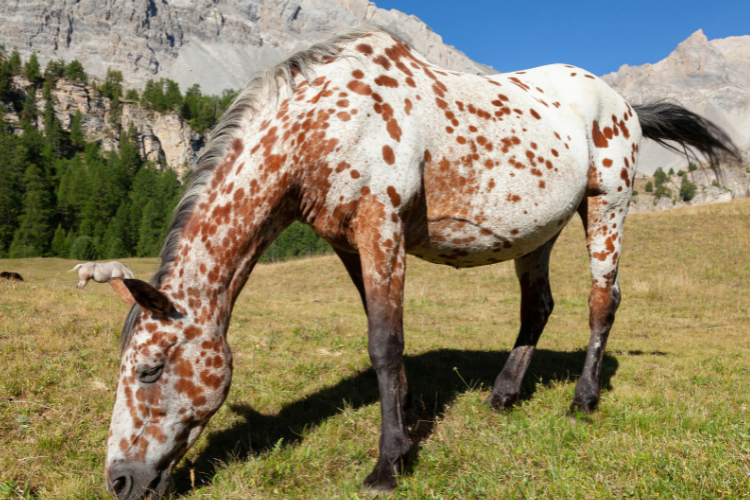
The whiskers around a horse’s muzzle detect texture, pressure and proximity to objects. When they lower their heads, they gather tactile information from grass height, fence rails or the edges of pathways. These whiskers act as early warning devices.
This tactile scanning helps them identify safe footing and avoid low obstacles. Even in complete darkness, whiskers guide their approach toward feed buckets, water troughs and shelter entrances with remarkable accuracy.
8. Body orientation shifts when they sense magnetic cues.
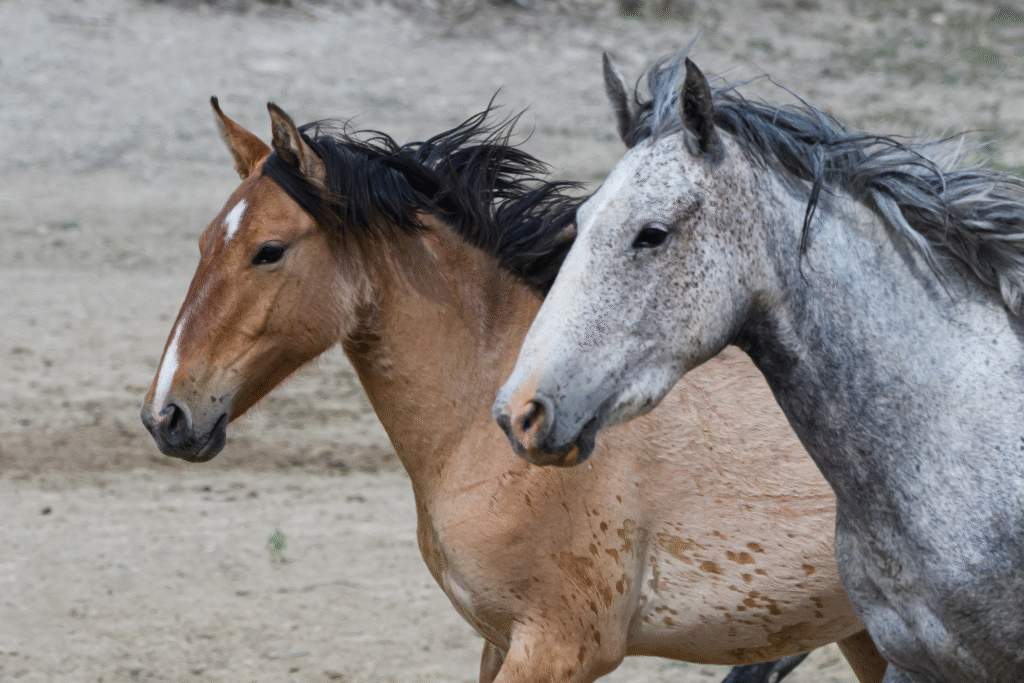
Some studies suggest horses may perceive subtle magnetic field variations, similar to other migratory or grazing animals. While still an emerging area of research, many experts believe these cues help animals maintain direction when visual landmarks disappear.
In darkness, this directional sense appears to influence how horses drift toward familiar areas of a pasture or barn. Even without clear evidence, behavioral patterns suggest an innate ability to orient themselves more reliably than humans could under similar conditions.
9. Slow, deliberate movement protects them from missteps.

Horses instinctively shorten their stride when visibility drops. Their weight shifts back slightly, lowering the risk of stumbling. This controlled gait gives them more time to interpret sensory signals before committing to each step.
This cautious pacing may look calm, but it reflects constant calculations happening through every limb and sense. By reducing speed, they maximize the information flowing from sight, sound and touch, allowing them to remain steady even without clear visual landmarks.