
A strange scientific argument refuses to stay buried.
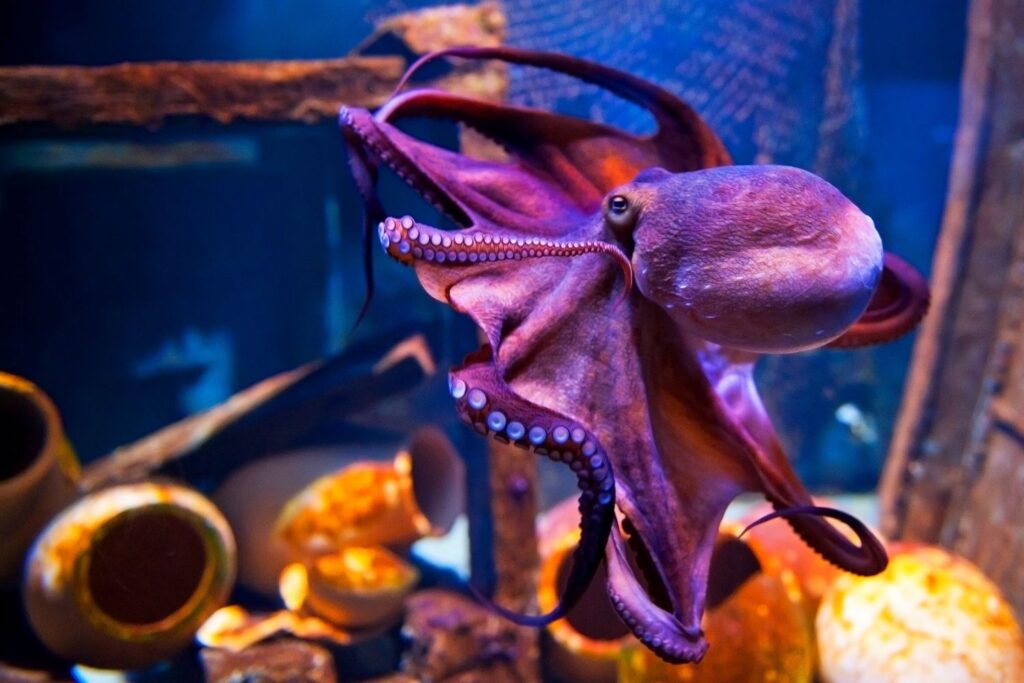
The idea sounds like late night internet bait, yet it started inside peer reviewed journals. In 2018, a small group of scientists suggested octopuses might not fully belong to Earth. That single claim detonated across science media, Reddit threads, and academic rebuttals. What followed was not consensus, but a tug of war between genetics, evolution, and cosmic possibility. If you’ve ever stared into an octopus eye and felt unsettled, this story explains why some researchers did too.
1. The alien octopus theory began inside a real journal.
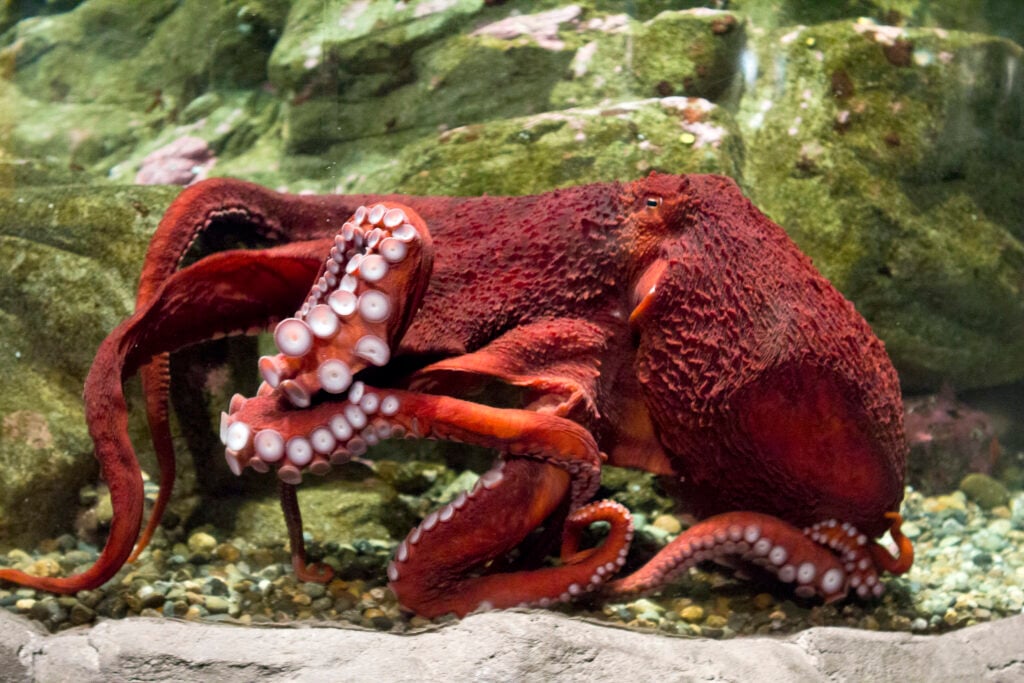
In early 2018, a paper published in Progress in Biophysics and Molecular Biology proposed that complex life on Earth may have been seeded from space. Octopuses appeared as a central example, not because they arrived in a spaceship, but because their biology seemed strangely abrupt in evolutionary timelines. According to the authors, cephalopods appeared with advanced nervous systems, camera like eyes, and sophisticated behaviors that felt biologically premature.
The controversy erupted because this was not a fringe blog post. As stated by the journal itself, the paper passed editorial review, even though many scientists strongly disagreed. That legitimacy gave the idea oxygen. Critics quickly responded, but by then the headline had escaped into the public imagination, according to reporting summarized by Nature and Science focused outlets.
2. Their genetics genuinely surprised evolutionary biologists.

Octopus DNA is weird, even by animal standards. When the octopus genome was first mapped in 2015, researchers discovered massive expansions in gene families related to neural development and adaptability. These genes were unlike those found in most other animals, raising eyebrows long before alien theories entered the chat.
Midway through the 2018 paper, the authors pointed to this genetic strangeness as circumstantial evidence, arguing that such complexity seemed to arrive without enough transitional fossils. Many scientists pushed back hard, emphasizing that rapid evolution does not require extraterrestrial origins, as stated by evolutionary biologists responding in the same journal. Still, the genetic data remains legitimately unusual, which is why the argument refuses to fully disappear.
3. Octopus intelligence fueled the speculation further.
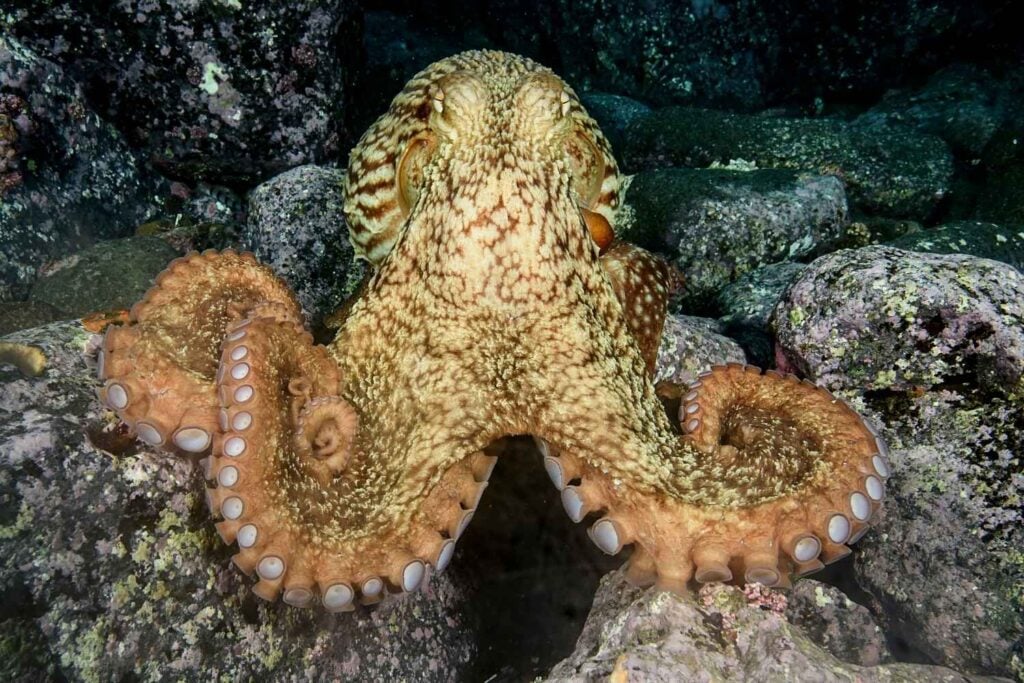
Octopuses solve puzzles, escape enclosures, use tools, and display what looks like curiosity. For animals without a centralized brain like ours, this level of cognition feels unsettling. The 2018 paper leaned heavily on this, suggesting intelligence evolved too quickly and too differently from vertebrates.
Opponents countered that intelligence evolves wherever ecological pressure rewards it. According to marine cognition research discussed by the University of Chicago and Monterey Bay Aquarium scientists, octopus intelligence reflects survival demands, not alien inheritance. Still, the decentralized nervous system, where arms can think independently, remains biologically rare. That uniqueness keeps the debate emotionally charged even when the science leans terrestrial.
4. Panspermia is old science dressed in new drama.

The alien octopus idea rides on panspermia, the hypothesis that life’s building blocks travel between planets on meteors or comets. This concept dates back over a century and has serious scientific supporters, including Nobel laureates. What changed in 2018 was applying it to a specific animal.
Panspermia does not claim octopuses dropped fully formed into the ocean. Instead, it suggests genetic material or viruses could have influenced early evolution. That subtlety was mostly lost online. Most scientists accept panspermia as plausible for microbes, not for complex animals with clear evolutionary relatives.
5. Fossil gaps are common, not cosmic proof.

One major argument for alien origins was the perceived sudden appearance of advanced cephalopods in the fossil record. However, paleontology is full of gaps, especially for soft bodied animals like octopuses that fossilize poorly.
Squid, cuttlefish, and nautiluses share common ancestry with octopuses, supported by anatomy and genetics. Transitional forms likely existed but left little trace. Fossil silence does not imply extraterrestrial intervention, it implies preservation bias. This is a boring explanation, but science often is.
6. Evolutionary speed can look magical without being mysterious.
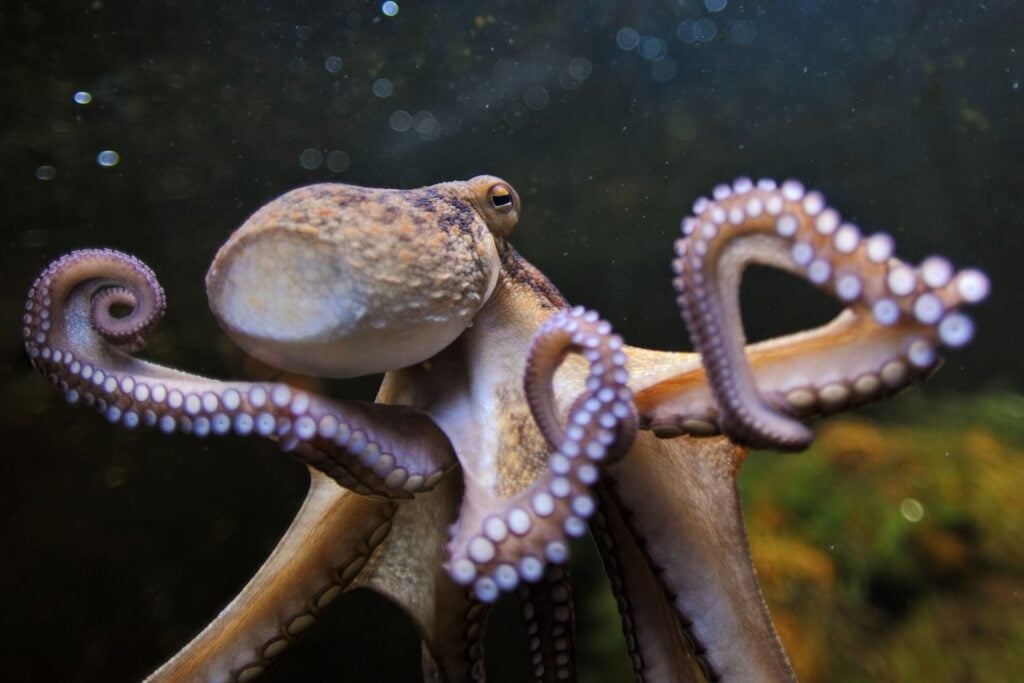
Evolution does not move at a steady pace. Environmental pressure, mass extinctions, and genetic flexibility can accelerate change dramatically. Octopuses emerged after the Cambrian explosion, a period famous for rapid biological innovation.
Their short lifespans and high mutation rates allow fast adaptation. Over millions of years, this can produce dramatic results. What looks like a leap is often a sprint that happened while nobody was watching.
7. Horizontal gene transfer confused the conversation.
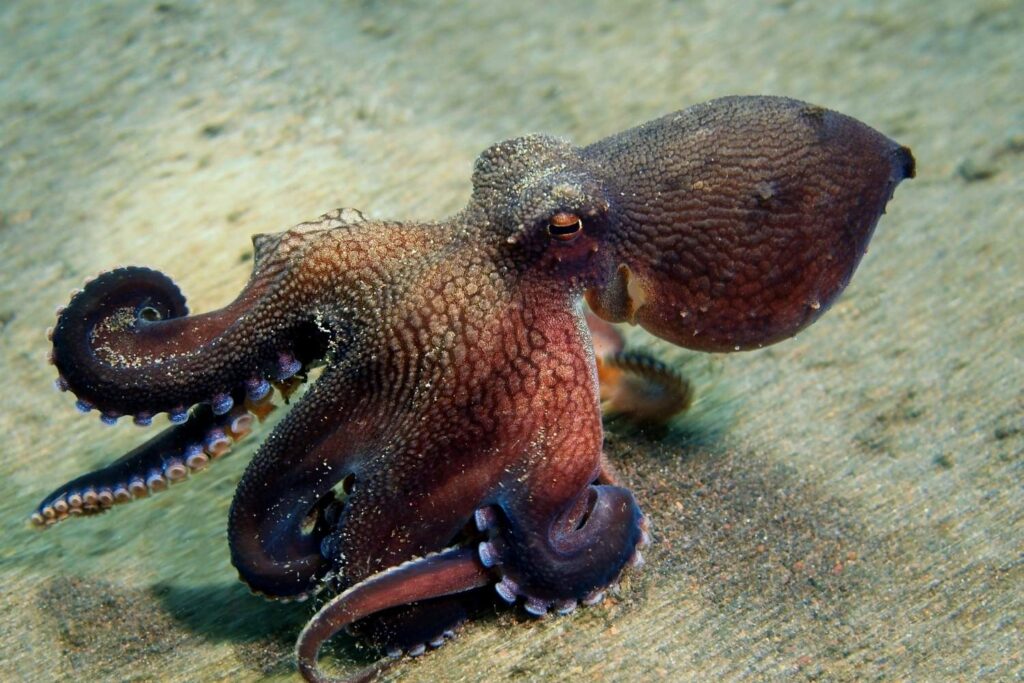
Some of the octopus genome includes genes that appear borrowed from other organisms. This process, called horizontal gene transfer, is common in bacteria and increasingly documented in animals.
Viruses can shuttle genes between species, creating sudden biological novelty. This mechanism explains much of the genetic weirdness without invoking space. Ironically, viral transfer strengthens Earth based explanations while sounding just exotic enough to fuel alien speculation.
8. Scientists criticized the paper’s framing, not curiosity.

Many researchers were frustrated not by the question, but by how confidently the 2018 paper presented speculation. Science thrives on asking strange questions, but it demands proportional evidence.
Several biologists argued the paper blurred hypothesis and conclusion. That critique matters because public trust erodes when speculative ideas feel overstated. The backlash was about rigor, not closed mindedness.
9. Media amplification turned nuance into spectacle.

Headlines stripped away caution and replaced it with certainty. Social platforms rewarded the wildest interpretation. Suddenly, octopuses were hiding in plain sight, watching us.
Most scientists involved never claimed that. The original argument was technical and conditional. Once the idea escaped academia, it mutated faster than any genome.
10. No physical evidence supports extraterrestrial origin.

There are no isotopic anomalies, no non Earth amino acid patterns, no foreign biochemistry in octopuses. Their cells operate using the same molecular rules as all known life.
Extraordinary claims require extraordinary evidence. In this case, the evidence remains philosophical, not physical. Until something measurable changes, Earth remains the most likely birthplace.
11. The theory survives because octopuses feel uncanny.
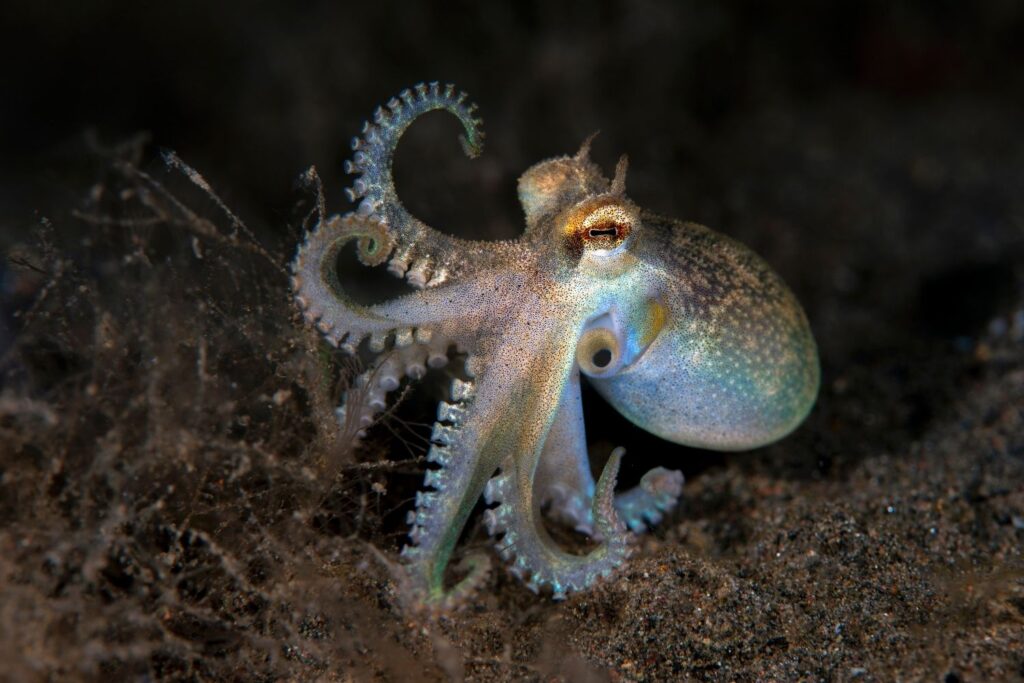
Octopuses look at us differently. Their movements feel intentional. Their intelligence feels sideways. That emotional response matters.
Humans are pattern seeking creatures. When something breaks our mental categories, we reach for cosmic explanations. The alien octopus theory persists not because it is proven, but because it captures that discomfort. Science says they evolved here. Our instincts are still catching up.