New Research Raises Doubts About Lucy’s Role In Human Ancestry

A familiar fossil no longer holds the center.

©Image license via Wikimedia Commons/Neanderthal-Museum, Mettmann, image of Lucy and girl

For decades, Lucy stood as a steady anchor in the human origin story. Discovered in Ethiopia in 1974, her skeleton shaped textbooks, museum halls, and classroom diagrams. She appeared to offer a clean bridge between apes and humans. That clarity is now softening. New fossils, refined dating methods, and deeper anatomical analysis suggest evolution was messier and more crowded than once believed. Lucy remains important, but her position may no longer be singular or central in the story of human ancestry.

Read more

How Spiders Build Perfect Webs With Math-Like Precision

The hidden calculations behind every silken thread.

©Image license via Canva

Spiders spin webs that appear effortless, yet every thread reflects precise spatial decisions. Across forests, fields, and city corners, they measure distance, tension, and angle without rulers or formulas. Biologists watching orb weavers at dawn see patterns repeat with eerie accuracy. What looks instinctive is actually a stepwise process refined by evolution and constant sensory feedback over long observed times.

Read more

12 Unsettling Ways Crows Are Using Their Intelligence

What scientists are quietly noticing about crows.

©ovenbird1 Image license via Flickr

Across cities, farms, and forests, crows are revealing minds that adapt faster than landscapes change. Scientists tracking their behavior keep finding strategies once thought uniquely human. These birds remember faces, plan ahead, and exploit our routines with unsettling precision. Watching them work feels less like observing wildlife and more like encountering neighbors who quietly understand the rules we live by.

Read more

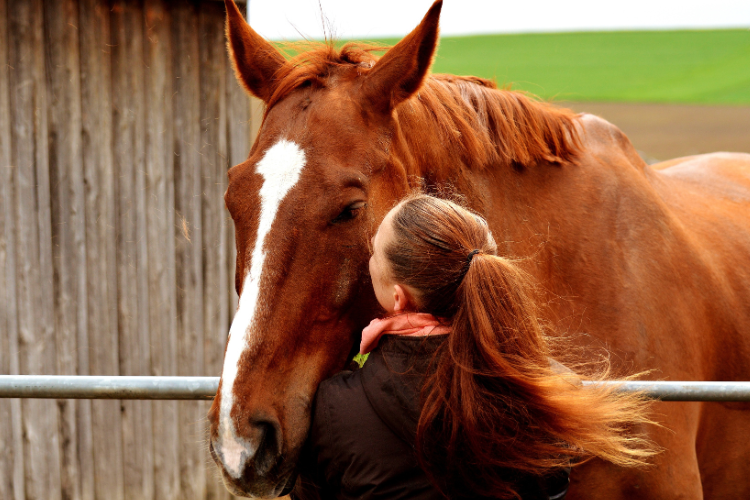
How Horses Sense Human Emotions Long Before We Speak

The quiet signals horses notice before words.

©Image license via Canva

Horses read us constantly, long before words form. In barns, arenas, and pastures, they track tension, breathing, posture, and intention with quiet precision. Researchers now know horses adjust behavior based on subtle human cues within seconds. What feels like intuition is layered biology, shaped by prey survival, social living, and thousands of years alongside people across modern landscapes everywhere today.

Read more

11 Places In The Wild Where Humans Are Basically Prey

Where the food chain stops favoring people.

©Image license via PetsnPals/ChatGPT

There are places on Earth where being human offers no advantage at all. In these regions, strength, intelligence, and tools fade against instinct, speed, and terrain. Predators do not hesitate, and landscapes do not forgive mistakes. People enter briefly, often overconfident, while the wild operates continuously. Here, danger is not rare or dramatic, it is routine. Survival depends on awareness, restraint, and knowing when presence alone makes you vulnerable. In such places, hesitation invites consequences that unfold faster than reaction.

Read more