12 Endangered Species That Might Not Survive the Next Decade And How We Are Helping

Some of the rarest animals on Earth are down to just hundreds, or dozens, and the clock is officially ticking.

©Image license via Canva

When we talk about endangered species, the usual image is a slow decline. But for some animals, the pace is anything but slow. Habitat is vanishing overnight. Temperatures are rising faster than they can adapt. Illegal trade, disease, and invasive species are pressing in from every side. Some of these animals are so close to the edge that one storm, one wildfire, one policy shift could tip the scales completely.

Still, not every story is doom. Around the world, people are stepping in with small, scrappy, sometimes wildly creative solutions. From last-ditch breeding efforts to Indigenous-led land protections, the work is happening. The question is whether it will be enough, and whether we’re doing it fast enough. These are the species balancing on that edge right now.

Read more

Why Cats Stare at Walls And 9 Other Things They See That You Don’t

Their vision picks up on details, movements, and signals that slide right past our human limits.

©Image license via Canva

It starts innocently. You glance over and your cat is just frozen, laser-focused on a patch of wall like it’s broadcasting the secrets of the universe. Nothing’s moving. There’s no shadow, no sound, no bug. Just… blank space. But to them? It’s something. And that’s where the fun (or the paranoia) begins.

Cats aren’t just zoning out when they stare into the void. Their sensory system is tuned differently from ours and the things they pick up on—whether visual, auditory, or even electromagnetic—don’t always show up on our radar. It’s less about spookiness and more about biology, though sometimes the overlap gets weird. What looks like a blank hallway or quiet night might be anything but. Let’s break down nine more moments where your cat is tuned into something your brain didn’t even know to question.

Read more

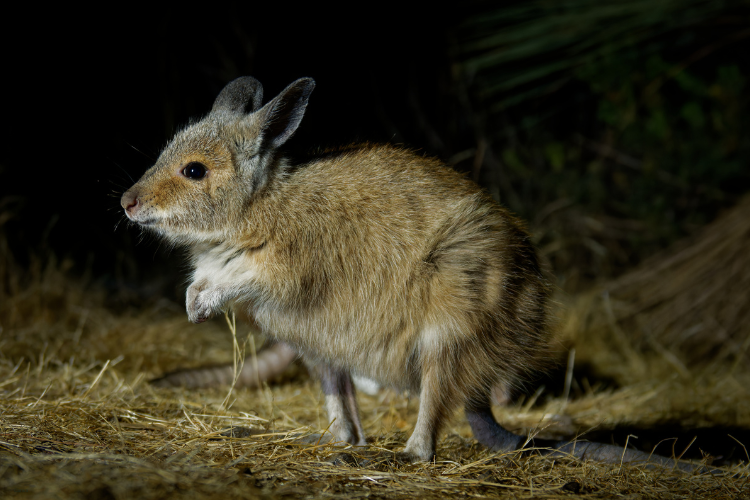
This Tiny Wallaby Disappeared, Reappeared, and Is Still on the Edge: 8 Reasons Why

It was declared extinct in the wild, but its comeback story is still in fragile territory.

©Image via Canva

For a wallaby that’s barely bigger than a rabbit, the mala, or rufous hare-wallaby, has been through enough plot twists to deserve its own documentary. It once hopped across vast stretches of central Australia, quietly thriving in the arid scrublands. But within a few decades, the species vanished from the mainland entirely, driven out by foxes, cats, and habitat loss. For a while, it seemed like the story had ended. Then scientists found surviving wild populations—barely clinging on—on remote islands off Western Australia. That’s when the comeback began.

Even now, though, this little marsupial hasn’t truly bounced back. It’s still listed as critically endangered, and every part of its recovery depends on human intervention. Reintroduction attempts are underway, but every project hinges on careful planning, intense predator control, and constant monitoring. The story of the mala is far from over. Here’s why its future is still hanging in the balance.

Read more

11 Creatures That Taste With Body Parts That Shouldn’t Be Tasting Anything

These animals don’t use their tongues to taste, they use their feet, their skin, and sometimes their wings instead.

©Image license via Shutterstock

Most of us were raised to think taste starts and ends with the tongue. Turns out that’s a very human problem. Nature had no intention of keeping flavor limited to the mouth. In fact, some animals have managed to turn their legs, arms, and even entire bodies into fully functioning taste zones. And we’re not talking about metaphorically. These creatures actually evolved taste receptors in places that feel more like a mistake than a feature, until you realize it’s pure survival.

The truth is, if you don’t have hands or utensils or even eyes that work well, tasting with your body becomes a lot more practical. And while some of these methods feel strangely efficient, others are downright unhinged. Here are 11 animals that are out here sampling the world with body parts that, frankly, should’ve been left out of the snack equation.

Read more

10 Brutal Outcomes of Putting Owls in Places They Were Never Meant to Be

Well-meaning humans keep moving owls, but the side effects are hitting entire ecosystems hard.

©Image via Canva

Owls show up in all kinds of unexpected places these days. Some are moved on purpose to control pests. Some hitch a ride on climate shifts. Others escape from captivity and quietly stake out new territories. It all sounds harmless until the ripple effects start showing up. Native species lose ground fast. Hybrid owls complicate conservation. And entire food webs shift in ways no one predicted.

This is not a theoretical problem anymore. The barred owl’s expansion into the Pacific Northwest is one of the most studied examples, but other cases are popping up across Europe and North America. Little owls introduced to Britain, barn owls released to vineyards, eagle owls reintroduced to parts of Europe — the list keeps growing. The trouble is, owls are highly efficient predators. When they land in ecosystems that were not designed to handle them, things can unravel fast. Here is what tends to happen next.

Read more