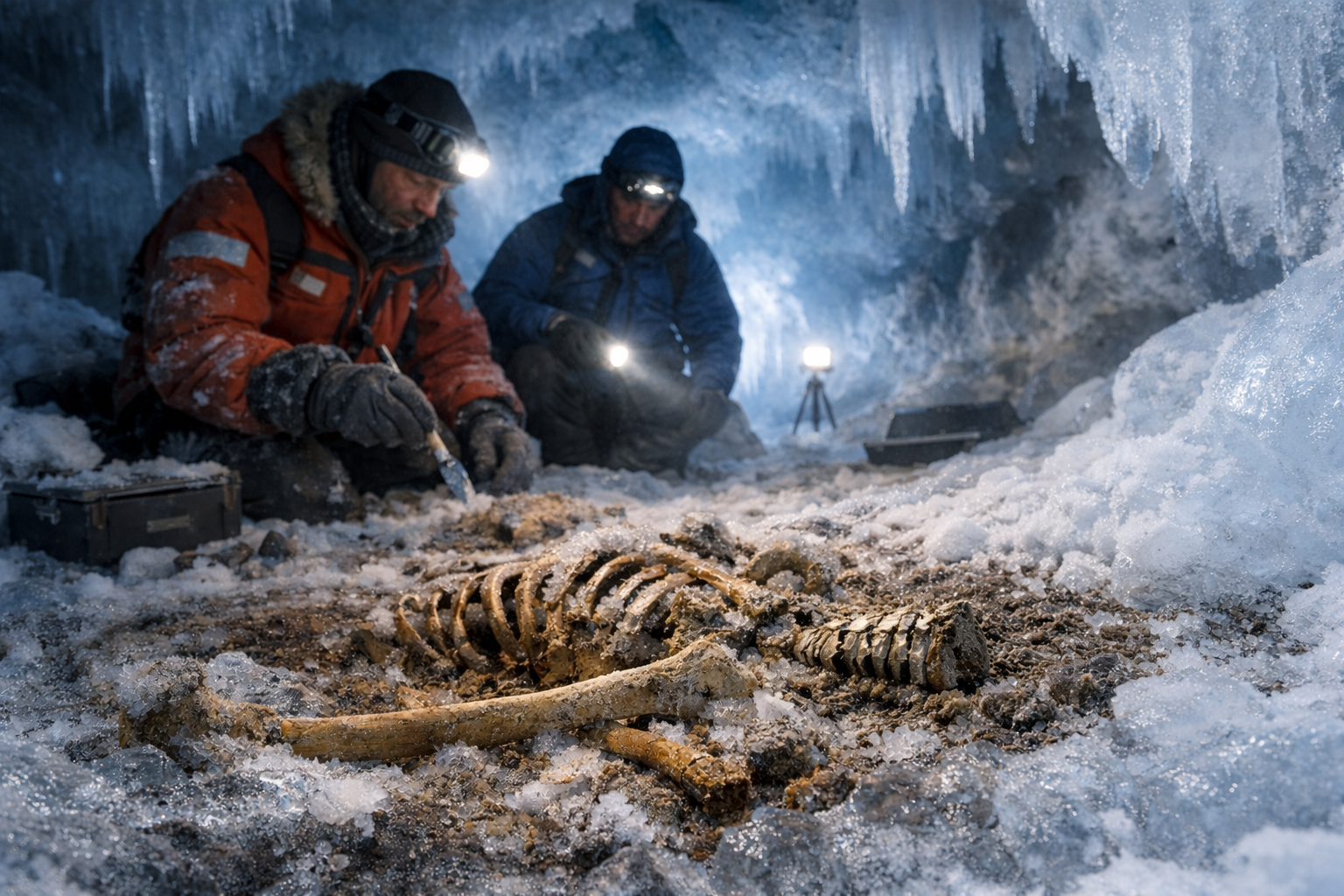
Clues hidden in plain sight are reshaping its story.
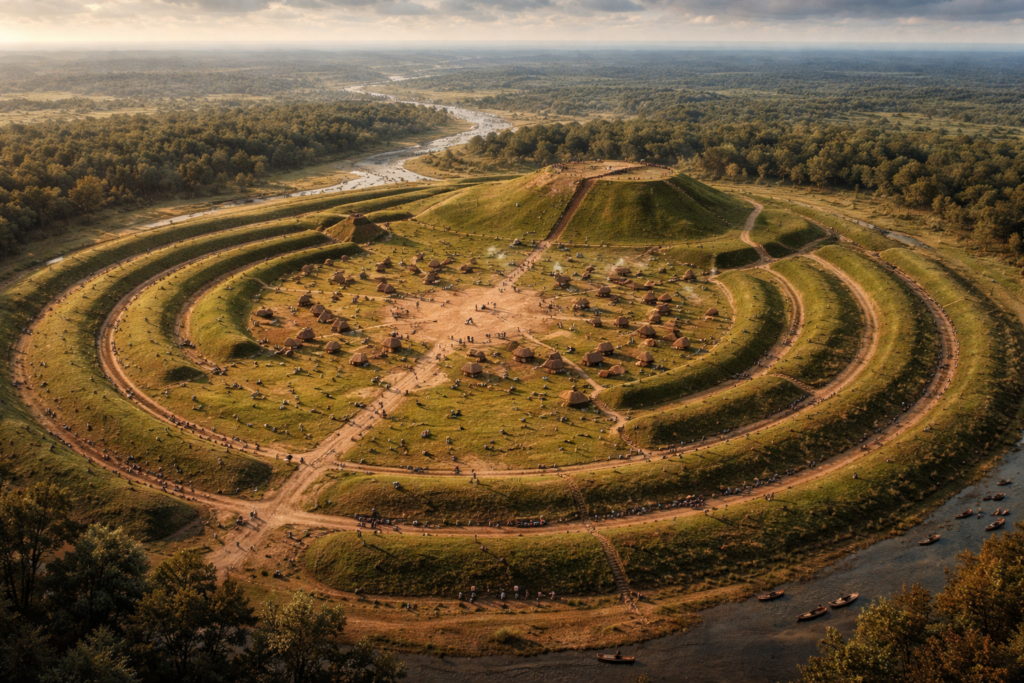
Across the quiet landscape of northeastern Louisiana, the sweeping ridges and towering mounds of Poverty Point rise with a presence that feels both deliberate and difficult to explain. For generations, archaeologists viewed the site as largely ceremonial, a place defined more by symbolism than daily life. Yet subtle clues buried in the soil have begun pointing toward a far more dynamic past. Patterns of movement, artifacts carried from distant regions, and the scale of construction hint at something larger unfolding here. As new research gathers momentum, the ancient earthworks appear less like silent monuments and more like the framework of an active human landscape.