
A towering presence that left no heirs.
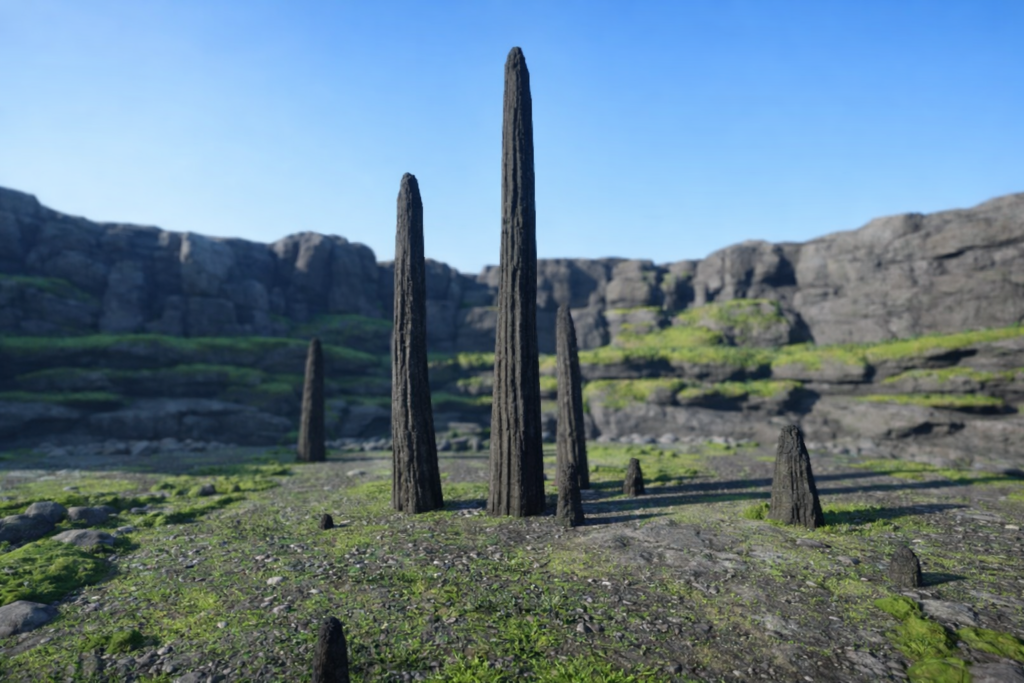
For more than a century, strange fossil trunks puzzled scientists, towering through ancient rocks without a clear identity. They appeared before trees, before forests, before familiar ecosystems existed. New analysis reopened that mystery, revealing something neither plant nor fungus as once defined. The stakes reach beyond classification. If this organism rewrites early life on land, it reshapes when complexity arose and how Earth’s surface first transformed into habitable ground and forces scientists to reconsider the tempo of evolution itself globally.
1. Prototaxites shattered assumptions about early terrestrial life.
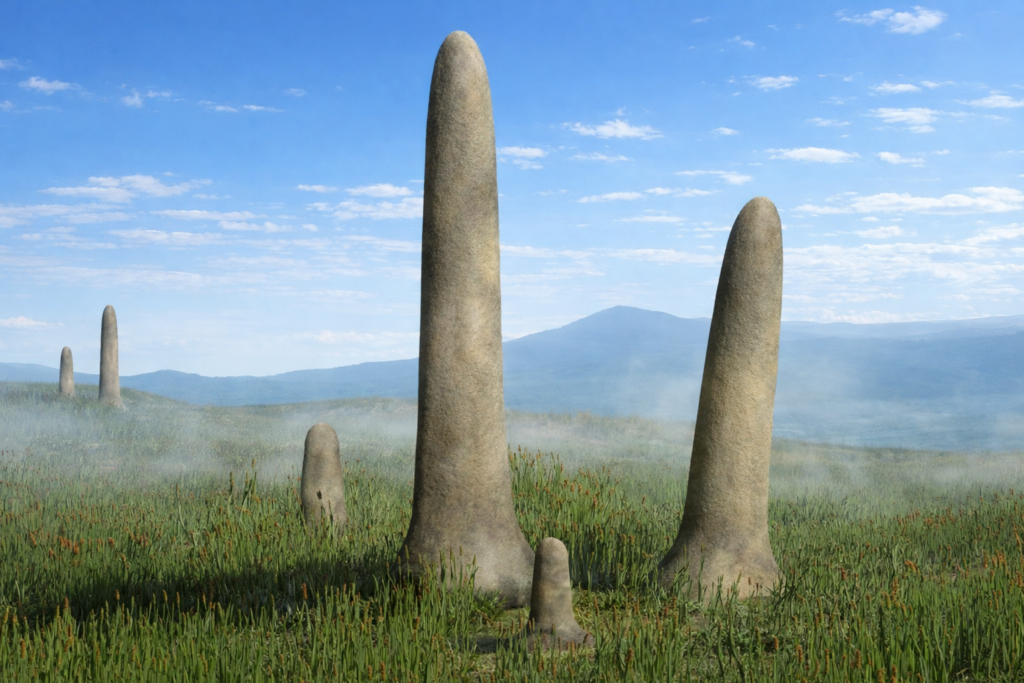
When Prototaxites fossils were first described, their sheer size destabilized timelines. Some specimens reached 26 feet dominating landscapes thought incapable of supporting giants. That contradiction lingered for decades, hinting that Earth’s earliest land ecosystems were more productive and strange than models allowed.
Microscopic analysis later complicated the picture, revealing internal structures unlike plants or animals. The findings reframed Prototaxites as a separate experiment in multicellular organization, as reported by Nature, intensifying debate over how many evolutionary paths once competed on land during early terrestrial colonization phases when environments remained unstable and resources unevenly distributed across continents worldwide at times.
2. Its anatomy resisted classification within known biological kingdoms.
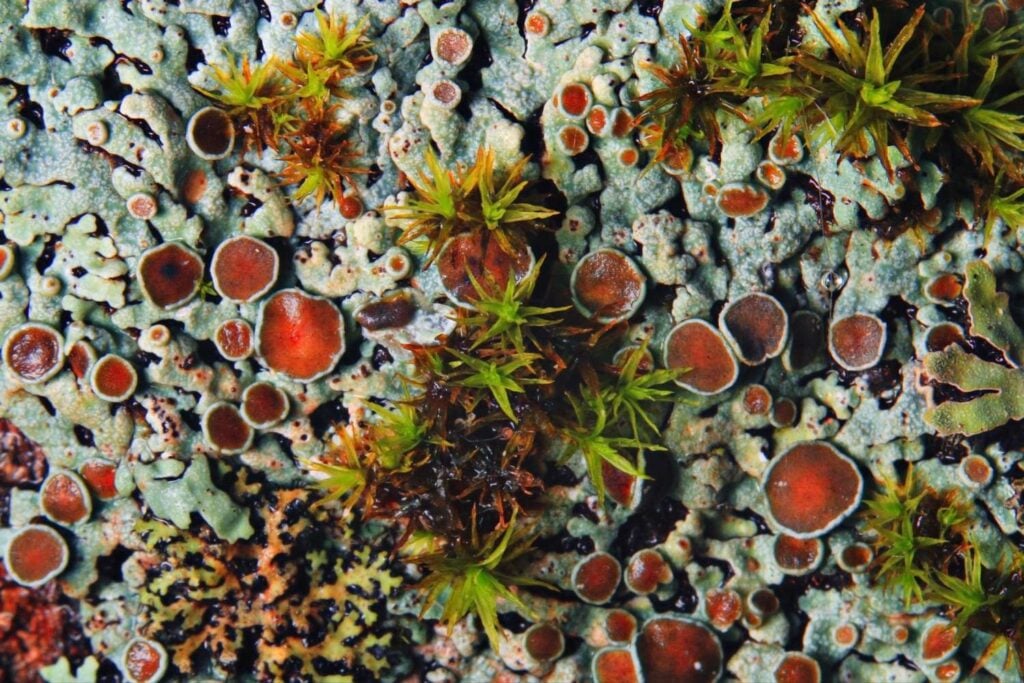
Early researchers argued fiercely over identity because features contradicted expectations. Growth rings suggested slow accumulation, yet chemical signatures conflicted with woody plants. Each new test seemed to erase one option while refusing to confirm another.
Some proposed a giant fungus, others a lichen, and some a lost lineage altogether. Isotope studies showed carbon uptake inconsistent with photosynthesis, as stated by Science, implying a heterotrophic strategy that blurred ecological roles and unsettled assumptions about early food webs before plants fully reshaped terrestrial energy flows and ecosystems stabilized permanently across exposed continental surfaces under harsh atmospheric conditions of deep time periods globally.
3. Its disappearance left no obvious modern descendants.
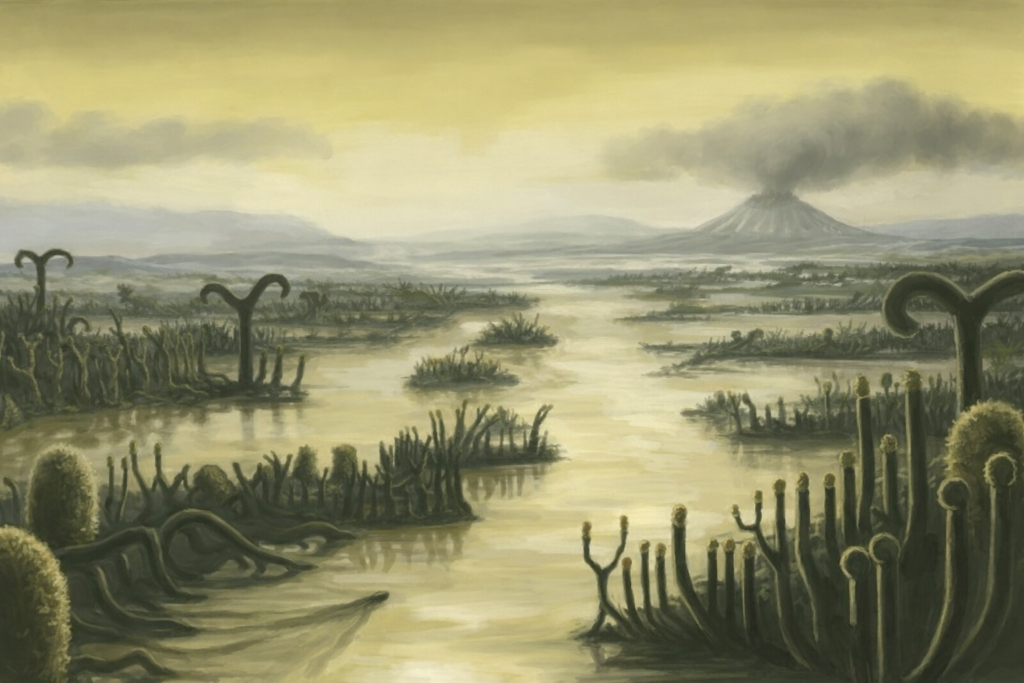
After dominating landscapes for millions of years, Prototaxites vanished. No gradual transition appears in the fossil record, no smaller successors carrying its traits forward. The abrupt absence sharpened the mystery, suggesting vulnerability to environmental shifts rather than competitive exclusion.
Climate fluctuations and soil development may have erased conditions it required. As discovered by Smithsonian Magazine, Prototaxites thrived before rooted plants transformed soils, implying ecological change, not failure, ended its reign as landscapes hardened and nutrient cycles shifted irreversibly during early Paleozoic environmental transitions worldwide that redefined terrestrial habitability for emerging plant dominated ecosystems and complex food networks later on Earthwide.
4. Fossil chemistry hinted at unexpected feeding strategies.
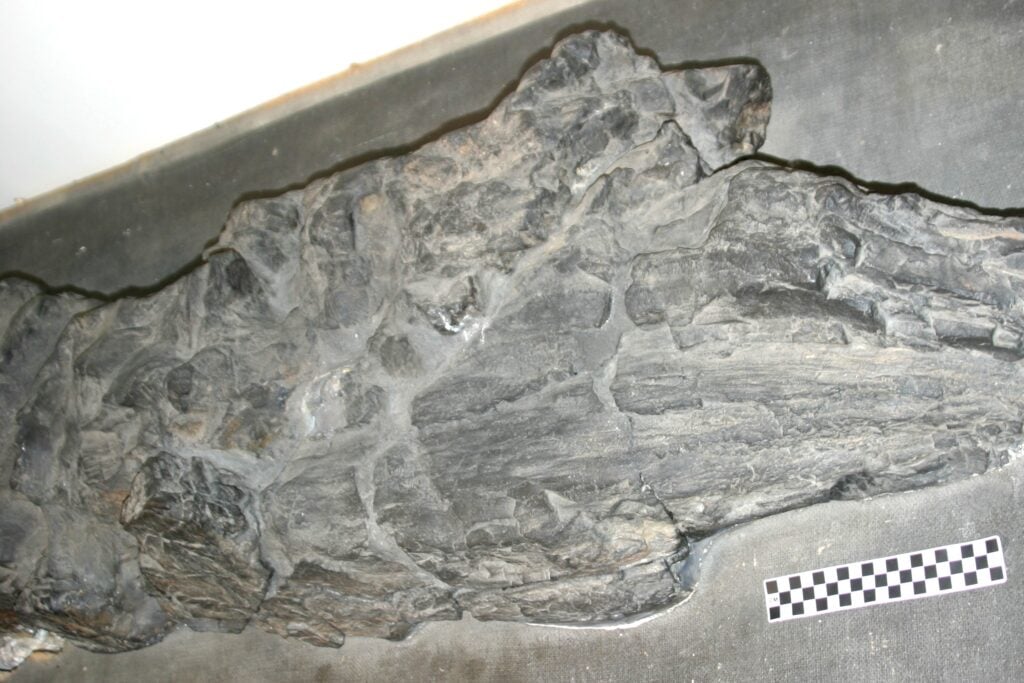
Chemical signals locked inside Prototaxites fossils suggested diets unlike photosynthetic organisms. These signatures implied reliance on decaying material or microbial sources. Such feeding would place it closer to decomposers, reshaping views of early land nutrient cycling.
If correct, Prototaxites occupied a role later filled by fungi, but at unprecedented scale. Its presence may have accelerated soil formation and carbon redistribution, influencing which plants eventually succeeded across emerging terrestrial surfaces lacking established root systems and microbial communities still organizing themselves during early Devonian ecological experimentation when land life remained unstable and poorly buffered against climate swings and erosion forces at scale.
5. Its size challenged limits of early oxygen availability.

Growing meters high requires energy and oxygen. Prototaxites’ size implied atmospheric conditions capable of supporting large terrestrial organisms earlier than assumed. That possibility unsettled reconstructions of ancient air composition.
Some researchers argue localized oxygen pockets may have existed near productive ecosystems. Others suspect metabolic efficiency allowed growth without modern oxygen levels, leaving atmospheric history unresolved. The debate keeps timelines fluid and assumptions provisional, forcing revisions as new proxies and models emerge from ancient sediments and isotopic records spanning continents and deep time intervals previously considered biologically constrained by simplistic atmospheric narratives used in textbooks for decades past until challenged recently.
6. Geographic spread hinted at global ecological influence.
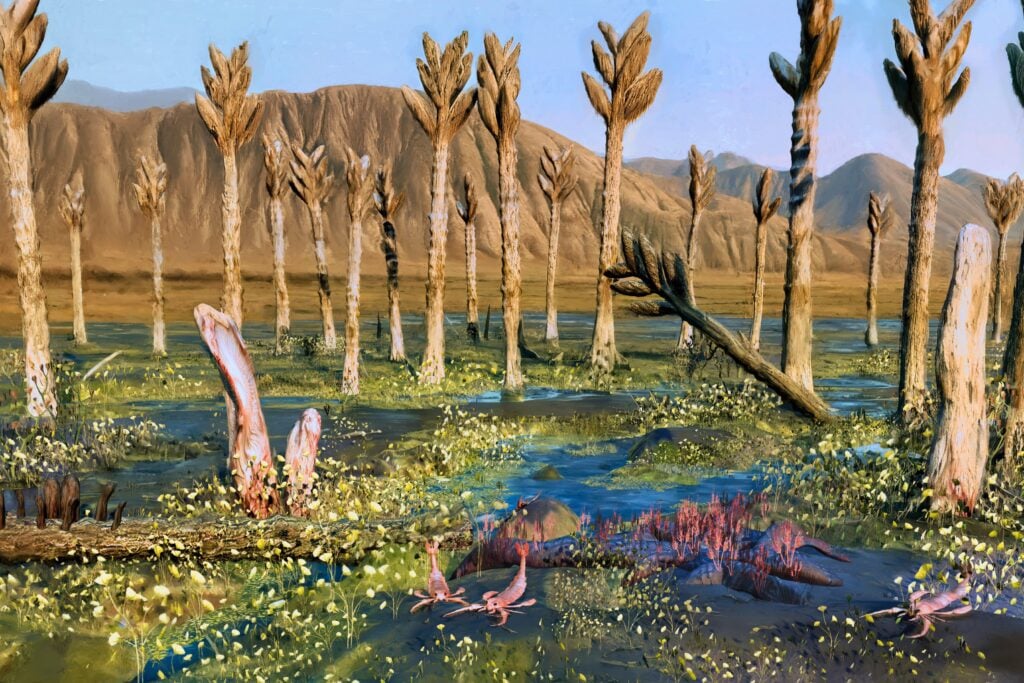
Prototaxites fossils appear across multiple continents, including North America and Europe. Such distribution implies broad ecological tolerance and dispersal mechanisms not fully understood.
Its presence suggests early land ecosystems shared common foundations before diverging regionally. That connectivity complicates narratives of isolated continental evolution. Global distribution raises questions about spore dispersal through atmosphere and resilience across variable climates and soils during a time when land colonization was experimental and survival depended on flexible biological strategies rather than specialized plant adaptations seen in later evolutionary stages that followed Devonian transitions toward structured terrestrial ecosystems with forests dominating the landscape eventually globally again.
7. Its growth challenged assumptions about early land stability.
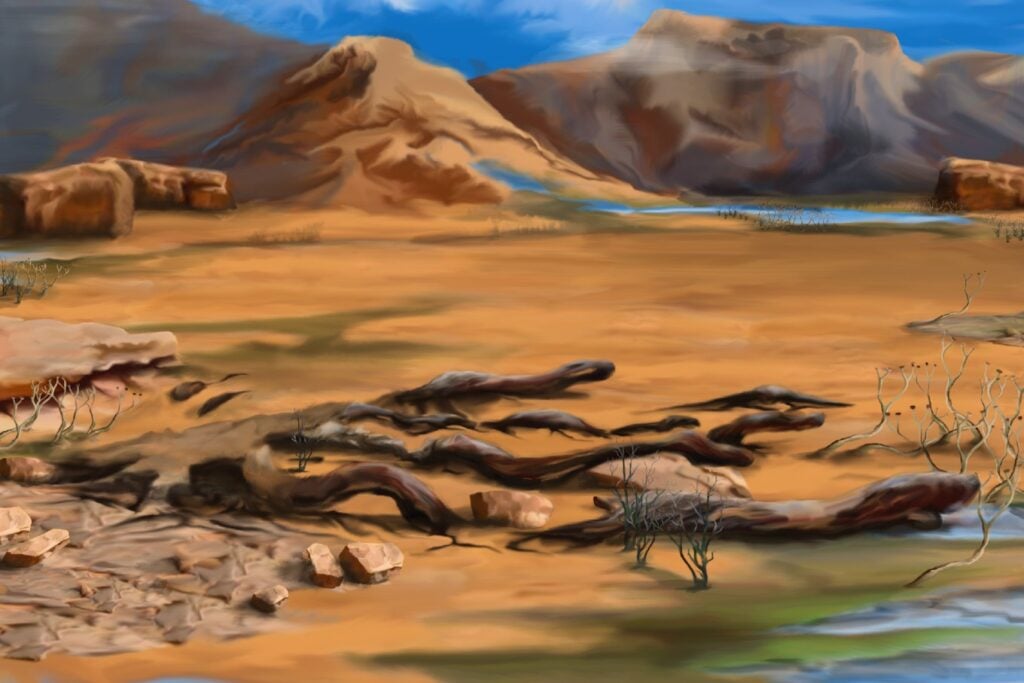
Sustaining towering organisms requires stable surfaces and nutrients. Prototaxites implies land was less barren than imagined, with soils capable of supporting vertical growth.
That stability suggests microbial mats and weathering processes were already active. Such groundwork would set the stage for later plant colonization without guaranteeing immediate success. The implication reframes Earth’s surface as dynamic earlier than classic models allowed or predicted, forcing reconsideration of erosion and soil formation timelines linked to early biological engineering by organisms predating vascular plants and structured root systems that later dominated continents for hundreds of millions of subsequent years until forests spread everywhere else.
8. Its mystery persisted despite advancing analytical technology.
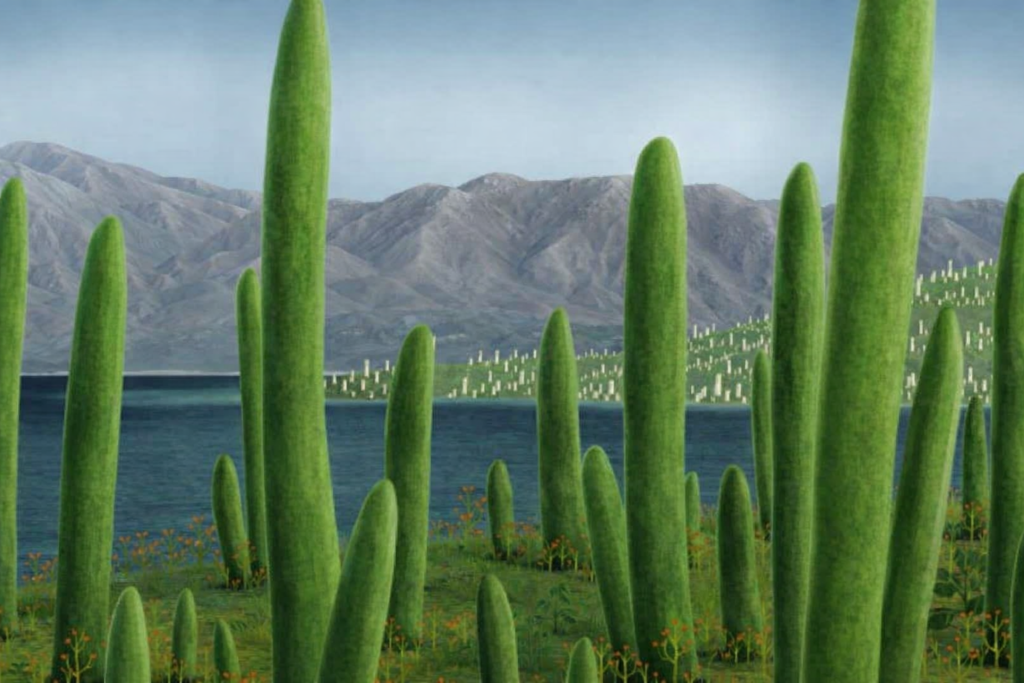
Even with modern tools, Prototaxites resists simple answers. Each analytical advance narrows options without closing debate, preserving uncertainty.
That persistence underscores limits of fossil interpretation. Some biological experiments leave traces without analogs, reminding scientists that extinction erases entire modes of life before modern ecosystems establish familiar categories. Prototaxites exemplifies lost complexity invisible to present biodiversity, challenging confidence in linear evolutionary narratives derived from surviving lineages alone and cautioning against oversimplified histories built from incomplete fossil windows into deep geological pasts where preservation remains uneven and biased by chance rather than abundance or ecological dominance at the time of deposition globally.
9. It reshaped debates about when complexity emerged.
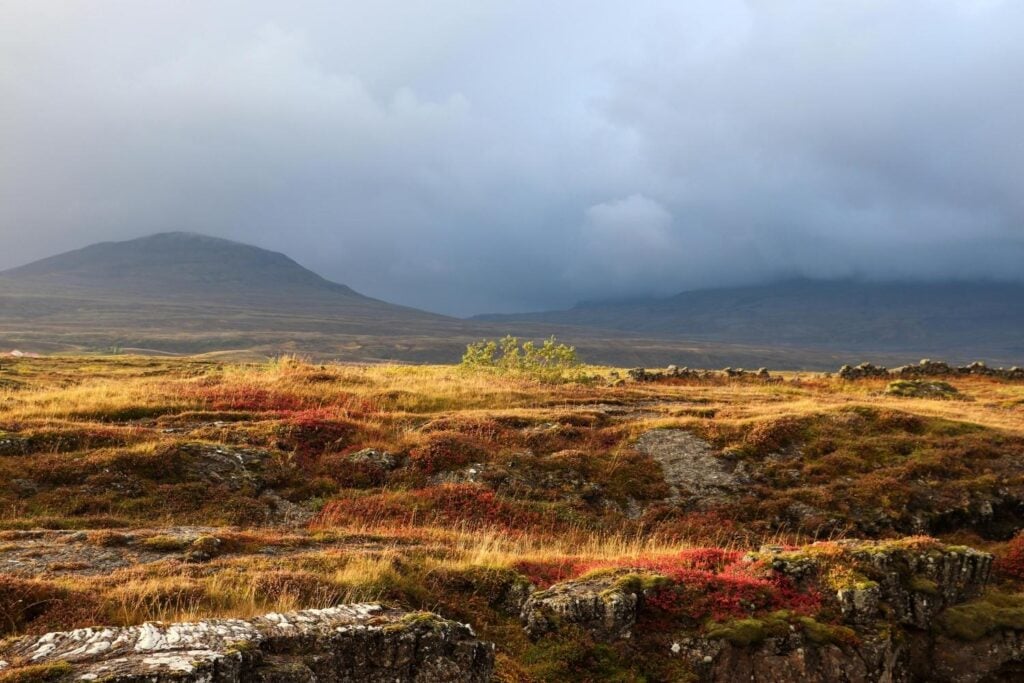
Prototaxites forces reconsideration of evolutionary pacing. Complexity may have appeared earlier, then vanished, rather than progressing steadily forward.
That pattern challenges comfort with gradualism. Early land life may have experimented broadly, with many lineages failing despite sophistication. This reframing alters how extinction is interpreted historically. Loss becomes expected outcome, not anomaly, within early evolutionary trials on newly exposed terrestrial environments subject to climate volatility and unstable nutrient systems that repeatedly reset progress before later stabilization occurred through plant soil feedbacks and atmospheric regulation across Paleozoic landscapes once conditions aligned for sustained complexity to persist longer than before seen anywhere else.
10. Its story reframes how scientists define life.
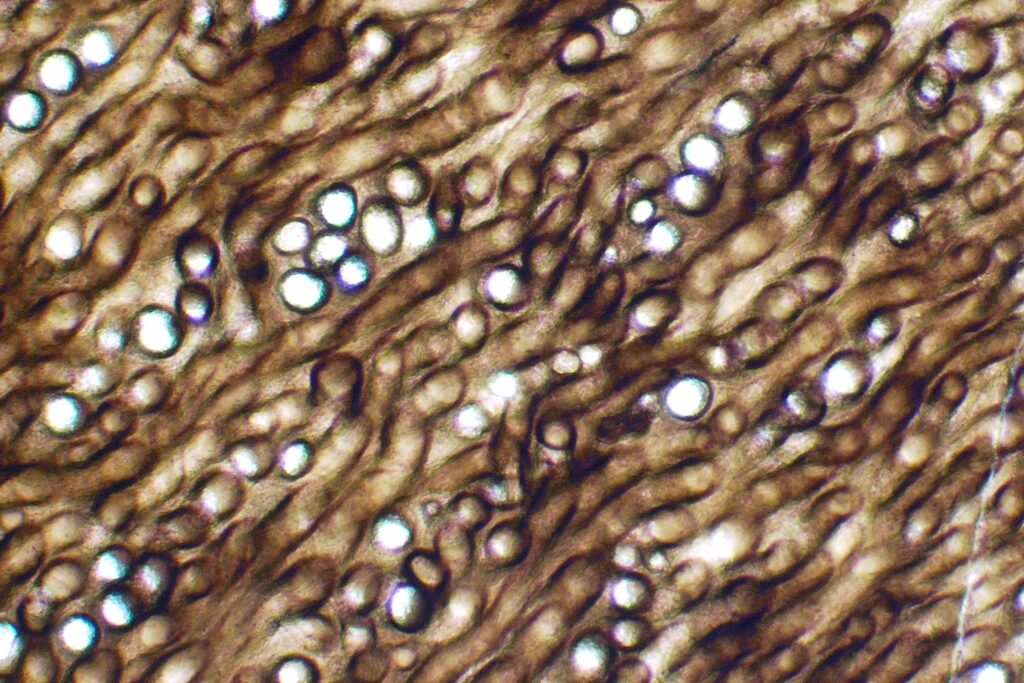
Prototaxites does not fit clean categories, and that discomfort matters. Definitions shaped by living organisms may fail when confronted with extinct possibilities.
By exposing gaps in classification, this organism reminds science that life’s history is broader than survivors suggest. Extinct forms challenge confidence and invite humility. Future discoveries may reveal other lost experiments that once shaped Earth’s biosphere without leaving modern descendants or recognizable evolutionary heirs. Prototaxites stands as warning against assuming inevitability in evolution or permanence of dominant strategies across geological history where contingency governs outcomes more than progress narratives often imply incorrectly when simplified for teaching purposes alone.