
Human leftovers are reshaping raccoon survival strategies.
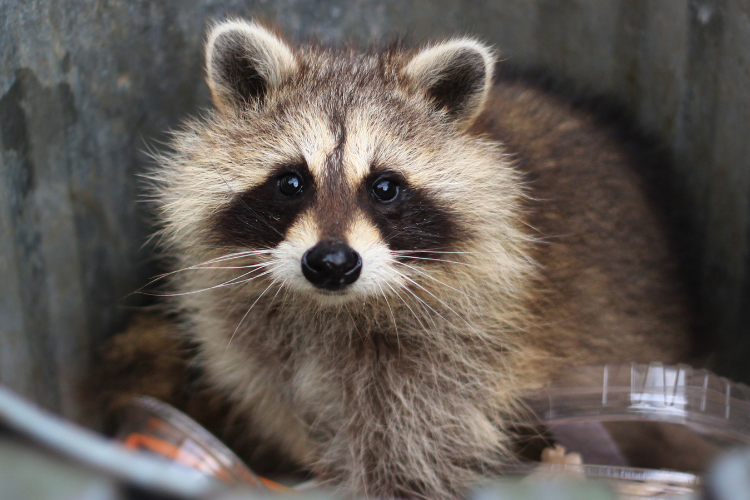
Trash night has become a turning point for raccoons across North America. Overflowing bins, compost piles, and food scented packaging are reshaping how these animals move, forage, and survive. Urban alleys, suburban cul de sacs, and rural transfer stations now act like predictable feeding zones. What is unfolding is not random scavenging, but deliberate adaptation, timed to pickup schedules, shaped by plastic lids, and refined around human routines that repeat night after night.
1. Raccoons now time their movements to trash schedules.

In Toronto, Chicago, and Los Angeles, raccoons have learned the rhythms of municipal pickup. They emerge just after sunset on collection nights, working entire blocks before dawn. Researchers tracking tagged animals noticed tighter foraging windows tied directly to curbside availability, according to the University of California Agriculture and Natural Resources.
This shift saves energy and reduces exposure to predators. By syncing activity with predictable waste access, raccoons minimize wandering and conflict. Streets become temporary pantries, then go quiet again by morning.
2. Some raccoons specialize in specific neighborhoods exclusively.

In suburbs outside Atlanta and Denver, individual raccoons now defend informal feeding territories based on trash quality. One group may focus on student housing, another on restaurant corridors, rarely overlapping routes. Motion camera studies revealed repeated, precise travel patterns as stated by the Smithsonian National Zoo and Conservation Biology Institute.
This neighborhood loyalty reduces competition and injury. It also explains why certain blocks see constant bin raids while nearby streets remain untouched. Trash consistency shapes social boundaries more than forest edges now.
3. Raccoons are teaching their young container techniques.

In Madison, Wisconsin, juveniles have been filmed watching adults manipulate latches, flip lids, and tip carts. These lessons happen early, often before full independence. The behavior spreads locally through family groups rather than instinct alone, as reported by National Geographic.
Learning from parents speeds survival in dense human areas. Young raccoons that master bins quickly gain weight and confidence. Those that fail often disperse farther or face higher mortality in traffic heavy zones.
4. Urban raccoons are eating at different hours.

In Phoenix and Las Vegas, heat and late night trash access push raccoon activity closer to midnight or later. They wait until streets cool and noise drops. This timing reduces stress and competition with stray cats and coyotes.
The result is quieter, more deliberate foraging. Homeowners wake to empty bins without ever seeing the animal responsible. Night has stretched longer for raccoons, shaped by asphalt temperatures and human sleep cycles.
5. Raccoons are using storm drains as travel corridors.

In older cities like Baltimore and St. Louis, raccoons move between trash hotspots using drainage systems. These routes avoid dogs, cars, and bright lighting. They also stay cooler during summer months.
Storm drains connect alleys, parks, and dumpsters into hidden highways. This underground movement explains sudden appearances far from green space. Infrastructure meant for water now quietly supports wildlife movement.
6. Some raccoons are ignoring natural foods entirely.

In parts of Southern California, raccoons consume little seasonal fruit or insects. Diet studies show heavy reliance on processed food waste year round. Calories come fast and easy from bags and bins.
This shift alters digestion and body size. Animals grow heavier but sometimes less agile. Natural foraging skills weaken, tying survival directly to continued human waste production.
7. Raccoons are adapting their hands to human packaging.
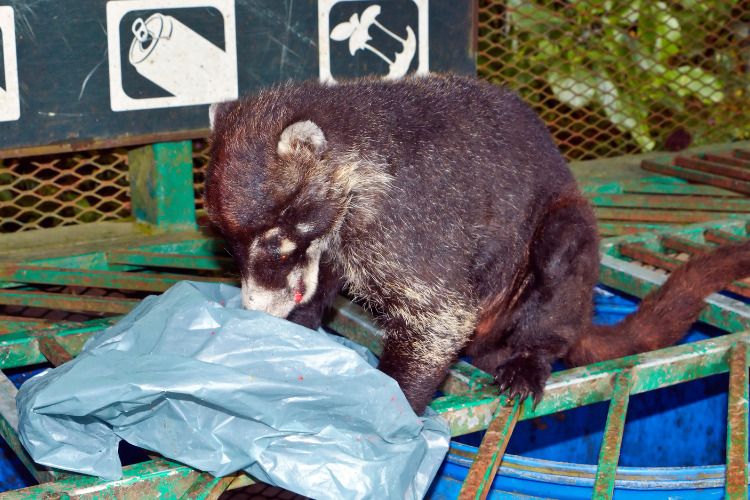
Repeated exposure to plastic, foil, and cardboard has refined raccoon dexterity. They open zip closures and peel tape with surprising efficiency. Their paws show wear patterns similar to tool use.
These small physical changes matter. Better grip means faster access and shorter exposure. Hands evolve behaviorally first, responding to materials never present in wild ecosystems before.
8. Trash rich areas support higher raccoon densities.
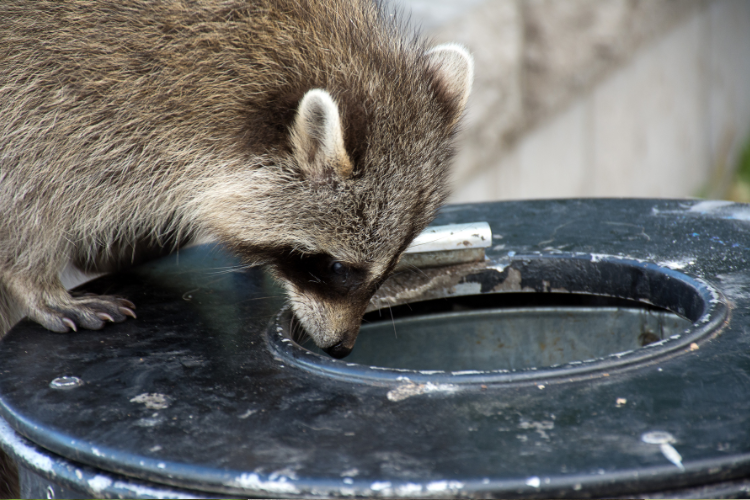
In neighborhoods near landfills or large apartment complexes, raccoon populations exceed historical norms. More food supports more individuals in smaller areas. This density increases disease transmission risk.
Urban wildlife managers now monitor raccoon health closely. Rabies and distemper spread faster where animals overlap nightly at bins. Trash abundance reshapes not just behavior but population structure.
9. Raccoons are avoiding forests near human settlements.

Some raccoons rarely enter nearby woods anymore. Forest food feels unpredictable compared to guaranteed trash access. They rest in attics, sheds, and storm culverts instead.
This avoidance changes ecosystem roles. Seed dispersal and insect control decline locally. Forest edges lose a familiar participant as raccoons follow calories toward concrete.
10. Trash based survival is changing raccoon personality.
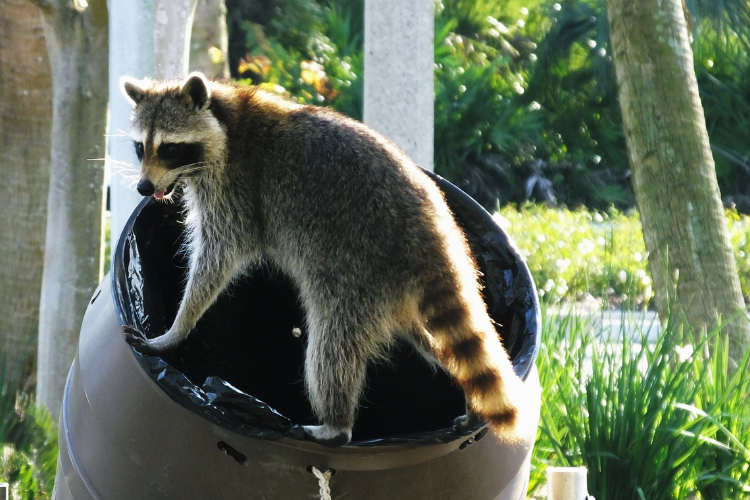
Urban raccoons show reduced fear and increased problem solving persistence. They approach homes calmly and retreat strategically when challenged. This confidence grows over generations.
Behavior becomes bolder yet calculated. Raccoons raised among bins learn that humans mean risk but also reward. Trash does not just feed them, it shapes who they become.