
A gliding reptile challenges myths and biology.
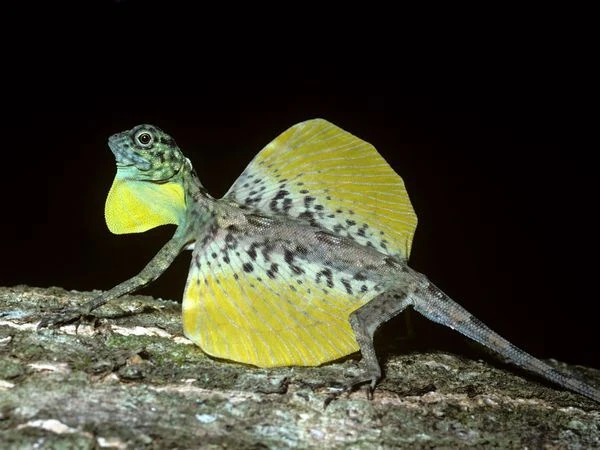
Deep in Southeast Asian rainforests, a small reptile quietly upended centuries of dragon lore. Long studied but rarely understood by the public, the Draco lizard glides between trees using winglike membranes. Observations from Indonesia, Malaysia, and Thailand reveal how this animal survives, communicates, and adapts in fragile forest canopies where evolution favors motion, camouflage, and restraint rather than fire or force.
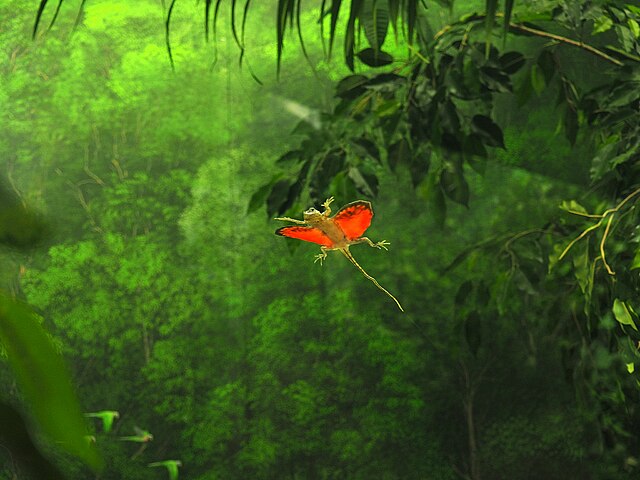
1. This lizard glides using ribs shaped like wings.
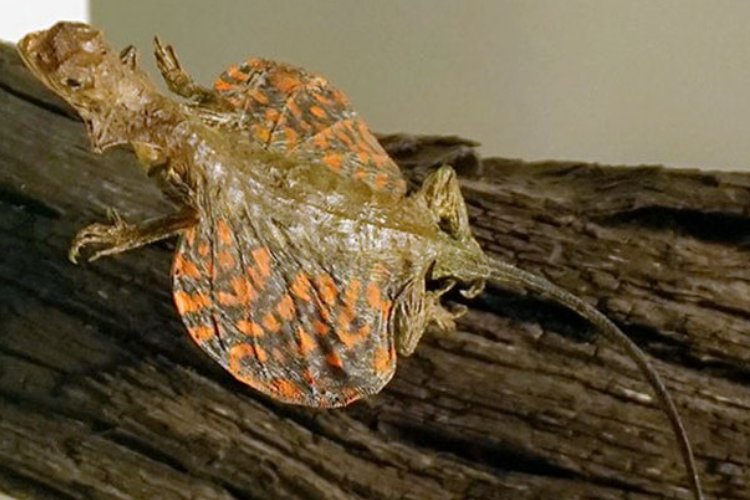
Draco lizards extend elongated ribs that support skin membranes, allowing controlled glides between trees. This ability reduces ground exposure where predators wait. According to National Geographic, some individuals travel over sixty feet in a single glide.
Gliding conserves energy in dense forests where climbing down repeatedly would be costly. Directional control comes from subtle body shifts and tail movement. This form of movement reflects precise evolutionary tuning to vertical rainforest habitats across Southeast Asia today.
2. Bright throat fans serve communication rather than defense.
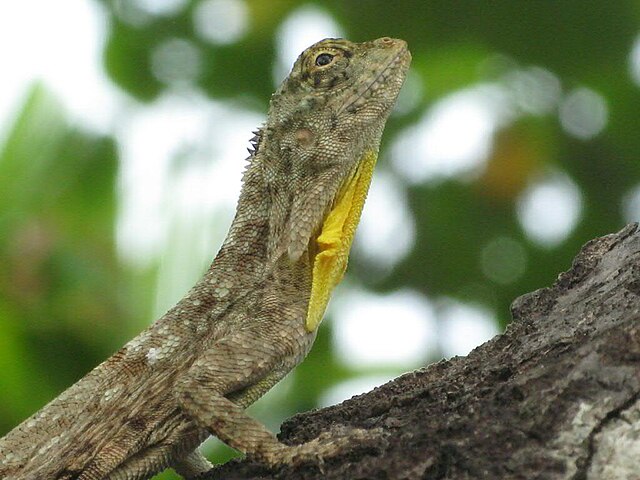
Male Draco lizards display colorful throat fans called dewlaps during territorial or courtship interactions. These displays appear dramatic but rarely escalate into physical conflict. As reported by the Smithsonian Magazine, color patterns vary by species and location.
Visual signaling limits injury and energy loss. In crowded canopies, quick recognition matters more than strength. The fan flashes information about identity and fitness, helping maintain spacing between rivals while attracting receptive mates nearby.
3. Their habitat spans multiple Southeast Asian forest regions.
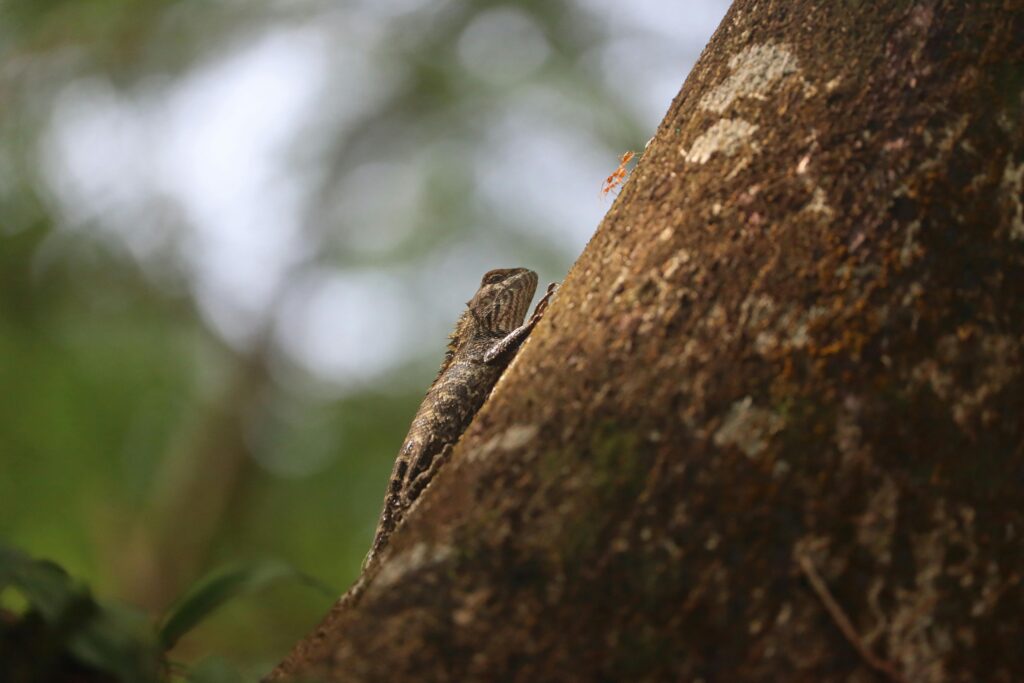
Draco species inhabit lowland and montane forests across Indonesia, Malaysia, Thailand, and parts of the Philippines. They rely on intact tree cover and specific microclimates. As stated by the Encyclopedia Britannica, over forty recognized species exist today.
Each species occupies narrow ecological niches. Fragmented forests isolate populations quickly. Because these lizards seldom descend to the ground, canopy continuity determines survival, making them sensitive indicators of deforestation and land conversion pressures.
4. Diet choices keep them anchored to treetops.
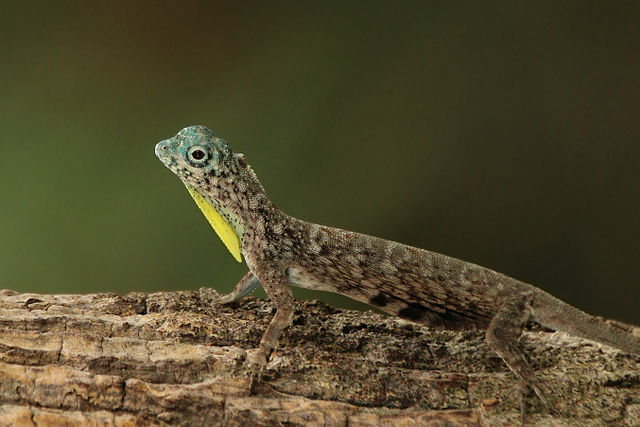
Draco lizards feed mainly on ants and small arboreal insects found on bark and leaves. This specialized diet reduces competition with ground dwelling reptiles and birds within the same ecosystems.
Remaining in trees lowers predation risk but limits food diversity. When insect populations shift due to weather or logging, Draco lizards struggle to adapt quickly. Their feeding strategy ties survival closely to forest health and insect abundance patterns.
5. Body size favors balance over intimidation.
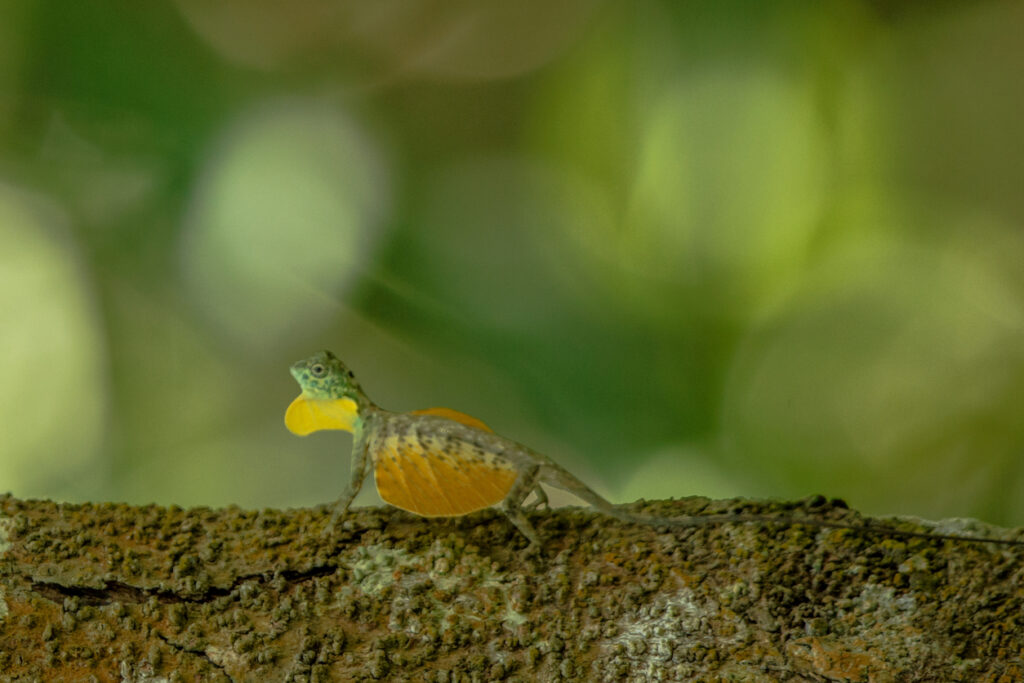
Most Draco lizards measure under eight inches long excluding the tail. Their lightweight frames support gliding while minimizing strain on extended ribs and membranes during flight between trees.
Smaller size also reduces caloric needs. Rather than overpowering threats, they rely on avoidance, camouflage, and positioning. This strategy proves effective in complex forests where visibility shifts rapidly and escape routes exist in three dimensions.
6. Coloration mirrors bark and leaf textures.
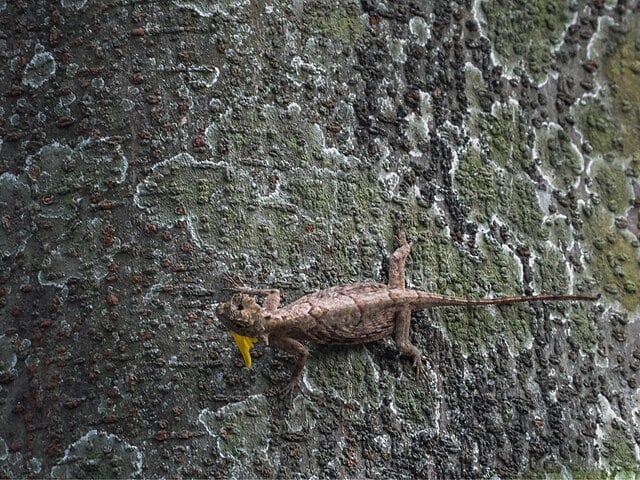
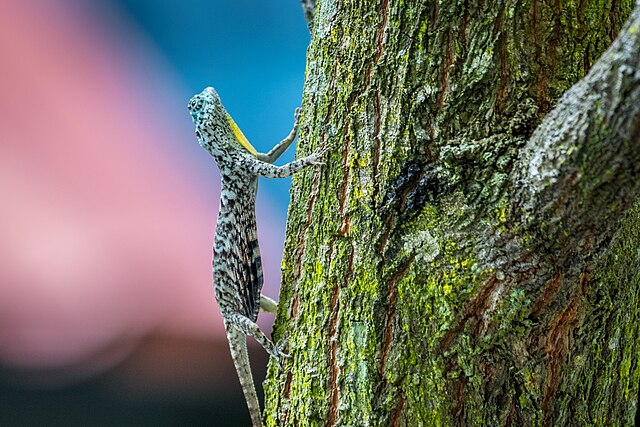
Draco lizards blend seamlessly into tree surfaces through mottled browns, greens, and grays. This camouflage remains effective even when stationary for long periods.
Stillness complements color. Predators scanning for movement often miss them entirely. When gliding, membranes fold away instantly upon landing, restoring invisibility. This rapid transition between motion and concealment defines their survival strategy in predator rich environments.
7. Breeding behavior limits time spent on ground.
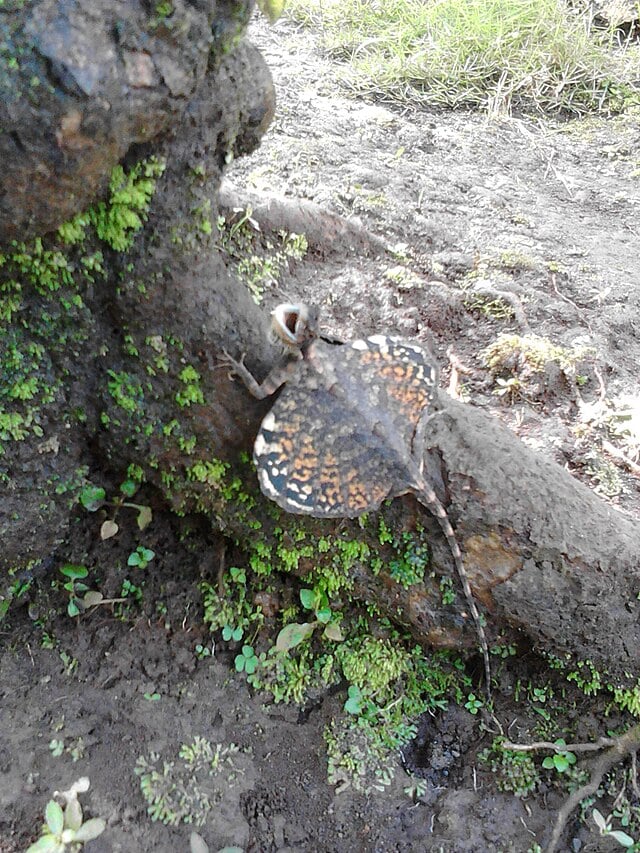
Females descend briefly to lay eggs in soil or leaf litter, then return quickly to trees. This vulnerable moment exposes them to predators and environmental stress.
Egg sites must balance moisture, temperature, and concealment. Human disturbance increases risk during this phase. Roads, trails, and cleared areas interrupt breeding success, affecting population stability even when adult habitat appears intact.
8. Forest loss threatens their unique movement strategy.
Logging and agriculture break canopy continuity, forcing Draco lizards to descend more often. Ground exposure increases mortality and energy expenditure beyond sustainable limits.
Unlike birds, they cannot gain altitude once launched. Gaps wider than their glide range become barriers. Habitat fragmentation transforms once connected aerial highways into deadly obstacles that populations cannot easily cross or recolonize.
9. This animal reshapes how dragons are imagined.
The Draco lizard demonstrates that dragon-like traits exist without myth or exaggeration. Flight, display, and dominance appear through subtle biology rather than spectacle.
Its existence reframes legends as reflections of natural observation. Small, quiet, and precise, this real life dragon thrives through restraint. Understanding it highlights how imagination often begins with real creatures living just beyond everyday notice.