
The image may not be what we thought.
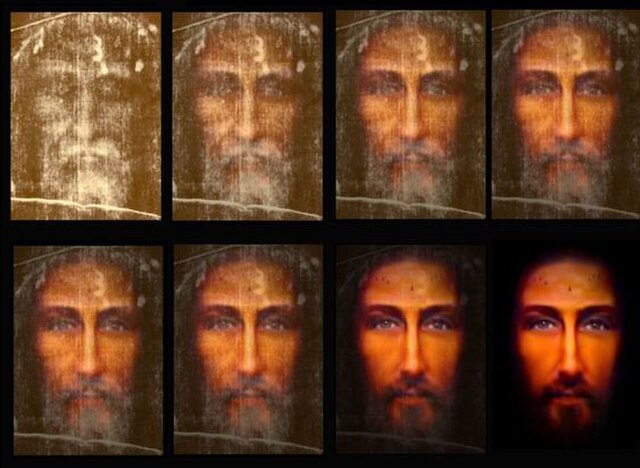
For centuries, the Shroud of Turin has existed in a space where certainty never fully takes hold. Every generation that studies it seems to leave with more questions than answers. What once felt settled begins to shift again as new tools pull details from the fabric that earlier science could not see. Patterns change, assumptions weaken, and long accepted timelines start to feel less secure. The object itself does not change, yet the story around it continues to move. Each new finding adds another layer, not of clarity, but of complexity, pulling the past further out of reach instead of bringing it closer.
1. New research suggests the cloth could predate medieval Europe.
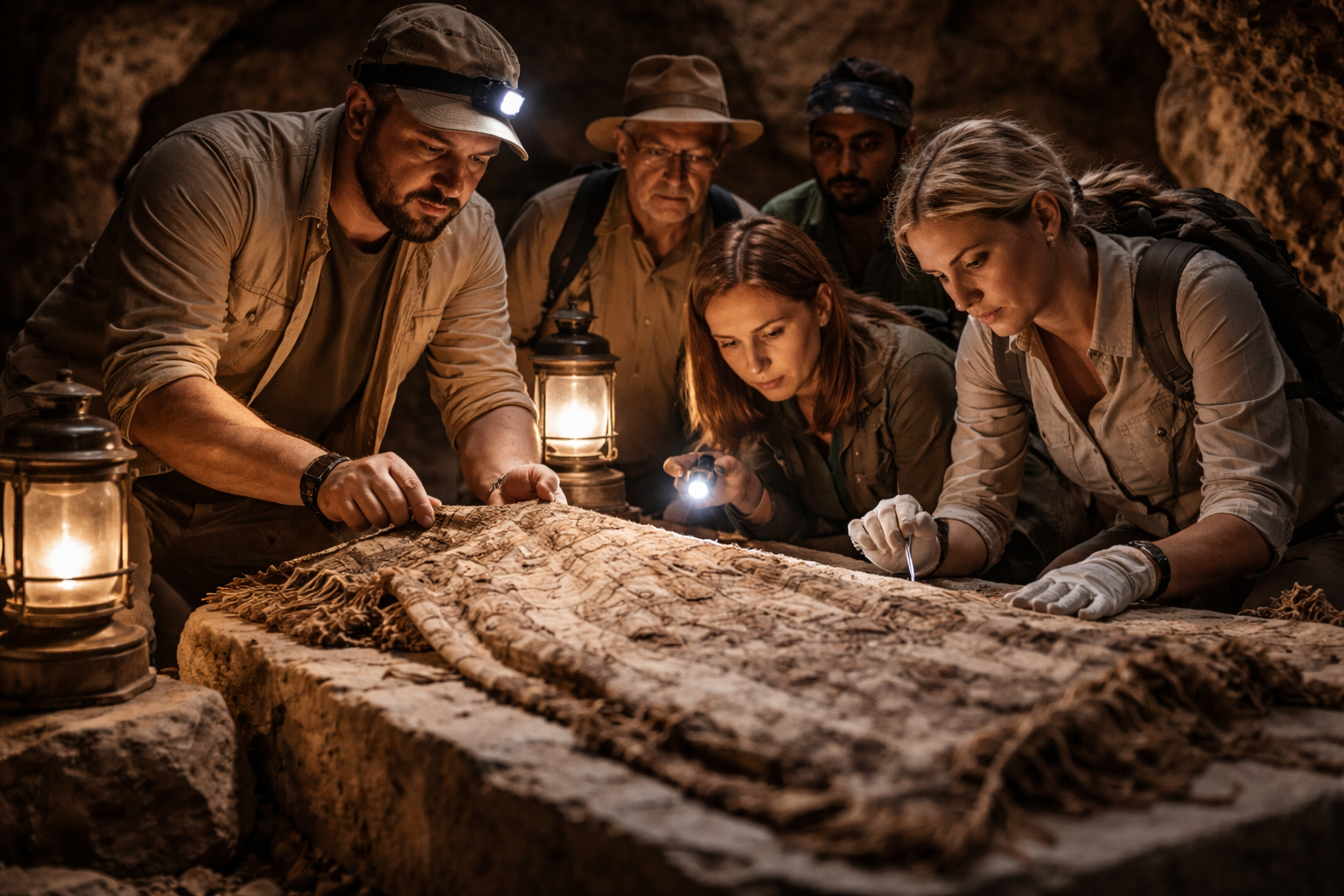
A recent study by Italian researchers proposes that the Shroud’s fibers may be far older than the 13th-century date established by the 1988 carbon-14 tests. Using new X-ray fluorescence and mechanical stress analysis, scientists detected aging patterns more consistent with first-century linen, according to findings presented by the Italian National Institute for Nuclear Physics. The researchers argue that radiation exposure and centuries of handling may have skewed earlier results. If confirmed, this would place the cloth in a historical window that changes nearly everything about its presumed origin.
2. Microscopic mineral traces link the cloth to ancient Jerusalem.

Traces of aragonite limestone, chemically identical to that found in the burial sites around Jerusalem, were identified on the Shroud’s surface. These findings, as discovered by researchers studying the micro-residues in the fibers, suggest a potential connection between the fabric and that geographic region. The samples match sediment unique to tombs near the Damascus Gate. For scientists, that clue doesn’t confirm the cloth’s biblical identity, but it narrows its possible provenance. It’s a small particle of earth that might carry three thousand years of human story.
3. High-resolution imaging reveals patterns invisible to the naked eye.
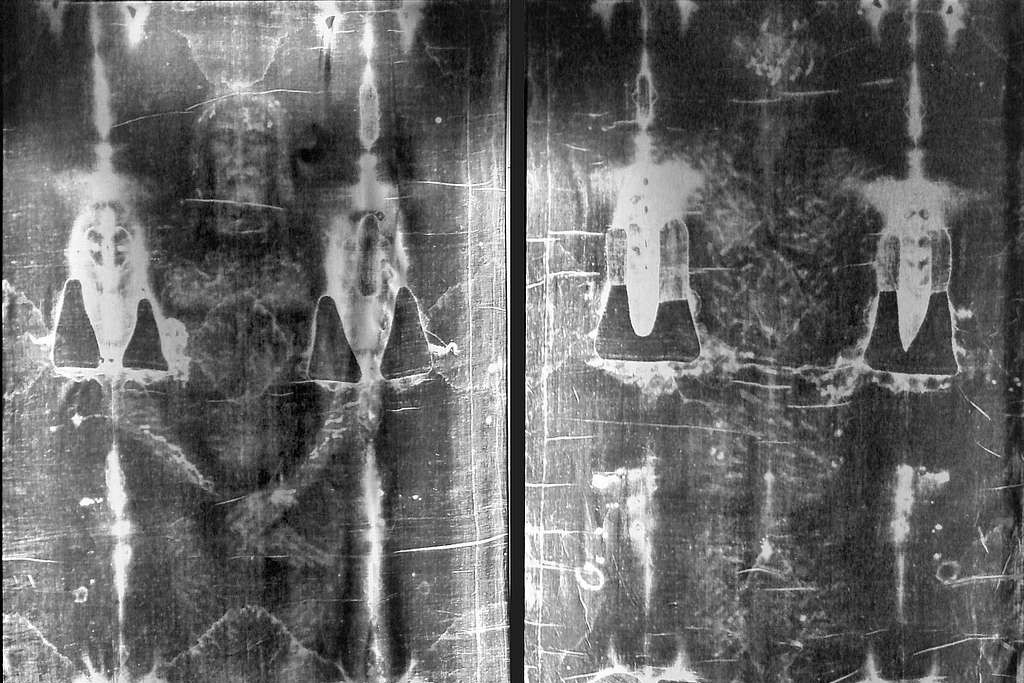
Advanced spectral imaging has captured subtle variations in the linen’s coloration that suggest the image wasn’t painted or burned but chemically altered at the fiber level, as stated by the European Academy of Sciences. Each strand appears to have undergone oxidation and dehydration at microscopic depth, too precise for medieval pigment or scorch techniques. These results have reignited interest among physicists, some of whom believe the image could have formed from a brief burst of energy. Others insist natural decomposition can’t yet be ruled out.
4. Carbon dating controversies are still shaping the debate.
The 1988 carbon-14 test, long seen as definitive, has come under renewed scrutiny due to questions about sample contamination. Critics argue the portion tested may have come from a repaired edge rather than the original cloth. Exposure to smoke and humidity during past fires could also have altered its isotopic balance. That doesn’t invalidate the medieval date but complicates how scientists interpret it. The argument now revolves less around belief and more around the integrity of sampling, a technicality that might change everything.
5. Textile experts find inconsistencies in the weave structure.
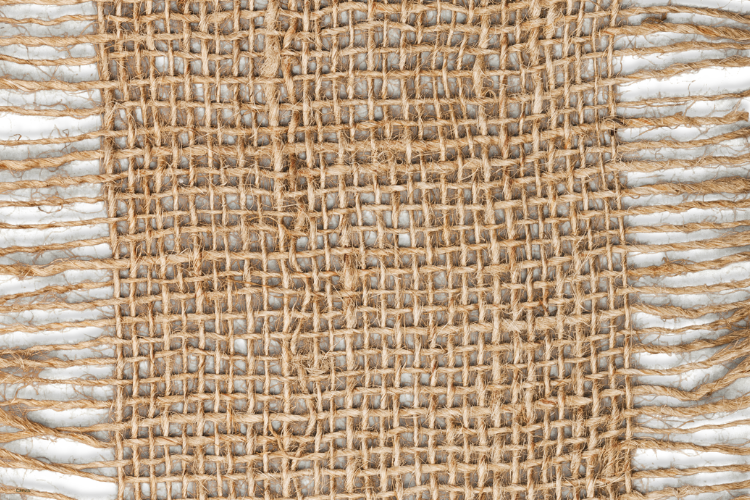
Close examination of the linen’s herringbone weave reveals irregularities that don’t align neatly with typical medieval European techniques. Some textile historians suggest the loom method reflects an older Eastern style, while others say repairs over time may have introduced mixed threads. The inconsistencies themselves tell a story of preservation, centuries of patching, folding, and reverence that blurred the line between artifact and relic. The linen, in essence, became a living document written over by generations of hands.
6. The image itself defies traditional artistic methods.
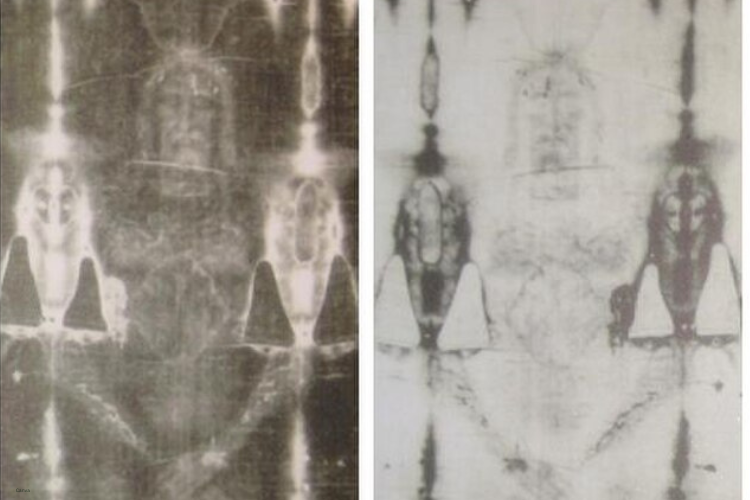
Attempts to replicate the Shroud’s image with pigments, heat, or photography have all fallen short. The faint sepia figure is too shallow to be paint and too detailed to be accidental. When scientists tried recreating the effect with medieval tools, the results lacked the Shroud’s unique depth and uniformity. Some theories involve vapor diffusion from a body, others a natural chemical reaction. Still, nothing fully matches the precision seen in modern imaging, leaving the mystery balanced on the edge between science and symbolism.
7. Forensic studies point to anatomically correct blood patterns.

Blood flow analysis on the Shroud shows realistic placement around the wrists, head, and torso, matching injuries consistent with Roman crucifixion practices. The patterns contain high bilirubin levels, a marker associated with severe trauma. Forensic pathologists argue that such details would be difficult to fake, especially in the medieval period when anatomical understanding was limited. Whether that realism is coincidence or authenticity remains uncertain, but it suggests whoever created the image possessed an extraordinary understanding of human suffering.
8. Historical records reveal how late the Shroud surfaced.

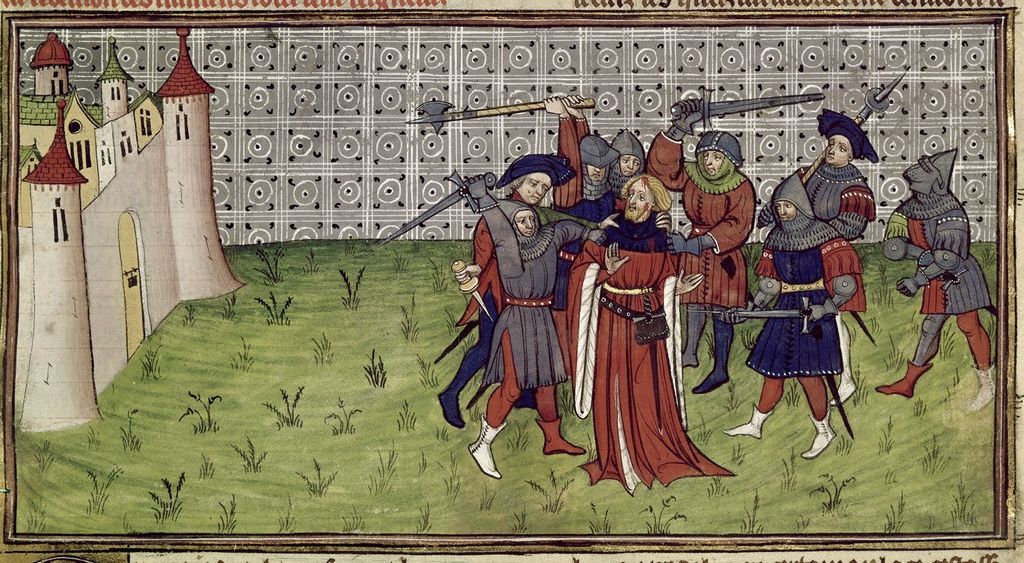
Despite scientific intrigue, historical documentation places the Shroud’s first known public appearance in the 1350s in France. Before that, its whereabouts are unknown. Some historians believe it was part of a larger medieval relic trade, while others argue it may have been hidden or relocated from the East. The absence of continuous records keeps skepticism alive. Even so, the sudden emergence of an artifact this sophisticated still puzzles researchers who question how a 14th-century artisan could have created something so advanced.
9. The mystery continues to attract new interdisciplinary teams.

Physicists, biochemists, and art historians now collaborate in ways that blend technology with theology. Each new dataset seems to both clarify and complicate the picture. Research groups from Italy, France, and the United States are pushing for further non-invasive testing to refine dating accuracy and image analysis. In a way, the Shroud functions as a scientific Rosetta Stone, every experiment translating fragments of a story that resists final interpretation.
10. The latest findings don’t settle faith, they deepen curiosity.
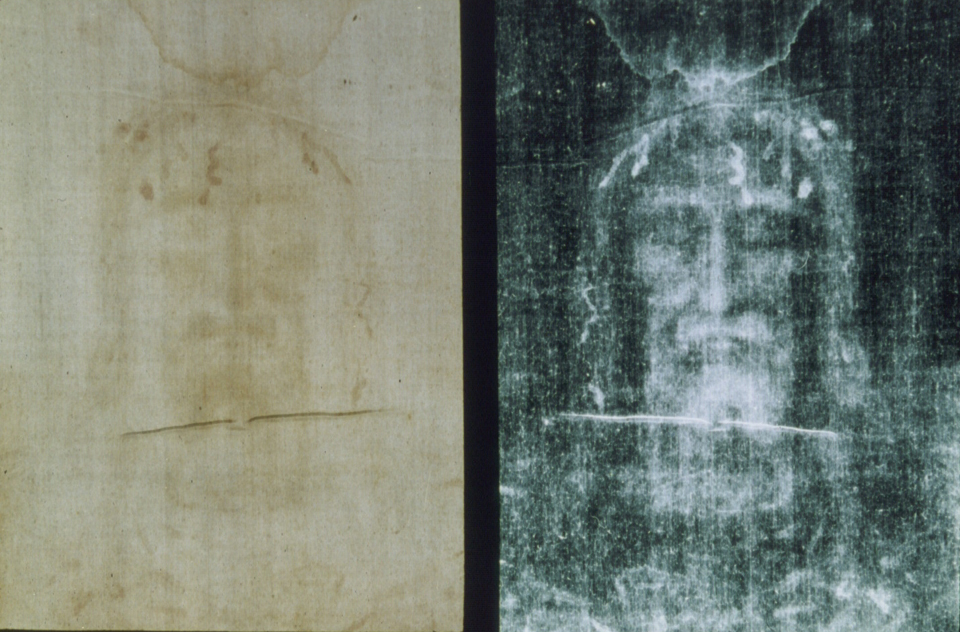
After decades of testing, the Shroud of Turin remains both artifact and enigma. The new findings don’t confirm miracles or debunk legends, they simply expand what’s possible. Science has made the image sharper, but the meaning blurrier. What’s emerging is less a verdict and more a conversation between centuries, where belief and inquiry coexist. The mystery persists not because we can’t solve it, but because it keeps reminding us how deeply human the search for truth really is.