
Their perception bends the limits of biology.

Snakes from pit vipers to some pythons navigate darkness using a sensory system that barely seems possible. Instead of relying on light, they read heat signatures in the environment as if each warm object leaves a glowing trail. Scientists studying their anatomy in the last decade discovered that this ability depends on finely tuned facial structures and neural circuits working together in a surprisingly elegant way. The result is a form of perception that operates outside human experience.
1. Pit organs turn heat into electrical signals instantly.

Pit vipers, pythons and some boas possess facial cavities called pit organs that detect heat with remarkable sensitivity. These organs contain membranes packed with heat responsive ion channels that convert temperature changes into electrical signals for the brain. Research on these structures has been detailed extensively, as reported by the National Institutes of Health. Their responsiveness allows snakes to sense heat differences as small as a fraction of a degree within milliseconds.
As the membrane warms, the channels activate, sending a rapid stream of information to visual and sensory centers. The speed and precision allow the snake to track prey that it cannot see, relying on temperature outlines rather than visible shapes. In near darkness, those signals effectively create a thermal map that guides every movement.
2. Specialized ion channels trigger sensitivity beyond human limits.
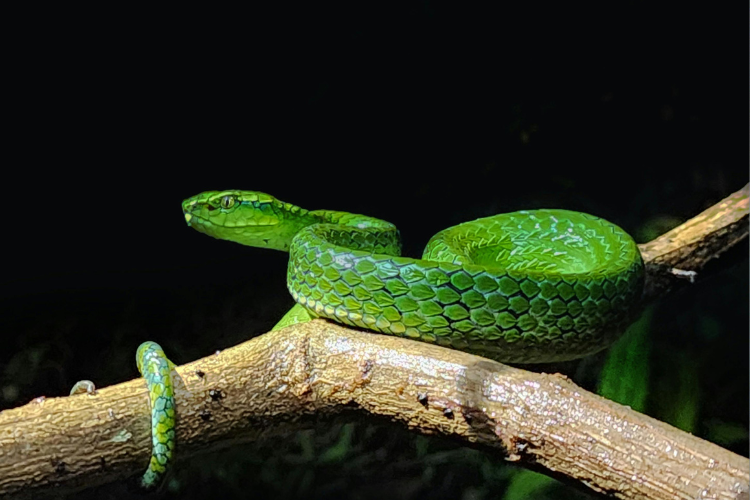
A key protein called TRPA1 acts as the infrared sensor within the pit organ membrane. Unlike the human version of the same protein, which detects chemical irritants, the snake variant evolved to respond to tiny fluctuations in heat. This surprising divergence has been highlighted in molecular studies according to the journal Nature. The adaptation transformed a common sensory mechanism into a precise thermal detector.
When heat strikes the membrane, the TRPA1 channels open instantly, allowing ions to flood in. The resulting nerve signal represents the intensity and direction of the heat source. Over evolutionary time, snakes refined these channels until they could detect animals hidden in brush, burrows or complete darkness.
3. Brain circuits merge heat signals with visual information.

Once the pit organ fires, the data travels to a region of the brain that integrates thermal information with visual cues, forming a combined map of the world. Neuroscientists studying this process described how the optic tectum merges both inputs, as stated by the University of California Berkeley. This blending gives the snake a way to navigate when light is scarce but shapes and edges still matter.
The integration also enhances precision. Thermal cues show where the warm body mass is, while visual cues reveal orientation and movement. Working together, they create a sensory picture that neither system could produce alone.
4. Thermal images help snakes pinpoint prey location exactly.

Snakes can detect the warmth of a rodent from surprising distances, especially in cool nighttime environments. The contrast between warm prey and cooler surroundings makes the thermal outline vivid to the snake’s sensory system. It is less like a clear image and more like a directional glow that narrows as the animal approaches.
When the prey moves, the temperature shift changes the firing pattern in the membrane. This allows the snake to adjust its trajectory on the fly, correcting course even when obstacles block visual cues.
5. Hunting strikes rely on microsecond timing from heat cues.

Once a snake identifies a target through heat, it prepares a strike guided by rapid adjustments in sensory input. The thermal information tells the snake not just where the prey is, but how quickly it is moving. These slight changes in temperature help calculate the perfect angle for impact.
During the strike, reflex circuits take over, using incoming thermal changes to refine the attack. Even if the prey shifts slightly, the snake adapts before the movement is complete, delivering a precise hit.
6. Infrared sensitivity expands dramatically in cool environments.
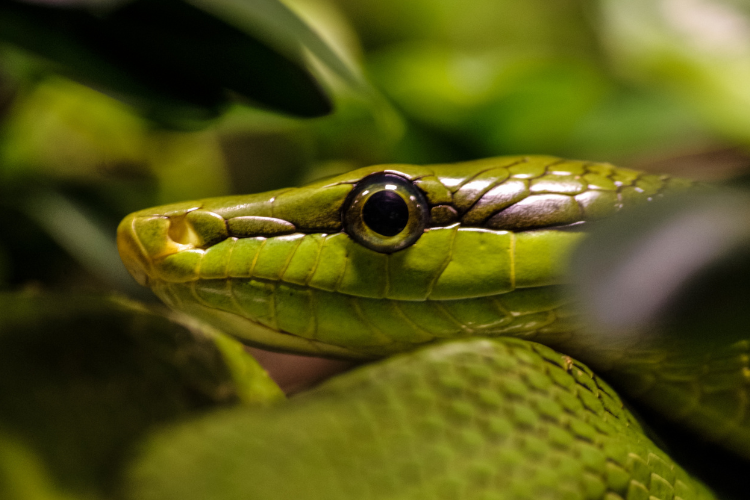
Snakes often hunt at dusk or during early nighttime hours when the temperature difference between prey and surroundings becomes sharpest. Cooler ground and air amplify the heat signatures that mammals produce, giving the snake cleaner data.
In warmer conditions, the contrast weakens, making thermal sensing less effective. Snakes compensate by relying more on scent trails and motion detection. The environmental shift shows how flexible and adaptive their sensory world can be.
7. Facial pits detect heat direction with remarkable accuracy.
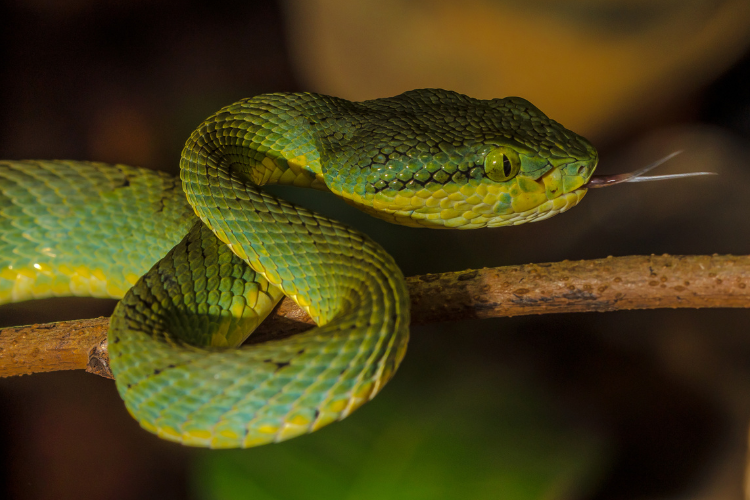
The placement of pit organs on either side of the face creates a form of thermal stereovision. Each pit receives a slightly different amount of heat, and the brain compares those signals to identify direction. The difference can be incredibly small, yet the snake interprets it with surprising clarity.
This comparison helps the snake orient its head precisely toward the heat source. In darkness, that alignment becomes the foundation for accurate tracking before the final approach.
8. Mechanical structures in the pits amplify tiny signals.
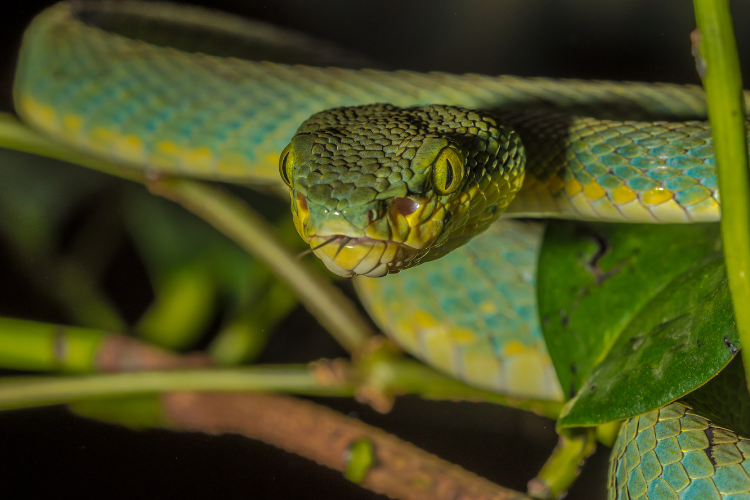
The membranes inside pit organs are suspended in a way that maximizes their responsiveness. Even microscopic temperature shifts cause slight physical changes that ripple across the surface. These movements increase the sensitivity of the ion channels embedded within the tissue.
The architecture also reduces noise from environmental fluctuations. By isolating the membrane inside an air filled chamber, the organ filters out irrelevant heat, keeping only the most meaningful signals.
9. Thermal cues guide snakes during navigation and exploration.

Snakes use heat not only for hunting but also to identify safe pathways at night. Warm surfaces may signal recently passed animals or sun heated rocks that still hold energy. These clues help the snake choose routes that conserve effort.
The world becomes a mosaic of gradients rather than bright and dark spaces. Each difference carries information about shelter, food or potential threats, allowing the snake to travel confidently even when light vanishes.
10. Evolution refined this system through millions of years.

The earliest ancestors of modern pit vipers and pythons developed slight advantages in detecting warmth, and natural selection amplified those traits. Over countless generations, the sensory capacity sharpened into a highly specialized system.
As their ecological roles expanded, the ability to sense heat became central to survival. Today’s snakes carry a sensory toolset that feels almost otherworldly, yet it emerged through steady refinement driven by the challenges of life in dim, unpredictable environments.