
Beauty and danger sit side by side in a single bloom.
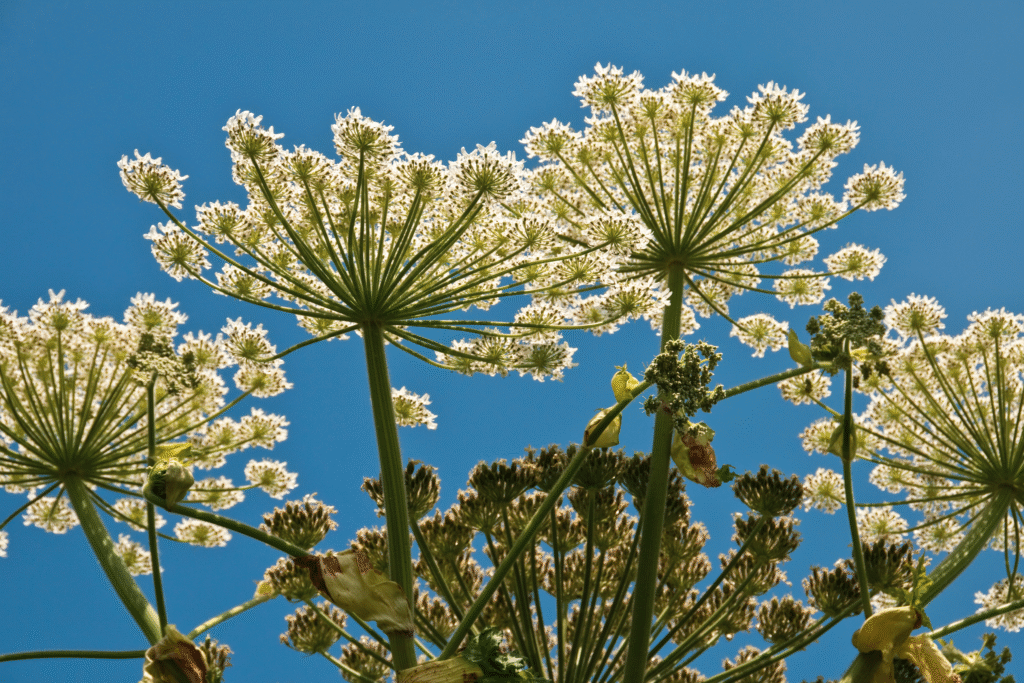
It looks harmless at first. The petals can be delicate, sometimes pale, sometimes bright, swaying softly in the breeze like any other wildflower. But brush against it, break its stem, or get too close, and this flower reveals its darker secret.
Known as giant hogweed, it isn’t just a weed or an oversized plant. Its clear sap contains chemicals that react violently with sunlight. On bare skin, it burns. In the eyes, it can strip away vision in a moment. It’s the kind of danger disguised as beauty that nature does best.
1. The flower grows taller than people.
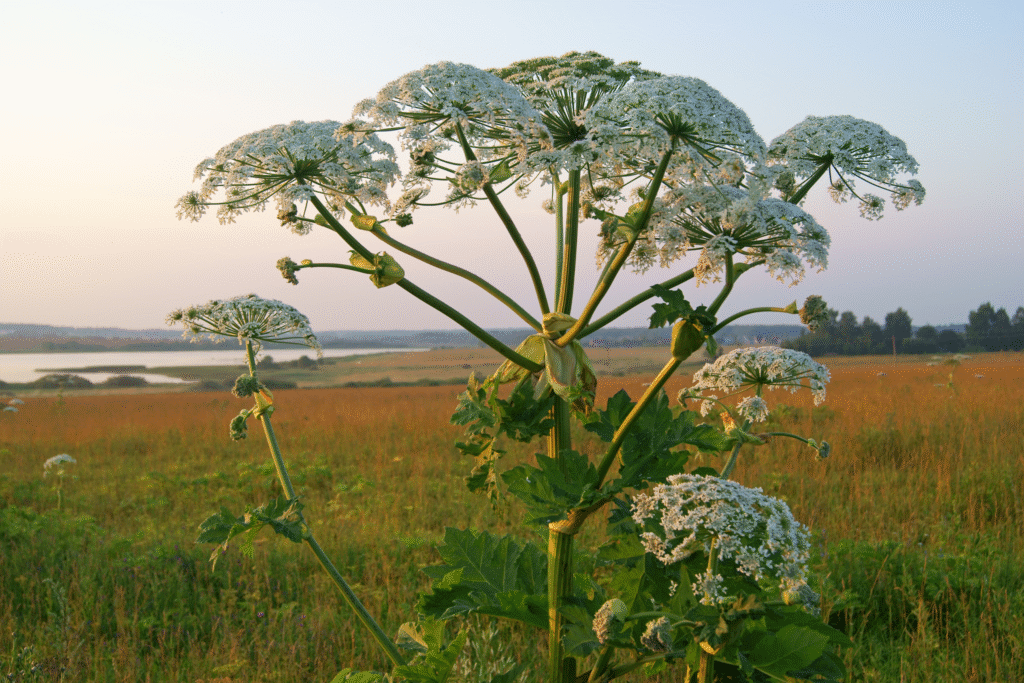
Giant hogweed is not subtle. Stalks can tower up to 14 feet, and clusters of white umbrella-like flowers stretch across the summer sky. From a distance, it resembles Queen Anne’s lace, but up close, its sheer size makes it unforgettable.
According to the U.S. Department of Agriculture, it was introduced from Asia in the early 1900s as an ornamental curiosity. That decision carried consequences still unfolding on roadsides, riverbanks, and gardens across North America.Its size draws people in, but the danger is hidden in every droplet of its sap. With a single touch, exposure begins.
2. The sap reacts with sunlight and burns skin.
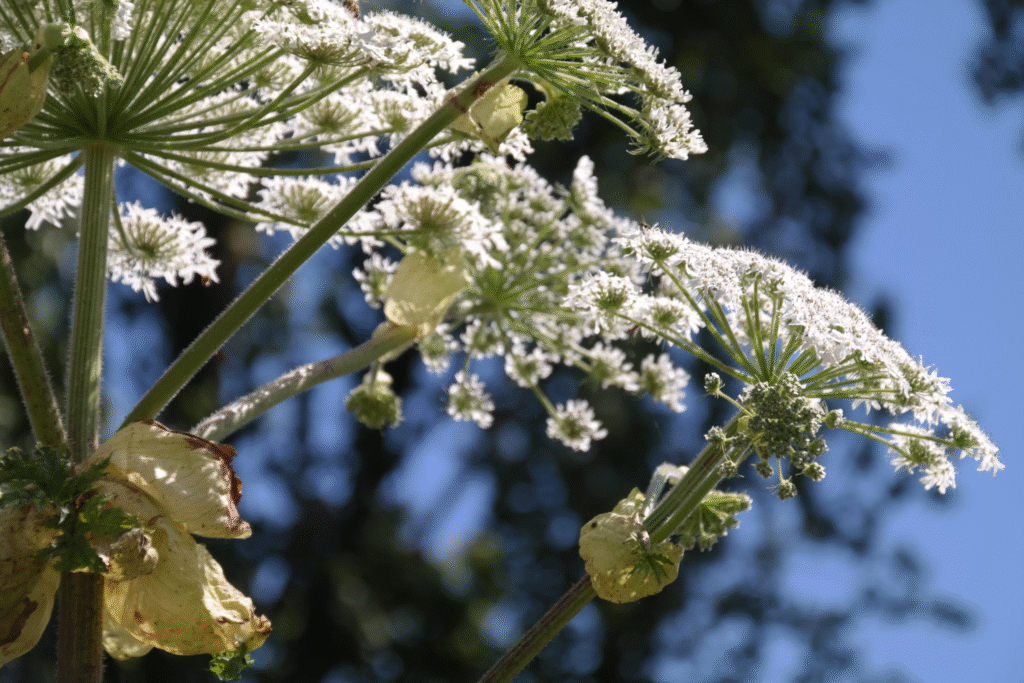
This plant carries a weapon that most flowers never evolved: furanocoumarins. These are light-activated chemicals that break down skin when exposed to ultraviolet rays. Within hours, blisters swell, turning what looked like a harmless brush into a painful injury. Severe burns can scar for life, as discovered by the New York State Department of Environmental Conservation.
The burns aren’t immediate, which tricks people into thinking nothing happened. Then the sun comes out, and the reaction ignites. For those unlucky enough to rub their eyes after contact, the results are far worse.
3. Contact with the eyes can lead to blindness.
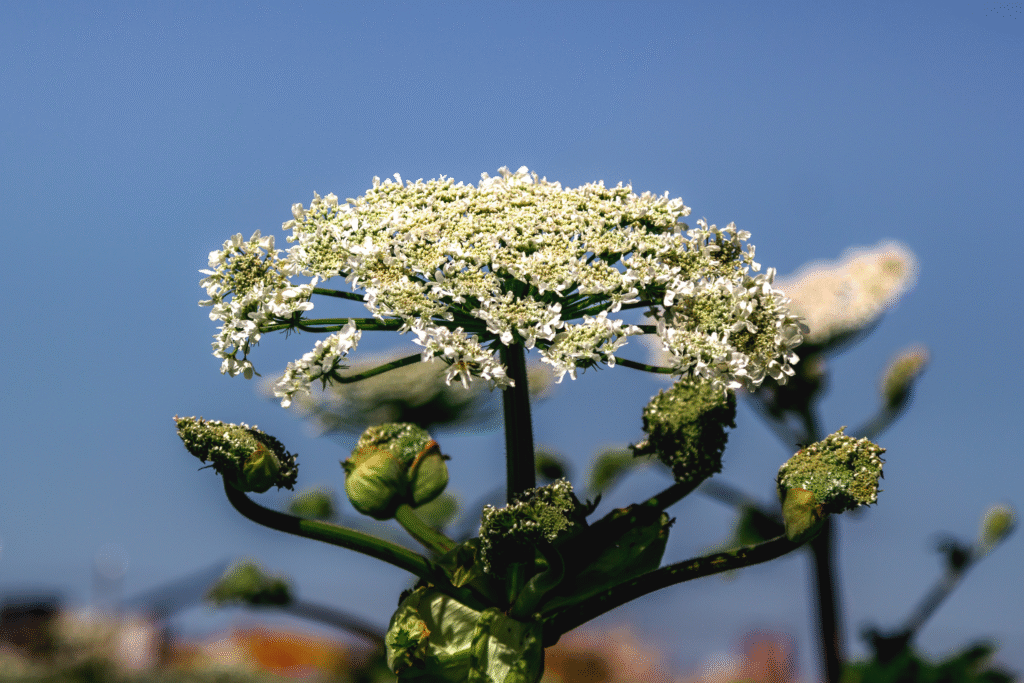
Doctors have documented cases where sap exposure to the eyes resulted in instant, sometimes permanent, blindness. Reported by the Centers for Disease Control, even the tiniest trace of juice from a snapped stalk can destroy corneal tissue. That’s the terrifying part: it doesn’t take much.
Children playing near streams, hikers brushing through tall stands, even gardeners trying to cut it back—all risk sudden exposure. Once in the eyes, treatment is often too late. The flower’s beauty becomes a lifelong mark.
4. Its seeds spread faster than control efforts.
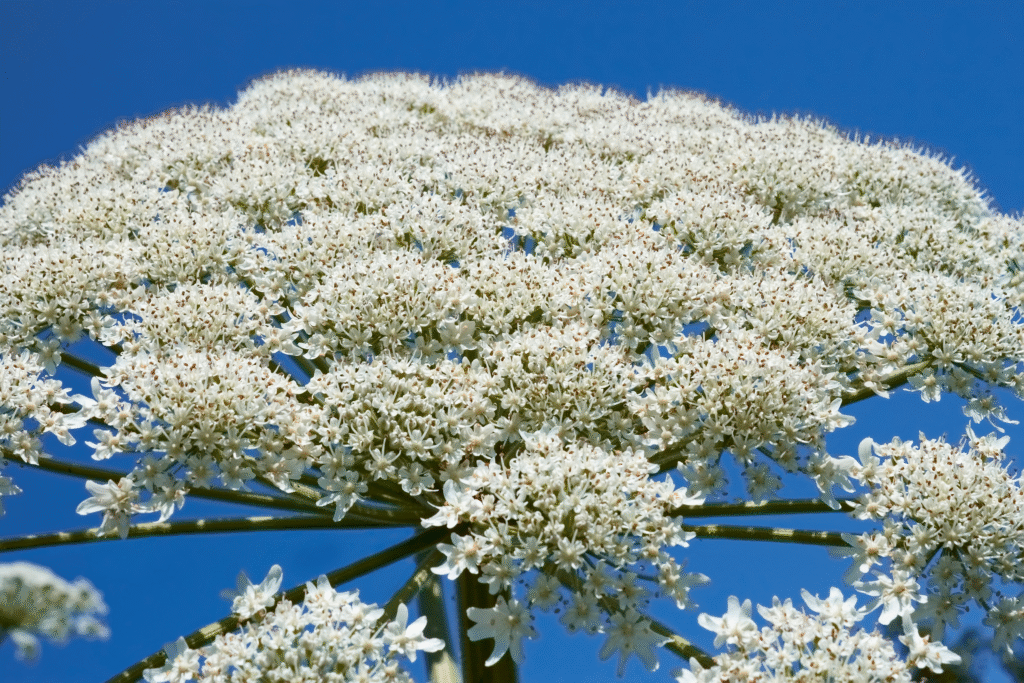
The plant produces up to 20,000 seeds a year, and each one can survive in the soil for nearly a decade. A single stalk can populate an entire riverbank, pushing out native plants and forming dense walls of towering growth. Eradication teams spend years pulling, cutting, and spraying, but the seeds return with persistence.
This makes giant hogweed not just a health hazard but also an ecological invader. It steals light and space from native plants, reshaping entire landscapes.
5. Wildlife avoids it while humans stumble into it.
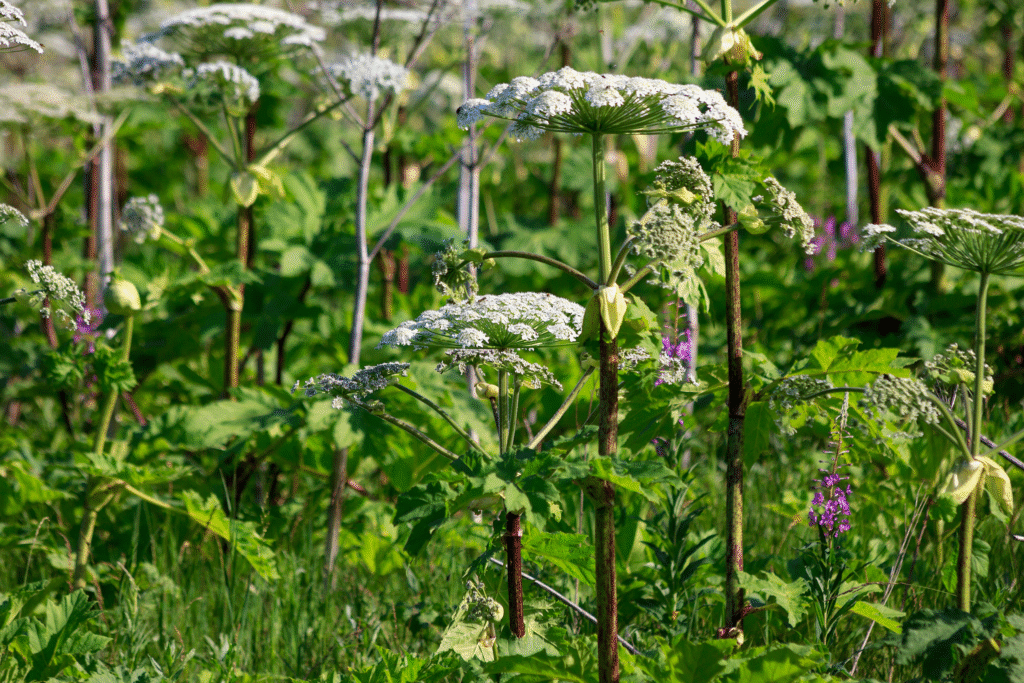
Deer and other grazing animals don’t bother with giant hogweed. Its bitter taste and chemical defenses keep wildlife away. But humans, attracted by its height or fooled by its similarity to harmless species, are the ones most at risk. Photographers lean close for pictures, gardeners mistake it for decorative cow parsley, and hikers step unknowingly into patches.
The plant thrives on this mismatch, spreading in places where curiosity outweighs caution. It stands untouched in fields while people continue to fall victim to its hidden sting.
6. Rivers and ditches give it the perfect home.
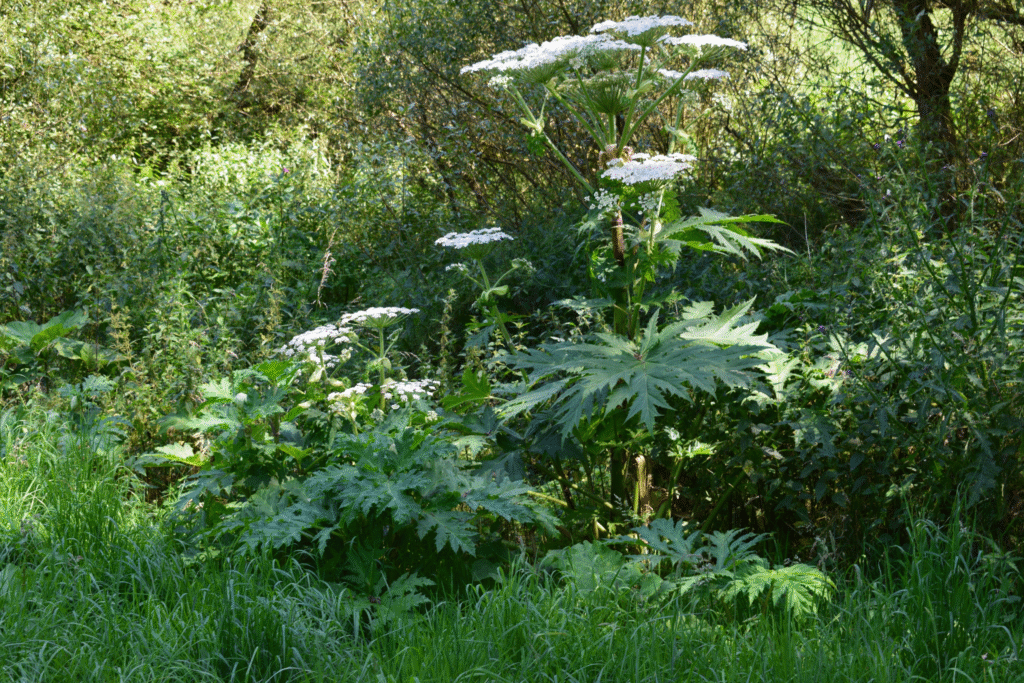
Giant hogweed prefers damp soil, which is why it so often appears near waterways, drainage ditches, and shaded valleys. Seeds float downstream, colonizing new stretches of land with each flood or storm. Eradication crews often chase it along creeks only to find it sprouting miles away the next season.
Its love for wet edges means it lurks where people walk dogs, fish, or camp. The very spaces designed for leisure turn into accidental hazard zones.
7. Identification mistakes keep happening.
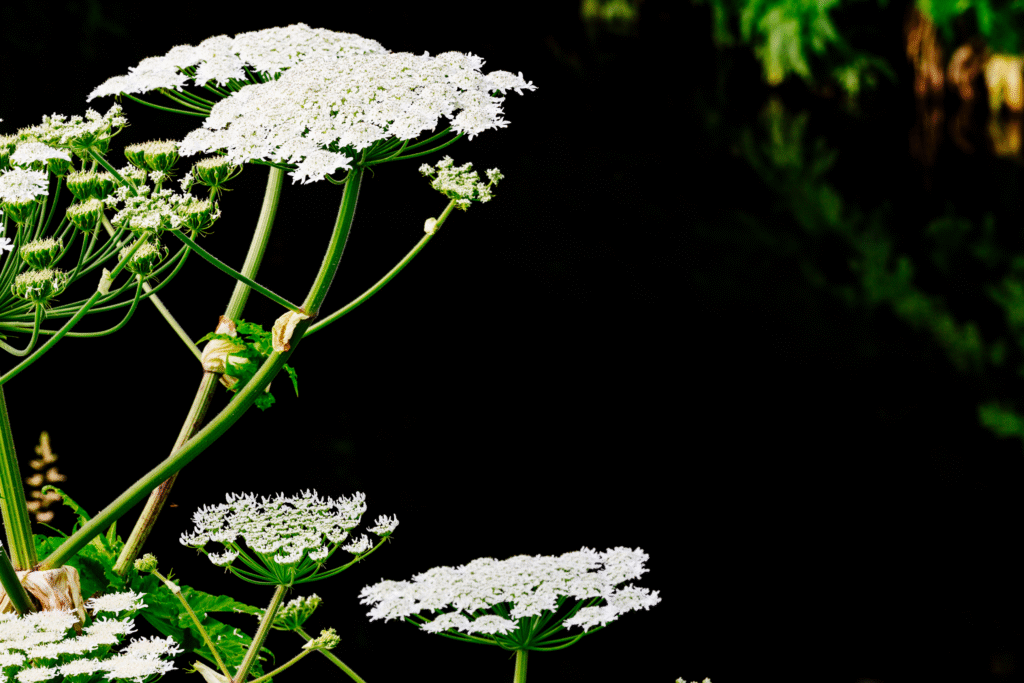
People confuse giant hogweed with Queen Anne’s lace, cow parsnip, or angelica. All of these look similar, but none carry the same level of threat. The giant version stands taller, with blotchy purple stems and coarse leaves as wide as an arm span. Still, in a roadside blur, the distinctions vanish.
That’s where trouble starts. A gardener pulling weeds or a curious child snapping stems might never realize the mistake until the burning begins hours later. Confusion keeps this plant more dangerous than it needs to be.
8. Governments now issue public warnings.
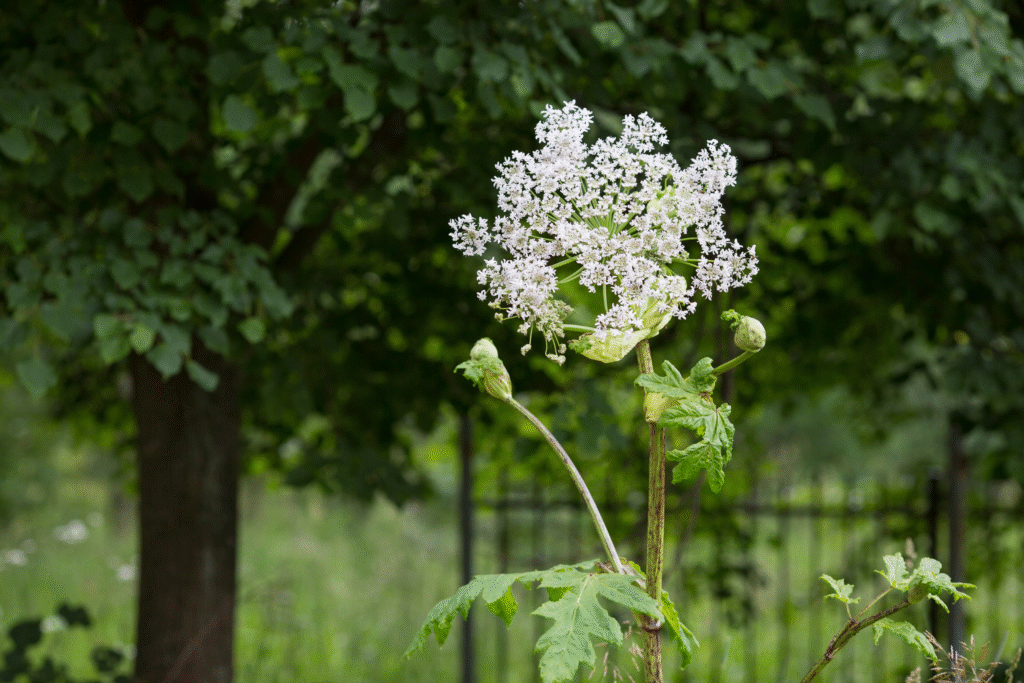
Entire campaigns have been launched to alert the public. Posters warn hikers, schools teach children not to touch it, and hotlines exist for reporting sightings. Some states have made eradication mandatory, forcing landowners to remove giant hogweed at their own expense.
Public awareness helps, but the flower still spreads. Each summer, new cases of burns appear, proving that the gap between knowledge and experience remains wide.
9. Protective gear is the only safe way to handle it.
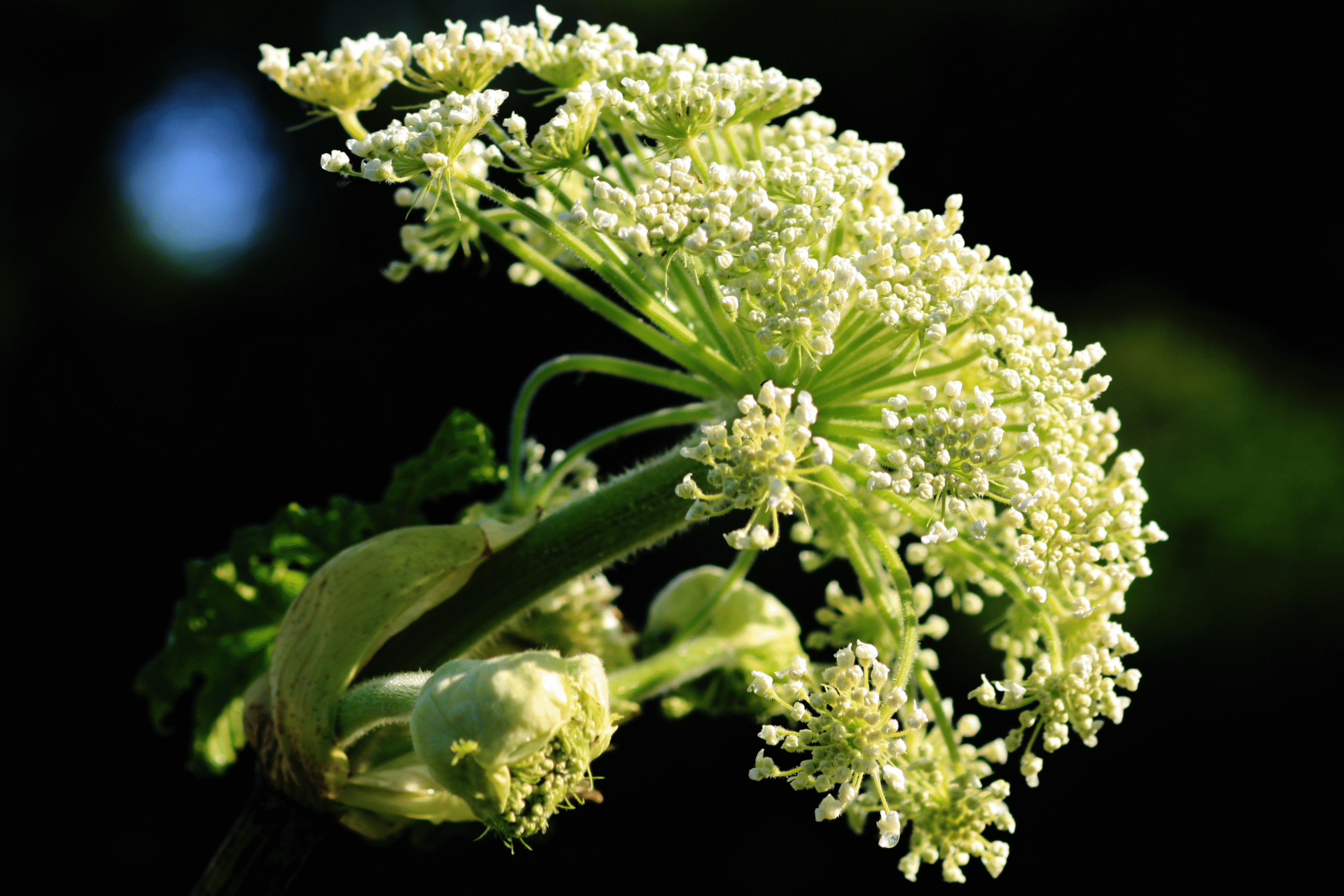
When eradication teams approach giant hogweed, they wear full suits, gloves, and face shields. Cutting it without protection risks sap spraying into the air or dripping onto exposed skin. Even mowing it can turn into a disaster, as sap-covered blades fling droplets outward.
Only sealed clothing and eye protection create a margin of safety. For everyday people, the best defense isn’t handling it at all—it’s reporting its presence and walking away.
10. Beauty masks its legacy of danger.
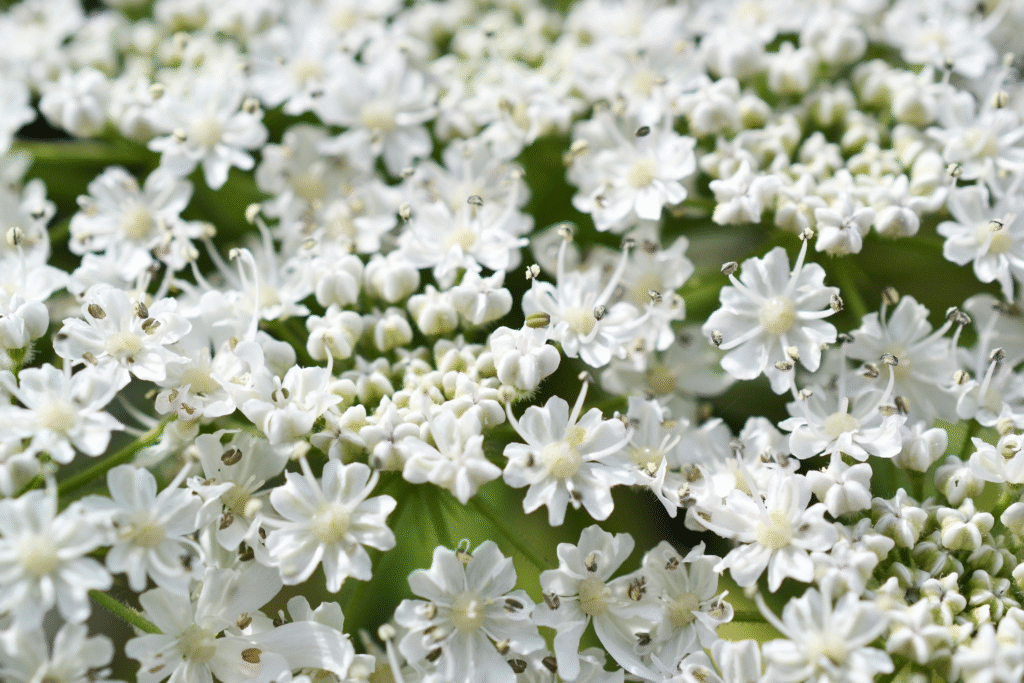
From a distance, giant hogweed appears almost magical—white blossoms towering like parasols against the sky. Up close, it tells a different story: burns, scars, blindness, and invasive conquest. Its beauty is real, but so is the destruction it leaves behind.
The flower carries two faces, one of allure and one of pain. Anyone who meets it quickly learns which one matters more. Its petals may glow in the sunlight, but its sap turns that same light into a weapon.