
Coastal ramparts vanish under a towering ocean surge.

It sounds like science fiction, but the mechanics behind a thousand-foot wave are grounded in real geologic processes. Landslides, subduction-zone quakes, or volcanic flank collapses could, under rare conditions, displace enough water to create a megatsunami capable of reshaping entire coastlines. Scientists have modeled these extremes not as predictions but as boundary tests of what the planet can do. Still, the data reveal a sobering truth—some U.S. states sit in positions so vulnerable that if such a wave ever occurred, they would simply cease to exist within minutes.
1. Washington State would face total shoreline inundation first.

Along Washington’s coast, the Cascadia Subduction Zone could displace the seafloor by several meters, sending waves of unimaginable scale toward the shore. In computer models, even modest ruptures generate destructive surges, but a full-margin slip could unleash a wall of water taller than skyscrapers, according to Scientific American. Low-lying towns from Long Beach to Aberdeen sit on narrow spits of land where escape routes vanish as the ocean rises. Within moments, the surge would erase the state’s outer coastline before continuing inland, consuming forests and infrastructure alike. The state’s fate would be sealed in minutes.
2. Oregon would see the surge sweep across its coastal plains catastrophically.
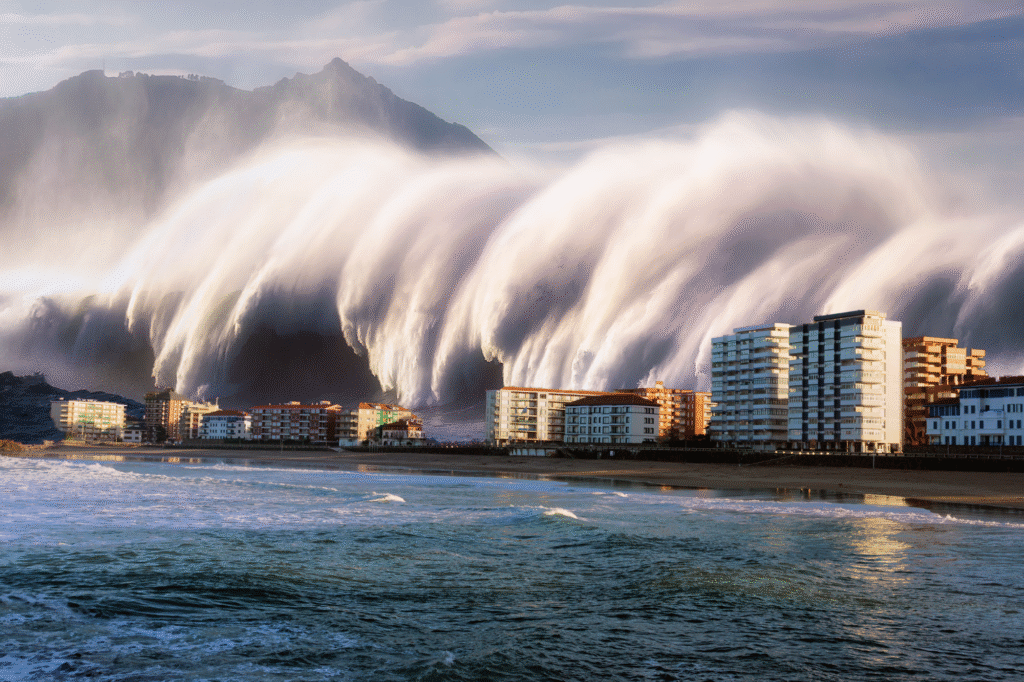
Just south of Washington, Oregon’s coastline rests directly above the same subduction fault, meaning it shares that vulnerability, as reported by The Guardian. A thousand-foot wave striking the Oregon coast would obliterate towns like Seaside, Newport, and Coos Bay, flooding entire valleys that funnel water toward inland cities. The terrain’s gentle slope offers almost no resistance, allowing the wave to roll unbroken across the landscape. Within minutes, coastal plains would turn into an unrecognizable inland sea, with only isolated highlands offering refuge from the advancing tide.
3. Northern California’s coastline would be among the earliest to vanish.

Northern California’s geology connects seamlessly to Cascadia’s southern extent, making it equally prone to mega-tsunami scenarios tied to subduction events, as stated by NOAA’s Pacific Marine Environmental Laboratory. In the event of a full-margin rupture, waves could reach the Humboldt and Del Norte counties within minutes. Crescent City, already notorious for past tsunamis, would have no natural defense against a wall of water that high. Entire segments of Highway 101 and nearby communities could vanish, leaving only debris-strewn uplands. The wave’s momentum would carry deep into river valleys, destroying everything in its path.
4. Alaska’s coastal districts would collapse under wave and landslide combinations.
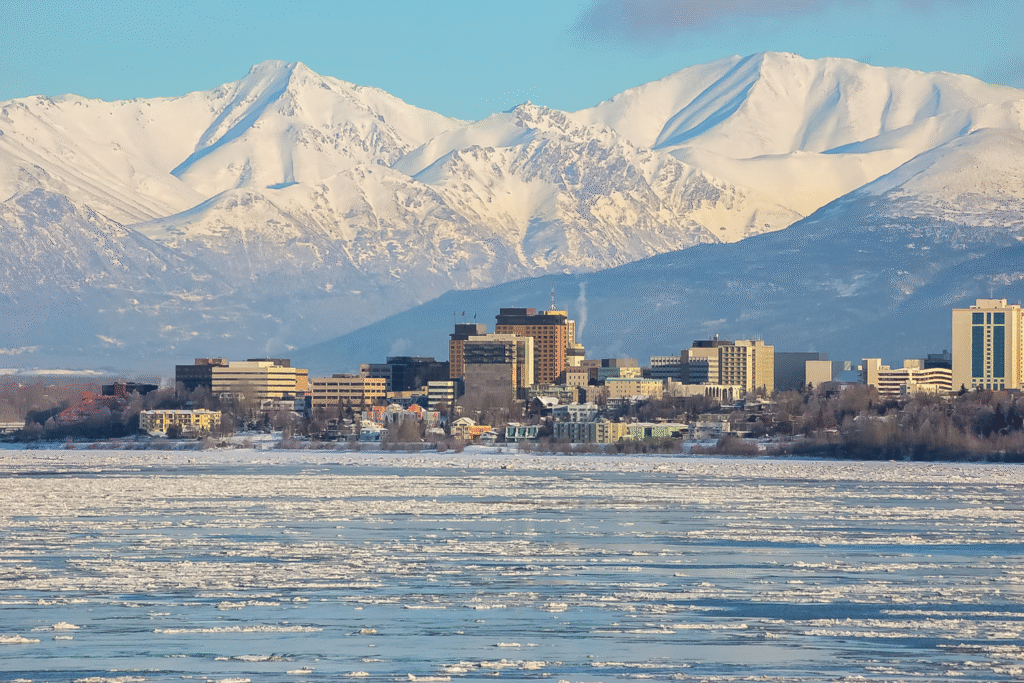
In Alaska, the risk is both seismic and topographic. Massive landslides triggered by melting permafrost or earthquakes could drop entire mountain faces into narrow fjords, creating localized waves of devastating height. In 2015, a slope collapse in Taan Fiord generated a 600-foot wave; doubling that volume would easily reach a thousand feet. The resulting surge could rush through bays and coastal inlets, flattening small villages and oil facilities along the Gulf of Alaska. Isolation and rugged terrain would hinder rescue efforts, making Alaska’s remote communities especially vulnerable.
5. Hawaii would be swept by waves generated from volcanic flank collapse.
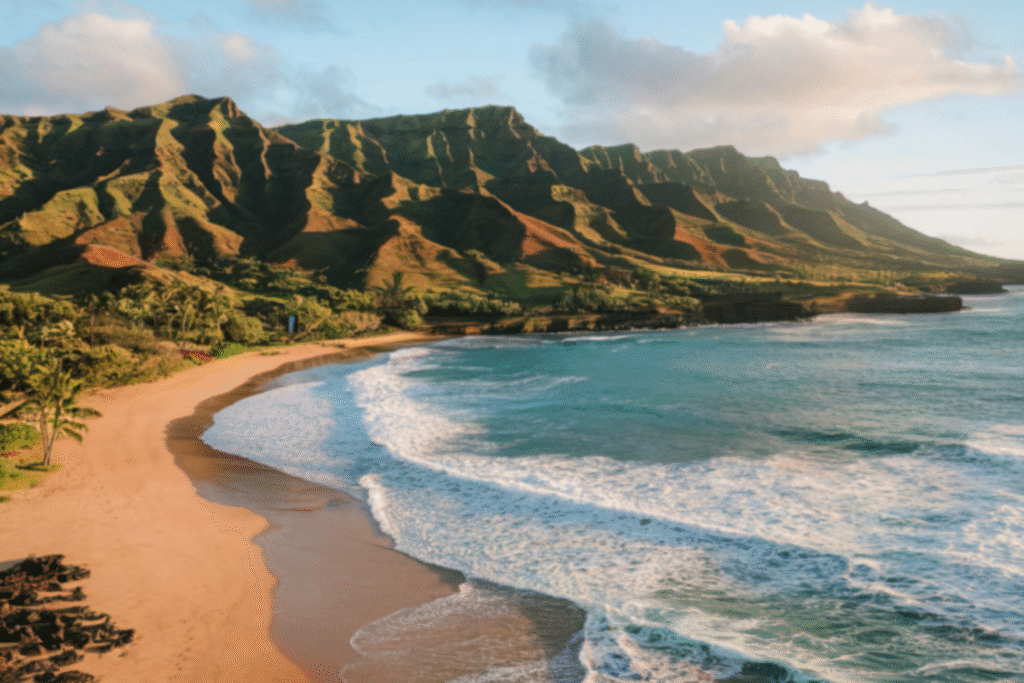
Hawaii’s greatest tsunami threat comes not from across the ocean but from itself. If the unstable flank of Mauna Loa or Kilauea were to collapse into the Pacific, the displaced water could form a wave surpassing any in recorded history. Geological evidence shows that similar collapses in the distant past launched waves hundreds of feet high that reached neighboring islands. The dense coastal population and limited evacuation infrastructure would make such an event catastrophic. In a thousand-foot scenario, entire coastal towns could vanish within minutes of the initial surge.
6. Louisiana’s low-lying bayous and delta would vanish under cascading surge.

In Louisiana, the problem is not tectonic but topographic. The Mississippi River Delta sits barely above sea level and continues to subside each year. A massive tsunami entering the Gulf could easily overrun weakened barrier islands and travel far inland. The state’s marshes would amplify the energy rather than absorb it, carrying the wave into populated areas around New Orleans. The combination of subsidence, sea-level rise, and lack of elevation ensures that the state’s southern half would vanish under any major oceanic surge.
7. Florida’s Gulf and Atlantic coasts would lose coastlines in minutes.
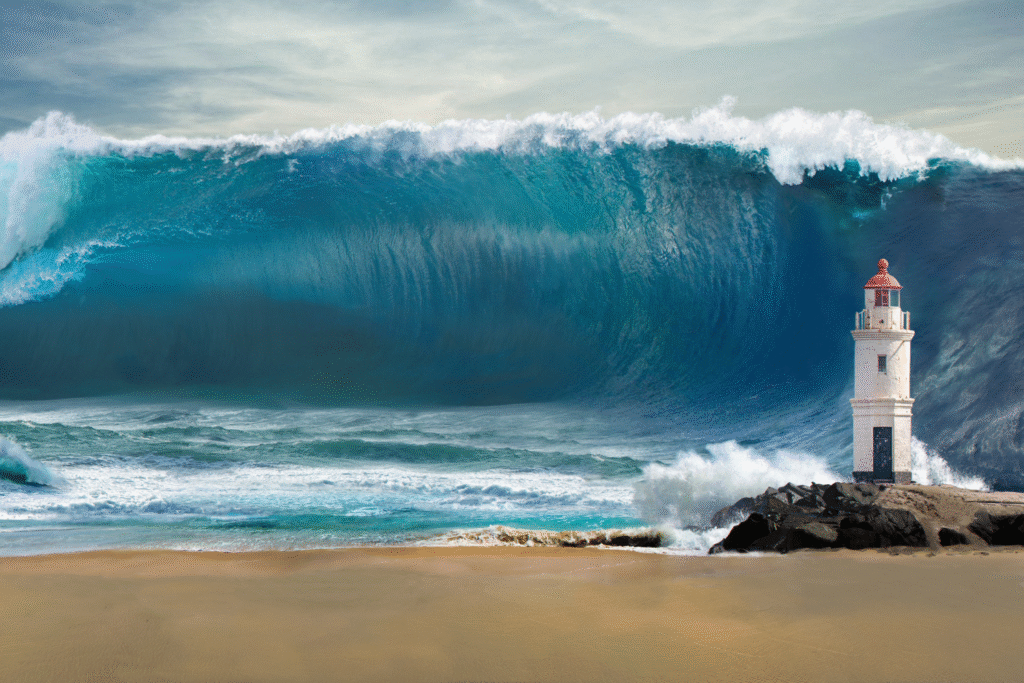
A thousand-foot wave striking Florida would wash across both coasts, with the peninsula offering no true barrier. The state’s highest natural point sits only 345 feet above sea level, leaving almost the entire region exposed. In a worst-case event triggered by an Atlantic landslide, Miami and Tampa could disappear under walls of water traveling at jetliner speeds. Saltwater would surge inland for dozens of miles, contaminating freshwater aquifers and obliterating infrastructure. Evacuation would be impossible once the wave approached, making survival dependent solely on elevation and luck.
8. New York State’s coastal regions would be quickly overwhelmed by surge.

New York’s vulnerability lies in its dense coastal infrastructure—subways, tunnels, and seawalls designed for storms, not megatsunamis. A wave entering the harbor could bounce between Manhattan’s skyscrapers and funnel up the Hudson and East Rivers. Within minutes, lower Manhattan, Brooklyn, and Long Island’s south shore would disappear beneath a churning inland sea. The city’s vertical geography would amplify flooding pressures, and even elevated boroughs would sustain catastrophic damage. The same conditions that make New York a maritime powerhouse would also make it a trap in such an event.
9. New Jersey’s Atlantic front would vanish under the cresting ocean slab.
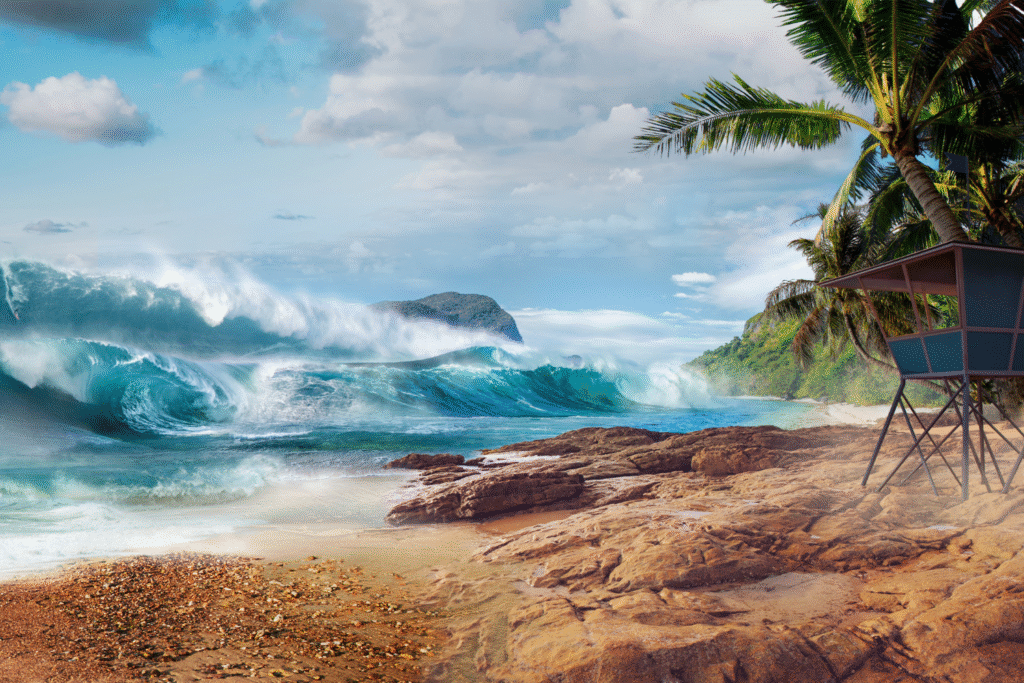
New Jersey’s long, low coastline offers little resistance to a megatsunami’s advance. Its barrier islands—already thin and overdeveloped—would disintegrate instantly, and the surge would pour across the mainland into densely populated suburbs. The wave would continue pushing west toward Philadelphia through Delaware Bay, spreading destruction across two states. New Jersey’s geography leaves few natural defenses, and its infrastructure would crumble under the pressure of a sustained inland surge. Once overtopped, recovery would be virtually impossible.
10. North Carolina’s Outer Banks would be swallowed by the advancing wall.
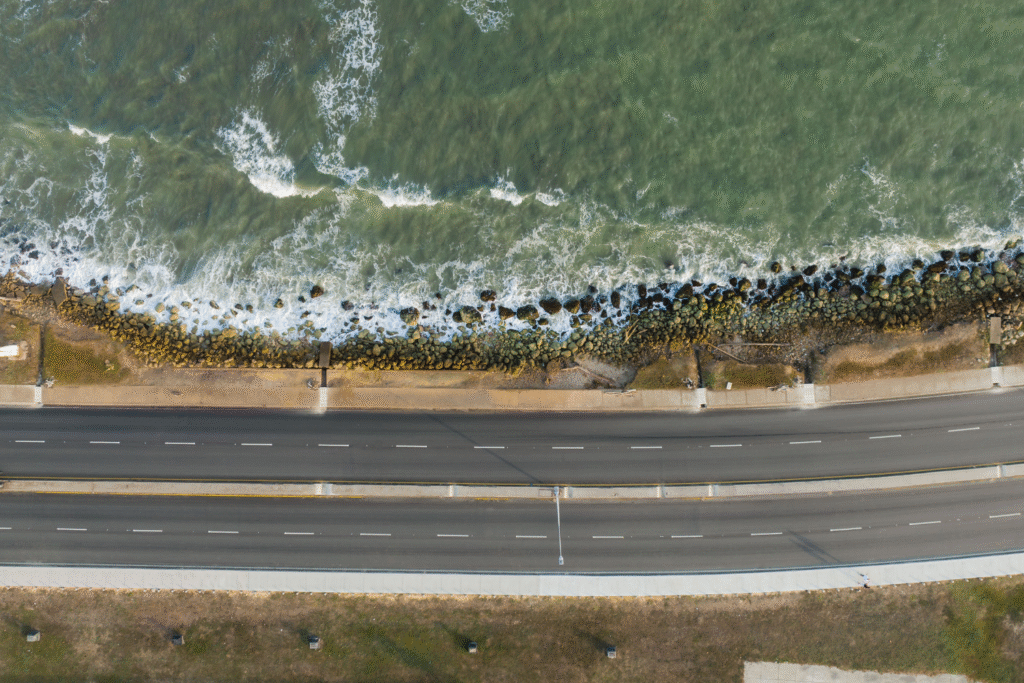
North Carolina’s Outer Banks, a fragile chain of barrier islands, already struggle against ordinary storm surges. A thousand-foot wave would obliterate them entirely, sweeping sediment and structures into the Pamlico Sound and beyond. With little topographic variation between the islands and the mainland, the water would continue across low-lying plains, engulfing farmland and towns as it moved westward. The wave’s residual force could reach hundreds of miles inland, leaving a shallow inland sea where the coastal plain once existed.
11. Virginia’s coastal plain would meet seawater’s advance fastest.
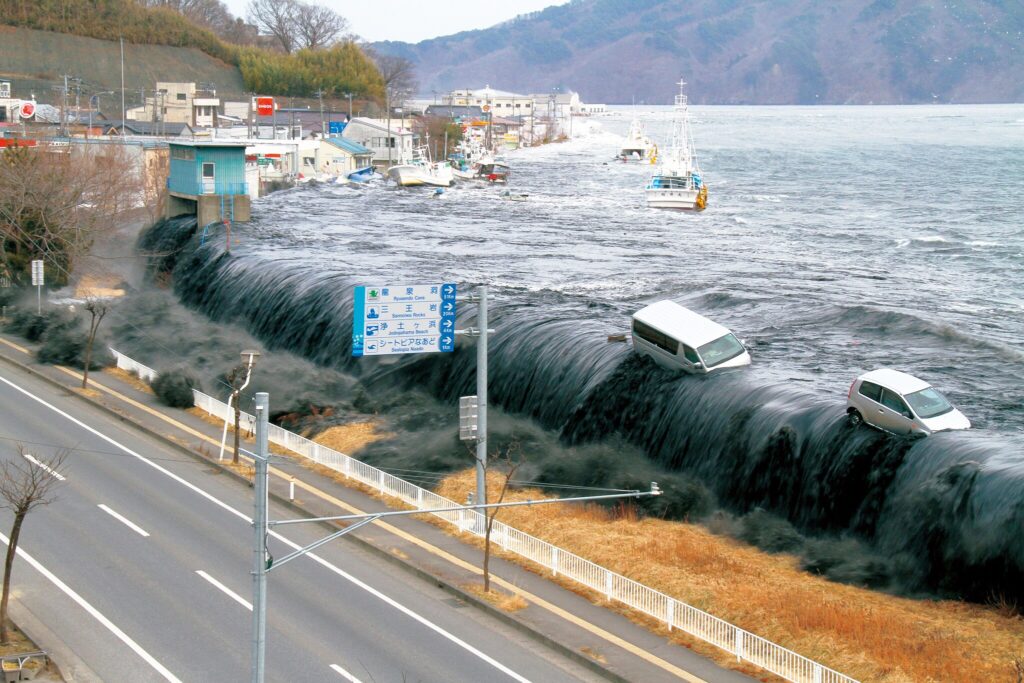
Virginia’s Tidewater region, which includes the Chesapeake Bay and its tributaries, sits only a few feet above sea level. A megatsunami approaching from the Atlantic would funnel directly into the bay, amplifying the wave’s height as it narrows inland. Naval installations, cities like Norfolk, and major ports would vanish almost immediately. Because of the bay’s shape, the surge would rebound and flood additional areas as it withdrew, doubling the devastation. The event would leave Virginia’s coastal geography unrecognizable—flattened, flooded, and rewritten by the sea itself.