
The night changes everything inside your house.
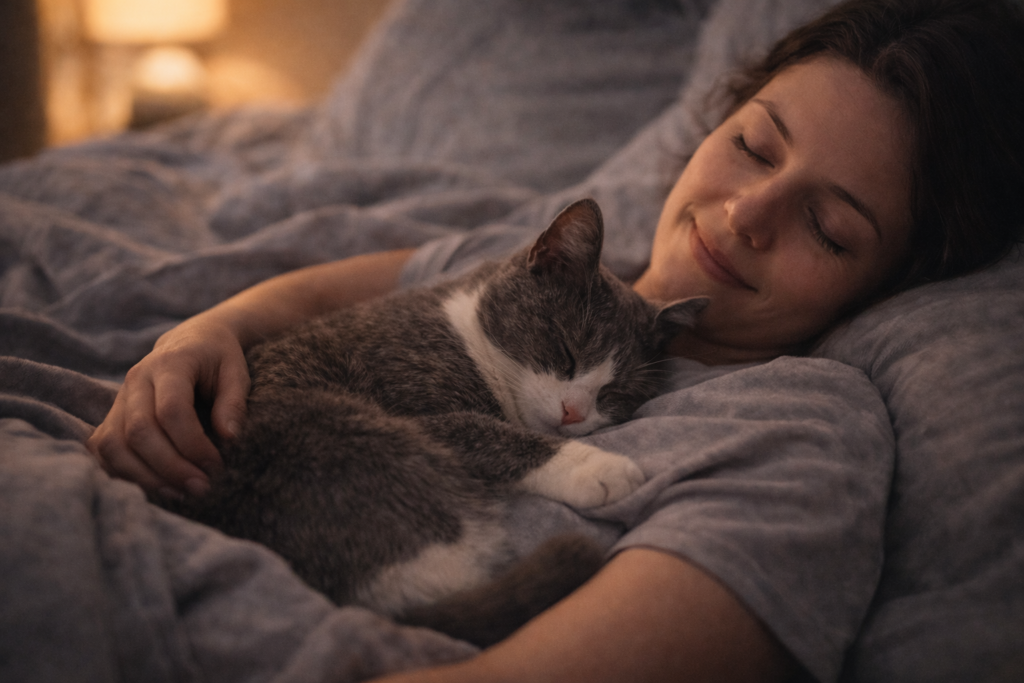
All day your cat moves like a tenant who barely acknowledges you. It naps in sunbeams, ignores your calls, and chooses the far corner of the couch. Then evening falls. Suddenly it follows you from room to room, curls against your legs, and insists on sleeping pressed against your ribs. The shift feels dramatic, almost suspicious. What changes after sunset is not mood alone. It is biology, environment, and instinct colliding in ways most owners never notice.
1. Cats are naturally twilight hunters.
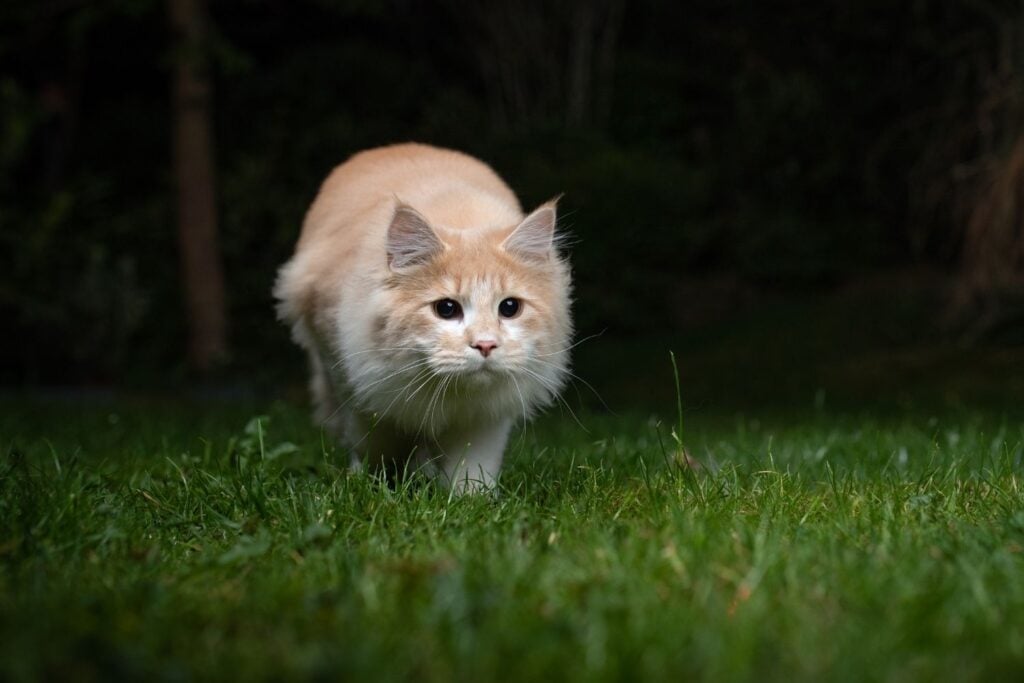
Domestic cats descend from African wildcats that evolved to hunt at dawn and dusk. Their circadian rhythms still reflect that ancestry. As daylight fades, alertness increases, pupils dilate, and muscular readiness rises. Evening is not bedtime in feline biology. It is activation.
In homes without prey, that energy has nowhere natural to go. When stalking opportunities are limited to toys and human ankles, your presence becomes the most dynamic stimulus available. The following behavior that feels clingy may simply be redirected hunting engagement.
2. Darkness heightens reliance on familiar figures.
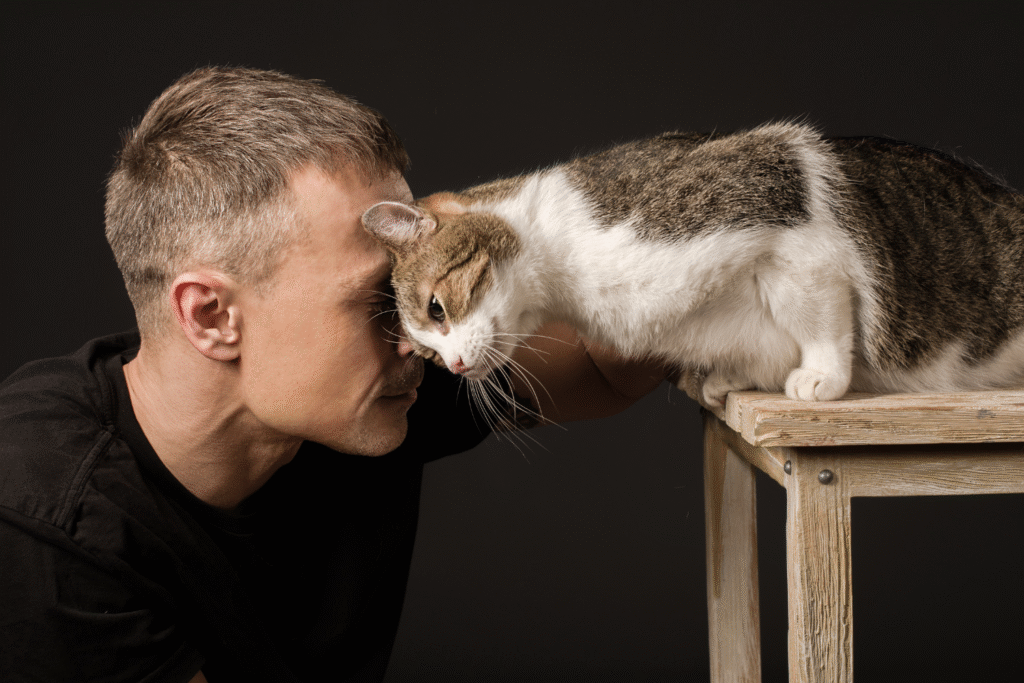
Low light alters visual contrast and shadow perception. Even confident cats scan more frequently when environmental clarity shifts. Small sounds carry differently at night, triggering heightened auditory processing.
In those moments, a stable reference point matters. Your scent, voice, and predictable movements create consistency in an otherwise shifting sensory field. Staying near you reduces vigilance demands and lowers physiological arousal.
3. Household noise levels finally drop.
Daytime sensory load can be substantial. Appliances hum, doors close, phones vibrate, and outside traffic fluctuates. Cats process higher frequency sounds than humans, making the world busier for them than you might realize.
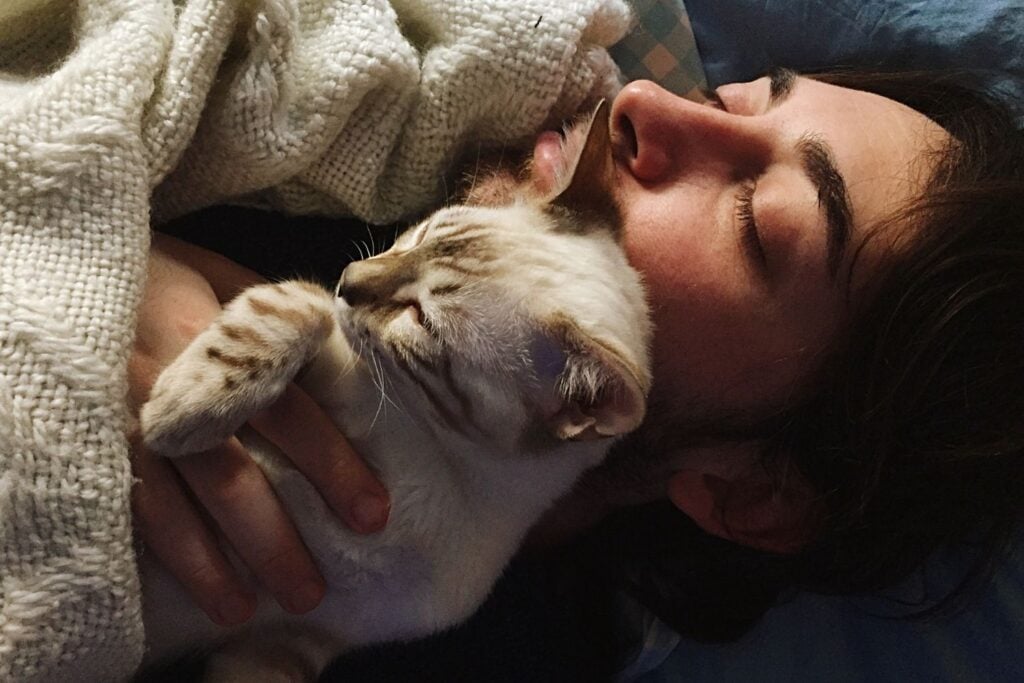
When the house becomes still, social bandwidth opens. With fewer competing stimuli, affiliative behavior surfaces. Evening attachment may reflect relief from overstimulation rather than sudden emotional dependency.
4. Temperature shifts encourage physical closeness.

Cats prefer ambient temperatures warmer than most humans maintain. As night progresses and thermostats lower, subtle cooling occurs. Conserving body heat becomes metabolically efficient during rest.
Pressing against your torso reduces caloric expenditure. Thermal imaging studies show measurable warmth transfer in co sleeping animals. What feels affectionate may also be thermodynamic practicality woven into social bonding.
5. Evening routines signal predictable interaction.
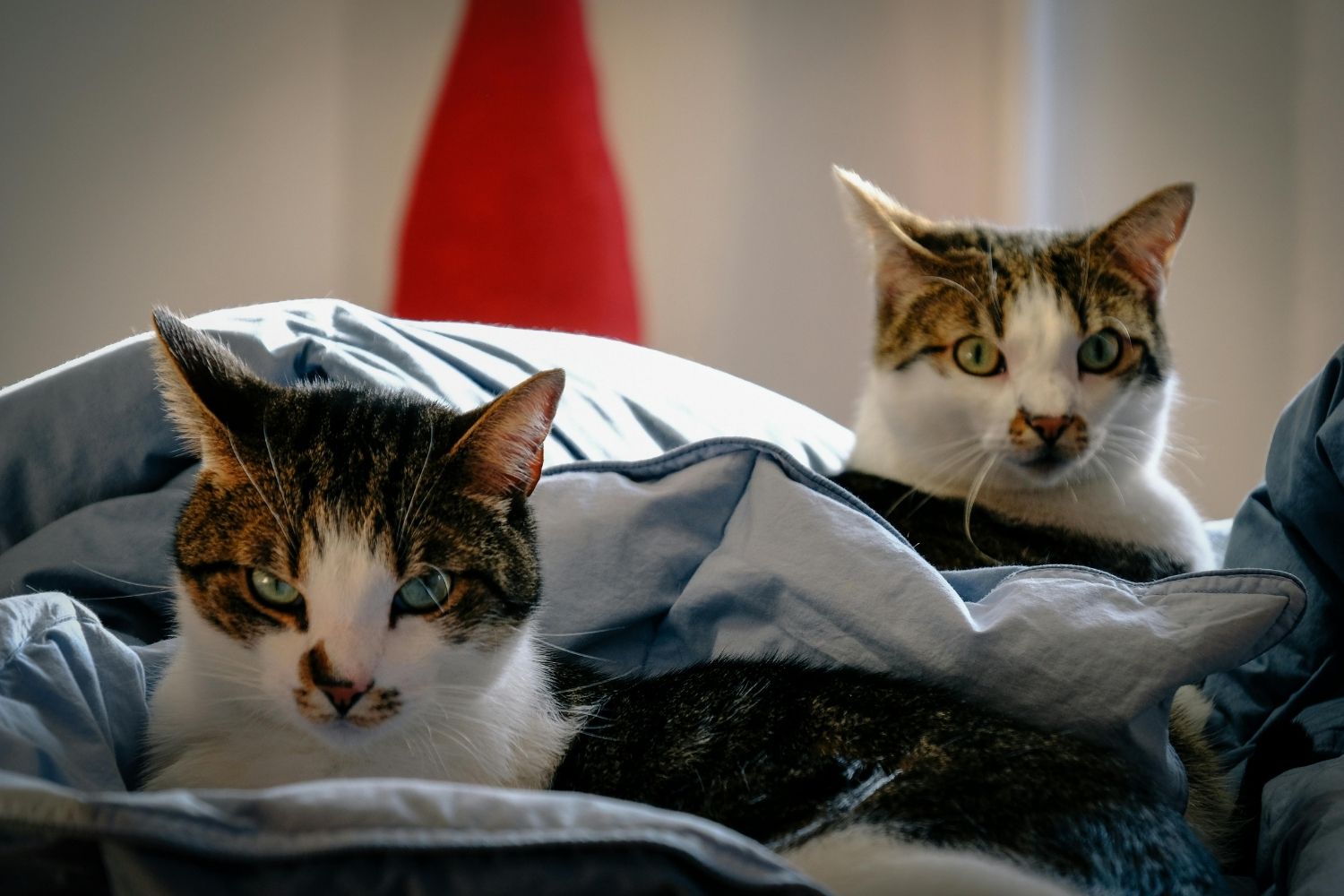
Cats memorize sequences with remarkable precision. The sound of a bathroom cabinet, the click of a light switch, or the rustle of bedding signals upcoming events. These cues cluster in the evening.
When routines consistently precede feeding, petting, or extended stillness, anticipation builds. Following behavior may represent strategic positioning within a learned behavioral chain. It is participation in a predictable script.
6. Separation stress peaks after long absences.

If you spend the day outside the home, your cat’s stress levels may rise gradually in your absence. Studies measuring feline cortisol indicate subtle elevation during prolonged solitude, even in well adjusted pets.
Evening reunions become the longest uninterrupted proximity window of the day. Closeness may not begin at dusk by accident. It may represent delayed social regulation after accumulated separation tension. The behavior can intensify in single cat households where no other feline companionship exists.
7. Hunting energy needs structured release.

Even indoor cats retain predatory sequencing instincts including orient, stalk, chase, and pounce. Without scheduled interactive play, that energy remains partially unresolved through the day.
At twilight, when instinct peaks, your movements trigger orientation responses. Walking down a hallway mimics prey trajectory. Standing still invites ambush style positioning. Following behavior may be a muted expression of drive seeking outlet.
8. Hormonal overlap creates social windows.
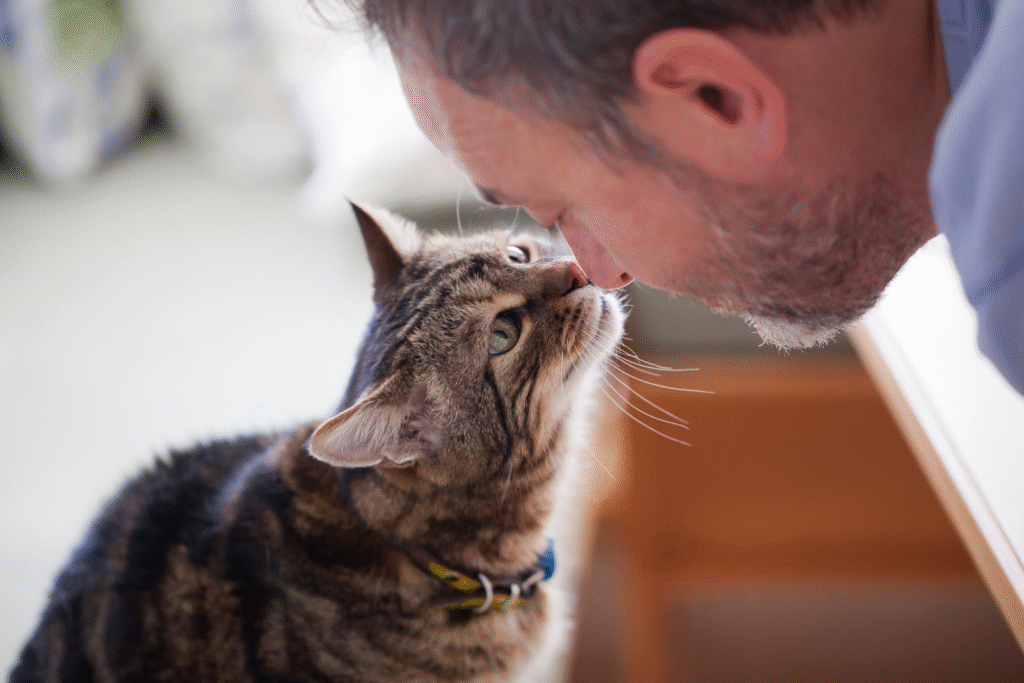
Melatonin rises in humans as darkness deepens, signaling sleep readiness. In cats, alertness remains high during early evening before tapering. This mismatch creates a period where you are stationary and they are stimulated.
Physical contact during this window can accelerate synchronization. Research on mammalian bonding shows proximity influences neurochemical regulation. Your cat may be aligning rest cycles through shared space rather than demanding attention.
9. Night vulnerability amplifies attachment patterns.
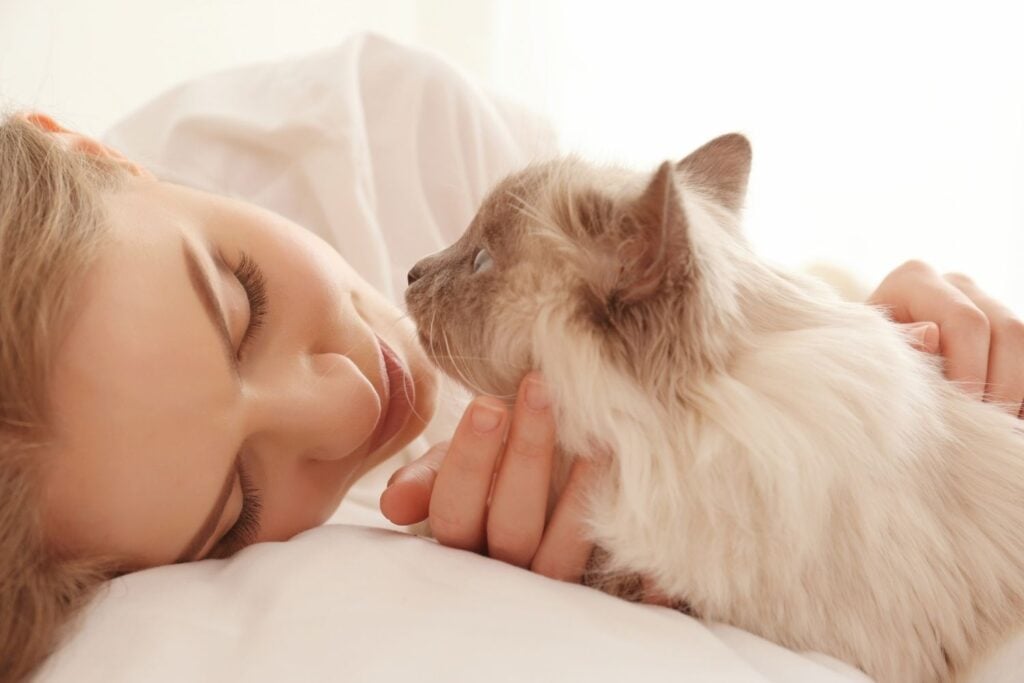
In wild conditions, dusk increases predator threat and decreases visibility. Felines evolved to seek advantageous positioning during vulnerable hours. Group proximity enhances safety perception.
Even within secure homes, ancestral coding persists. Choosing to sleep pressed against you may activate ancient security responses. The behavior reflects survival memory embedded in neural pathways rather than modern dependence.
10. Your posture signals availability and calm.

Throughout the day you are in motion. Rapid directional changes and task switching make approach less predictable. In the evening, you often sit or recline for extended durations.
Cats favor stability. A seated human presents minimal sudden movement risk. Prolonged stillness signals safety and opportunity for sustained contact without interruption. The shift in your body language invites closeness.
11. Learned reinforcement strengthens nightly bonding.

Each time you respond positively to nighttime closeness, the behavior is reinforced. Petting, soft speech, or allowing bed access strengthens association between darkness and reward.
Over weeks and months, neural pathways solidify around that timing. The result feels spontaneous but is built through repetition. Your cat’s apparent transformation after dark may be the predictable outcome of biology interacting with consistent human response patterns.