
New equations are challenging long held cosmic limits.

For decades, warp speed belonged firmly to fiction, dismissed by physicists as mathematically clever but physically impossible. That certainty has softened. In recent years, peer reviewed papers have reopened questions about spacetime manipulation, energy requirements, and what physics actually forbids. The shift did not come from engineers or futurists, but from theorists revisiting Einstein’s equations with fresh constraints. What they are finding does not promise starships tomorrow. It suggests the door may not be locked as tightly as once believed.
1. Recent papers reopened debate over warp feasibility.
For years, warp drive concepts were shelved as unphysical because they required impossible energy conditions. That assumption shaped textbooks and public understanding. Recently, a small group of physicists challenged that foundation by revisiting spacetime metrics under stricter mathematical limits.
New theoretical work showed alternative solutions that avoid exotic matter requirements, according to Physical Review D. These models do not claim engineering readiness. They argue feasibility within known physics. That distinction matters because it shifts warp speed from forbidden to unresolved, reopening debate rather than ending it.
2. Energy requirements were reduced in newer models.

Earlier warp equations demanded more energy than entire stars could provide. That scale made discussion academic at best. Revised models focused on reshaping spacetime geometry to reduce those demands significantly.
Physicist Erik Lentz proposed soliton based configurations that rely on positive energy densities, as reported by Scientific American. While still enormous, the energy requirements dropped from astronomical impossibility to theoretical extremity. The change reframed the problem from absolute impossibility to one of scale and control.
3. Spacetime manipulation replaced faster than light motion.

The newer papers emphasize that warp travel does not move an object faster than light locally. Instead, spacetime itself contracts and expands around a vessel, preserving relativity.
This distinction resolves a major objection rooted in causality. Researchers reframed the concept as geometry engineering rather than velocity, as stated by Nature Physics. By avoiding local light speed violations, the models align more closely with Einstein’s framework, reducing conflicts that once invalidated the idea outright.
4. Mathematical consistency remains under intense scrutiny.

Even supportive physicists stress that equations alone do not guarantee physical reality. Solutions must remain stable under perturbation and not collapse under realistic conditions.
Small instabilities could invalidate entire models. Researchers are now stress testing solutions for internal contradictions. That scrutiny is necessary before any conceptual leap toward implementation can be justified within serious physics discourse.
5. Negative energy constraints are no longer absolute.

Negative energy was once considered unavoidable for warp metrics. That requirement clashed with quantum field theory and experimental evidence.
Recent formulations demonstrate configurations that avoid sustained negative energy regions. While not eliminating challenges, this development removes one of the strongest theoretical barriers. It changes the nature of the problem rather than solving it outright.
6. Engineering challenges remain far beyond current capability.
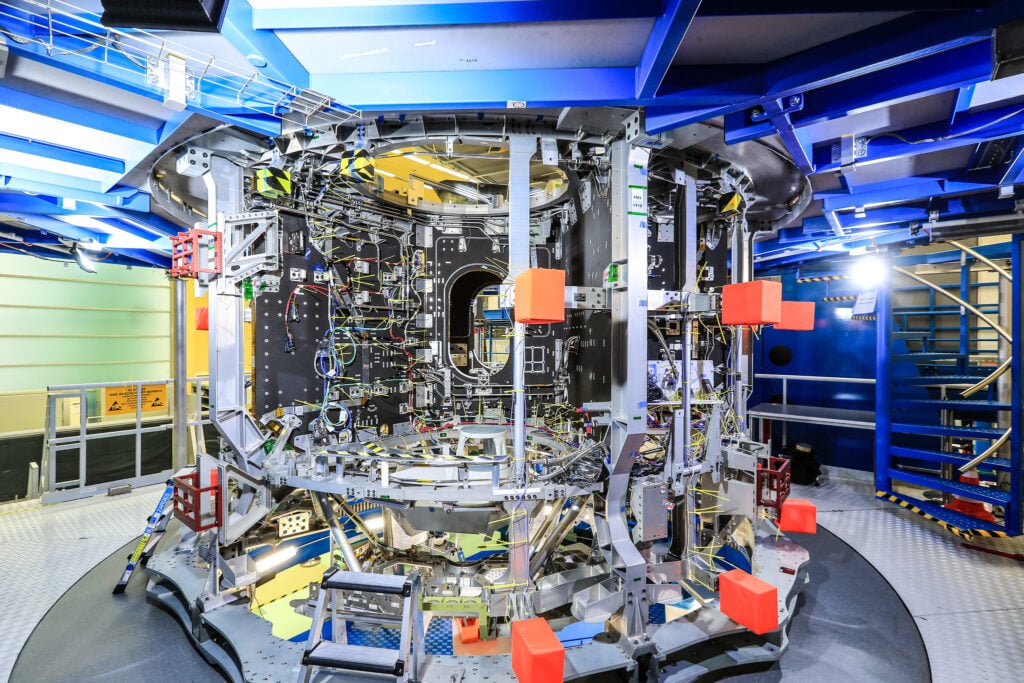
Even if equations permit warp motion, translating math into machinery remains daunting. Controlling spacetime curvature would require materials, precision, and energy management far beyond anything now conceivable. No known structure can shape gravity deliberately.
Physicists emphasize that feasibility does not imply practicality. The gap between theoretical allowance and engineering reality spans centuries. Current discussion remains conceptual, focusing on constraints rather than construction. Acknowledging that distance keeps research grounded while allowing physics to explore boundaries without promising technology that cannot exist yet.
7. Quantum effects introduce additional unresolved complications.

Warp metrics must coexist with quantum field behavior. Vacuum fluctuations, particle creation, and horizon effects could destabilize any spacetime bubble before motion begins. These factors complicate otherwise clean equations.
Researchers are examining whether quantum backreaction destroys warp configurations. Early analysis suggests some models may survive limited effects, but uncertainty remains. Reconciling general relativity with quantum mechanics remains physics’ deepest challenge, and warp travel sits directly at that intersection without resolution today.
8. Causality concerns have not fully disappeared.
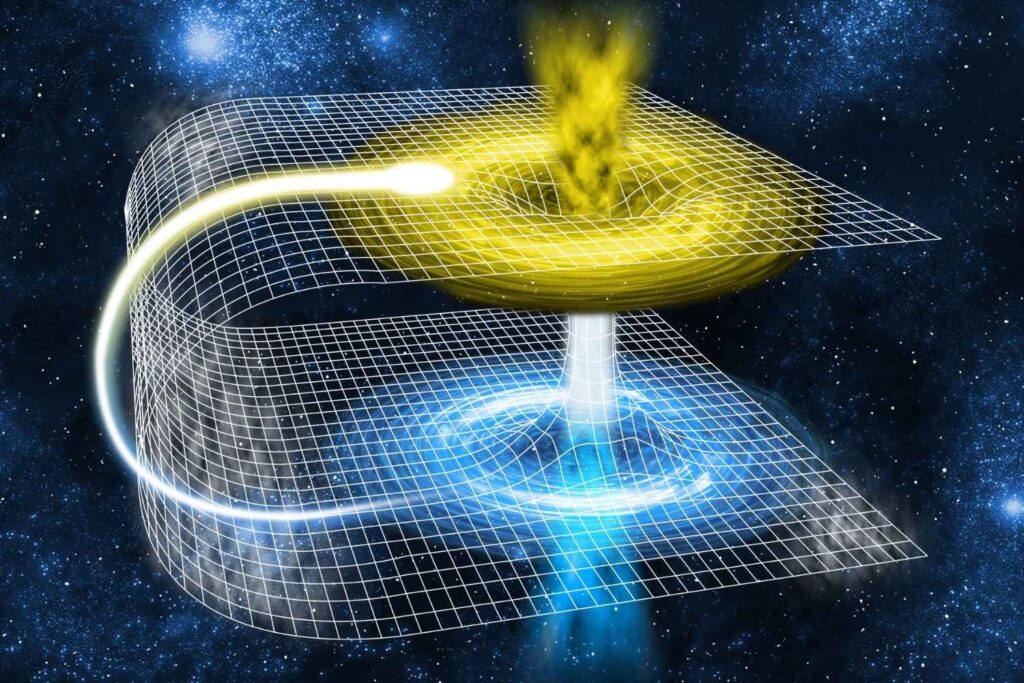
Although newer models avoid local faster than light motion, broader causality questions persist. Closed timelike curves and paradoxes could still emerge under extreme spacetime manipulation.
Physicists debate whether natural constraints prevent such outcomes or whether additional rules must apply. The concern is not philosophical but mathematical. Any model enabling time loops would likely be rejected. Resolving this issue is essential before warp concepts can be considered internally consistent.
9. Experimental testing remains impossible for now.

Warp physics operates far beyond laboratory scales. No experiment can currently test spacetime curvature at required magnitudes. That limitation confines work to theory and simulation.
Researchers rely on consistency checks, numerical modeling, and indirect constraints. Progress depends on mathematical rigor rather than data. While frustrating, this mirrors early gravitational wave research, which remained theoretical long before detection became possible through unrelated technological advances.
10. The idea shifted from forbidden to uncertain.
The most important change is conceptual. Warp travel is no longer dismissed outright by physics. It occupies a narrow space between impossibility and feasibility.
That shift matters because science advances by refining boundaries. Removing absolute prohibitions invites deeper examination without guaranteeing success. Warp speed remains distant, but it now belongs to physics rather than fiction. The debate has reopened, and with it, questions once considered settled are active again.