
What these moments reveal is unexpectedly profound.
It begins in a way that feels familiar, a pause, a shift, something in the air that doesn’t quite move the same. But what follows isn’t what most people expect. There’s no rush to leave, no quick return to routine. Instead, something slower takes hold, something that looks almost intentional. The more these moments are observed, the harder they are to dismiss as simple instinct. What unfolds feels layered, deliberate, and deeply affecting. And once you see it happen, it becomes difficult to separate what we call human emotion from something that may not belong to us alone.
1. Giraffes linger beside fallen companions.

Out on the African savanna, giraffes are usually seen as calm, elegant, almost distant animals. But when one of their own dies, especially a calf, their behavior shifts in a way that feels hard to ignore. They don’t simply pass by. Adult giraffes, often the mother, have been seen remaining beside the body for hours, sometimes stretching into days.
There’s no clear survival benefit to staying. It doesn’t improve safety, and it isn’t limited to close relatives. Other members of the group will approach, sniff, gently nudge, then linger nearby in a way that feels less like investigation and more like quiet acknowledgment. Field researchers who expected giraffes to move on quickly have documented this behavior, and many were caught off guard by how long it lasted.
Nothing about it is dramatic, which somehow makes it more powerful. Seeing such a reserved animal become so still and attentive feels intentional. There’s no panic, no vocal reaction, just a steady presence. And that pause suggests something deeper than instinct, something that looks a lot like processing what just happened.
2. Elephants do more than remember the dead.

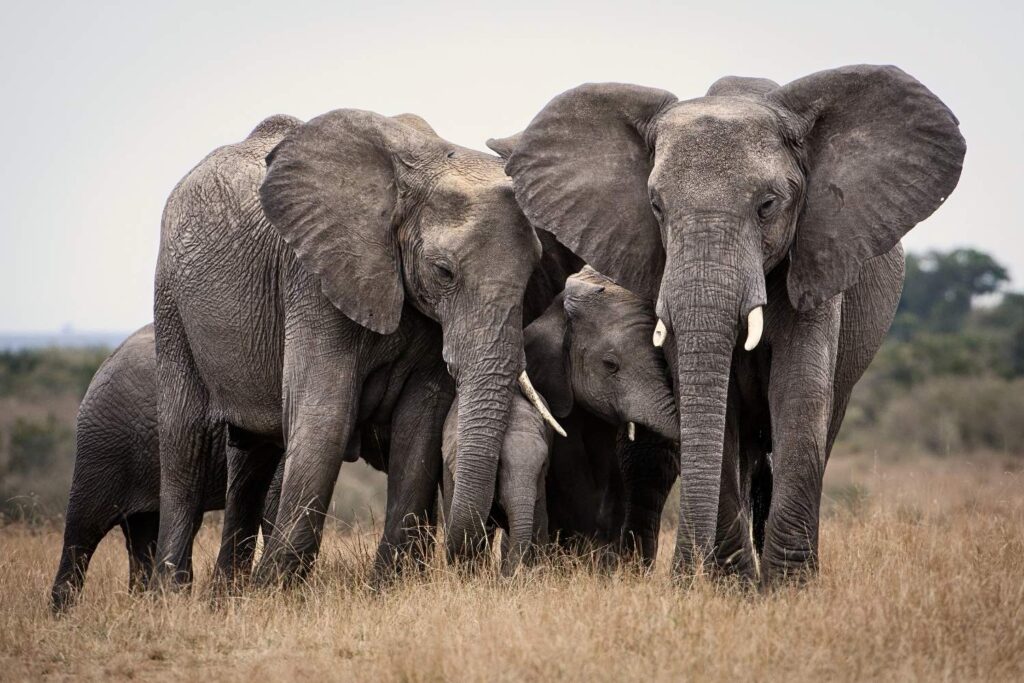
Recognizing loss in the moment is one thing. Elephants seem to go beyond that. They have been observed returning to the bones of long-deceased relatives years later. It is never just a passing look, they stop, reach out, and sometimes carefully lift or trace the skulls or tusks with their trunks.
This has been recorded both in the wild and in sanctuaries, where observers have seen elephants gather quietly around remains. It often involves their own herd, but what stands out is that they sometimes show the same behavior toward unrelated individuals. That kind of response points to something more layered than simple instinct.
Their behavior also shifts depending on who has died. When a calf or matriarch passes, elephants have been seen standing over the body, swaying slightly, or attempting to raise them. These actions serve no survival purpose. They are deliberate responses. And they reveal how memory and loss are deeply embedded in their social lives.
3. Magpies leave behind more than silence.

You probably don’t think of birds as emotional. But magpies might change your mind. These highly intelligent members of the crow family have been seen engaging in what looks a lot like mourning rituals. When they come across a dead magpie, they’ll gather around in small groups, and what they do next is wild.
Some have been seen nudging the body or cawing softly, which isn’t unusual. But others have placed blades of grass or small objects near or on the body. That kind of behavior seems symbolic, like an offering. It’s not food. It’s not functional. It’s intentional.
Researchers don’t fully understand the meaning, but the pattern shows up enough to suggest it matters to the birds. It’s also not always immediate. Some magpies have been observed returning to the site later. That delay, that repetition it points to memory, connection, and a kind of grief we’re only beginning to decode.
4. Orcas alter their behavior dramatically after losing a calf.

In the cold waters of the Pacific Northwest, orcas live in tight-knit pods that operate more like families than random animal groups. So when one loses a calf, it can send shockwaves through the pod. One heartbreaking example is known as Talequah, a mother orca who carried her dead calf on her head for 17 days straight.
That wasn’t an accident. She wasn’t confused. She pushed the calf up over and over, refusing to let it sink. This wasn’t just seen once. It was witnessed and documented by researchers across multiple days and locations. Other orcas in her pod stayed close and seemed to support her actions, even adjusting their own behavior to accommodate her.
It shattered people’s assumptions about what grief looks like in non-human species. The calf was already dead. There was no benefit in holding on. But she did anyway. And in doing so, she showed the world that the line between human and animal emotion might not be as thick as we think.
5. Chimpanzees gather in silence when one of their own dies.

If you’ve ever spent time watching chimpanzees, you know they’re expressive, loud, and always in motion. That makes it even more striking when everything stops after a death. In sanctuaries and the wild, chimps have been observed forming a circle around a fallen individual, not in panic, but in eerie silence.
They don’t just stare. They reach out. They touch the body, especially the hands or face. Some of them groom the deceased, like they’re trying to maintain the bond for a few moments longer. Others might sit nearby and simply watch, refusing to move for hours. There’s no chaos. Just stillness.
In one documented case, a mother carried her dead infant for days, slowly becoming more withdrawn from the group. When she finally set the body down, other chimps approached it carefully, as if aware that something had shifted. These moments show us that for chimps, death changes the emotional landscape, and they feel it deeply.
6. Sea lions wail and linger after losing a pup.

Out on rocky shores where sea lions gather in huge noisy groups, it’s easy to miss individual behavior. But when a pup dies, something changes. Mothers can be seen circling the body, vocalizing in strange, haunting ways, sounds that don’t match their usual calls. These aren’t just signals. They feel emotional.
The mothers will often nudge the body, trying to elicit a response, long after it’s stopped moving. Some even stay near the body for hours or longer, crying out in ways that grow quieter over time. The other sea lions don’t interfere. They keep their distance. It’s as if they recognize the moment as different.
There’s no evolutionary benefit to any of this. It doesn’t help them raise more pups or strengthen the group. But they still do it. That persistence, that refusal to move on quickly, reveals a kind of grief that’s raw and real. It’s not showy, but it’s undeniable.
7. Crows hold what looks eerily like funerals.

No one gives crows enough credit. They’re smart, social, and they don’t forget a face, human or otherwise. But what’s really fascinating is how they behave around their dead. Researchers have documented crows gathering silently around the body of another crow, forming what genuinely resembles a funeral.
They don’t touch the body. They just gather. Sometimes they call out, sometimes they don’t. And then, just as suddenly as they arrive, they leave. It’s not random. It’s not chaotic. It’s deliberate and somber. Some experts believe it’s a learning behavior, they’re assessing danger. But others argue there’s more going on.
The mood changes. The way they act changes. And when you see it in person, it’s hard not to feel the weight of it. These aren’t just reactions to a threat. They’re emotional cues. They’re responses to loss. And once you’ve seen it, you can’t unsee it.
8. Dolphins stay with their dead and refuse to leave.

When a dolphin dies, it doesn’t just disappear. Other dolphins, especially close relatives, have been seen circling the body, pushing it toward the surface, and staying with it far longer than expected. Mothers, in particular, have been observed keeping dead calves afloat for hours or even days.
This isn’t accidental. It’s exhausting work. They have to swim harder, breathe differently, and adjust their rhythm to keep the body close. They’re clearly aware that the calf is no longer alive, but they still choose to stay. That choice says more than any behavior we can measure.
Eventually, the group moves on. But even then, they often do so slowly, as if they’re waiting for the right moment. Grief in dolphins isn’t loud. It’s persistent. It shows up in the effort they give to hold on, even when nothing is coming back.
9. Bonobos react to death with quiet and care.

Bonobos are often described as the more peaceful cousin to chimpanzees, but their emotional lives are just as complex. When one of their group dies, the response is immediate and tender. They slow down. They gather close. And they touch.
It’s not a frenzy. It’s soft, almost ceremonial. Bonobos have been seen grooming the body of the deceased, sometimes even laying beside it as if providing comfort. They don’t just lose a member. They lose a relationship. And their behavior reflects that loss in a way that feels intimate.
What’s especially telling is how the group dynamic shifts afterward. Social roles change. Bonds have to be rebuilt. The absence isn’t just felt, it reshapes how the group functions. Grief in bonobos isn’t just emotional. It’s structural. And that makes it all the more real.
10. Wolves howl for the ones they lose.

Wolves are famous for their howls, but not every howl is the same. After the death of a pack member, especially a close companion, wolves have been recorded howling in patterns that differ from their usual calls. These howls aren’t calls to hunt. They’re not marking territory. They sound like mourning.
Sometimes they howl alone. Sometimes the whole pack joins in. They might do this for minutes or hours, long after the body is gone. What matters is the tone, it changes. It drops. It wavers. And anyone listening closely can tell the difference.
Even days later, wolves may return to the place where a member died. They sniff the ground, move slowly, and often remain silent. The loss doesn’t just vanish. It lingers. And the way wolves express it reminds us that sound, like grief, carries far beyond what we can see.