Why Millennials Are Abandoning Homeownership In Cities They Once Fought To Live In

The dream changed quietly, then all at once.

©Image PetsnPals/ChatGPT, Young couple moving out of the city

For years, major cities were magnets for millennials chasing careers, culture, and belonging. Homeownership was supposed to follow once stability arrived. Instead, the opposite happened. Across the last decade, many millennials have stepped back from buying homes in the very cities they once scrambled to afford. This shift is not about disinterest or delay. It reflects lived experience colliding with economic reality. What looks like retreat is often a deliberate recalibration shaped by risk, memory, and a changing definition of security.

Read more

Archaeologists Reveal the Maya Built Water Filtration Systems Centuries Before Europe

Ancient cities solved water safety far earlier.

©Image license via Wikimedia Commons/Peter Andersen

For decades, Maya cities were described as vulnerable to drought and disease, dependent on seasonal rains and exposed reservoirs. That picture has changed. Excavations in northern Guatemala revealed engineered filtration systems built more than a thousand years ago, quietly protecting drinking water long before similar solutions appeared in Europe. These systems were not accidental or primitive. They were planned, maintained, and tied to urban survival. What archaeologists uncovered reshaped assumptions about ancient engineering, public health, and how early civilizations understood the invisible dangers in water.

Read more

Ancient Treasure and a Giant Sea Dragon Found Along Britain’s Coast

Two discoveries rewrote Britain’s coastal past.

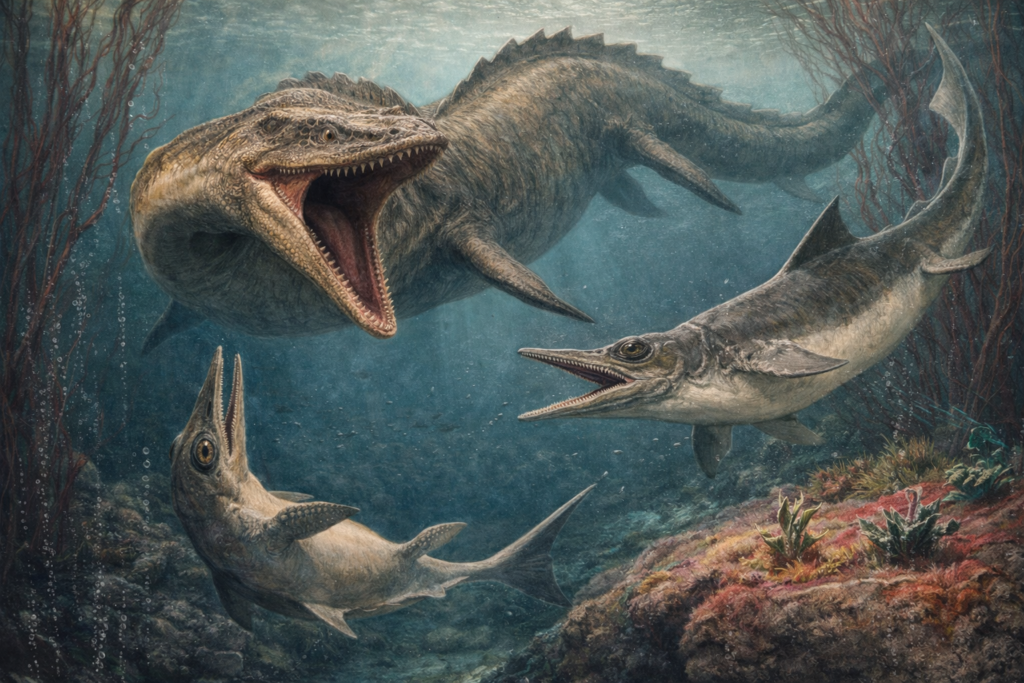
©Image PetsnPals/ChatGPT, Mosasaurus and Ichthyosaurs swimming in the ocean

Along Britain’s eroding coastline, storms and shifting cliffs have a way of revealing what time tried to hide. In recent years, chance discoveries have exposed objects separated by millions of years yet bound by geography. One involved human hands, metal, and intent. The other belonged to a reptile that ruled ancient seas long before people existed. Found within miles of one another, these discoveries forced archaeologists and paleontologists to look twice at familiar shores. Britain’s coast turned out to be less predictable than anyone expected.

Read more

If You Stay Calm During Chaos, Neuroscience Explains Why

Your brain reacts differently when pressure hits.

©Image license via PetsnPals/ChatGPT

In moments of chaos, some people feel their heart race and thoughts scatter, while others slow down and seem to sharpen. This difference is not personality alone. Neuroscience shows that stress responses vary based on brain wiring, past experience, and regulation systems shaped over time. Calm behavior during emergencies often reflects how certain neural circuits engage under pressure. Instead of shutting down, these brains shift into controlled focus. Understanding why this happens reveals how calmness is less about willpower and more about biology working quietly in the background.

Read more

If Your Pet Sleeps in Your Bed, You Most Likely Have These 8 Traits

Science links sleep habits to emotional wiring.

©Image license via Canva

Sharing a bed with a pet often starts as a small exception and quietly becomes routine. Over time, that choice reflects how someone handles closeness, stress, and comfort when defenses are lowest. Sleep is one of the most neurologically vulnerable states humans enter each day. Who we allow into that space reveals patterns in attachment, regulation, and empathy that show up elsewhere in life. Research in psychology and neuroscience suggests that people who sleep beside their pets tend to cluster around specific emotional and behavioral traits shaped by both biology and experience.

Read more