
Something felt wrong before anyone smelled it.

It was late, the lights were off, and the house had settled into that steady nighttime quiet when most appliances hum unnoticed. Then the scratching started. Persistent. Sharp. A cat who usually curled up without fuss began pacing, crying, and clawing at a closed bedroom door. His owners assumed it was restlessness. It was not. Within minutes, that agitation would pull them toward a smell they had not yet registered and a hazard they could not yet see.
1. Trident refused to let them sleep.

Trident’s behavior that night was immediate and insistent. According to Newsweek, his owners said he repeatedly scratched at the bedroom door and meowed in a way that felt urgent rather than playful. He would not settle, even after they tried to ignore him and turn off the lights again.
What stood out was the persistence. This was not a brief complaint or request for food. His agitation continued until his owners physically got up. That decision changed the trajectory of the night.
2. The noise escalated into frantic clawing.

As reported by People magazine, Trident escalated from vocalizing to clawing at the door with force, making it impossible to ignore. The scratching was repetitive and intense, a marked departure from his normal nighttime behavior.
His owners later described the sound as desperate rather than demanding. That tonal shift mattered. Cats often communicate discomfort or alarm through subtle changes in pitch and frequency. This was sustained, high energy agitation that felt different enough to raise concern.
3. A burning smell filled the kitchen.
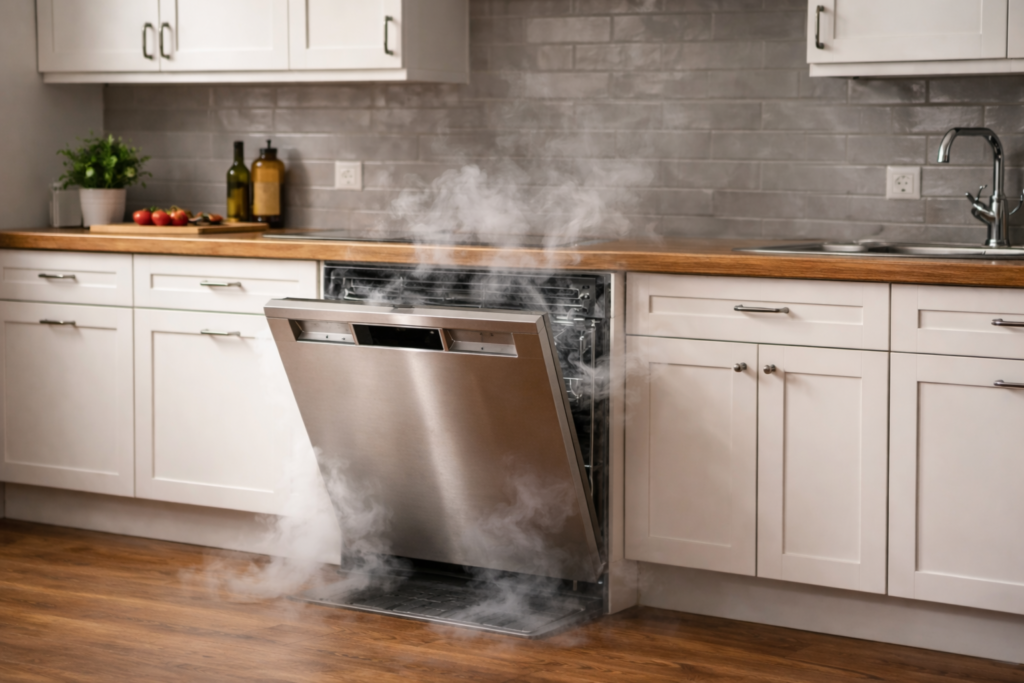
When they opened the bedroom door and followed him down the hallway, they were met with a sharp chemical smell coming from the kitchen area. According to The Independent, the odor was traced to the dishwasher, which had been running overnight.
The scent was not yet overpowering, which may explain why they had not noticed it from the bedroom. It was early stage overheating, detectable only when closer to the source. Without Trident’s insistence, it could have gone unnoticed longer.
4. The dishwasher element was actively overheating.
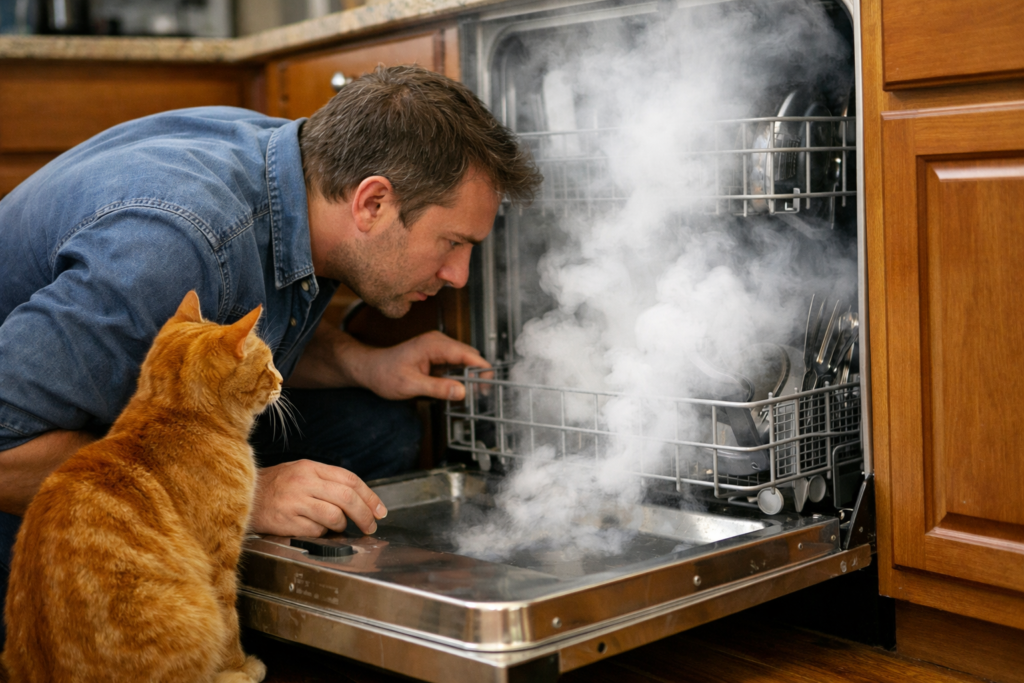
Inside the dishwasher, something had slipped downward during the wash cycle and fallen onto the exposed heating element at the bottom of the appliance. The object, likely plastic or synthetic, began to melt against the hot coil.
Heating elements in dishwashers can reach temperatures high enough to dry dishes quickly. When foreign material rests directly against them, melting and smoke can follow. In this case, the object had already begun deforming and emitting fumes.
5. Quick action prevented a possible fire.

The owners immediately shut off the dishwasher and disconnected power to the unit. Removing the melted object stopped further heat exposure and eliminated the immediate threat.
Appliance related fires often begin with overheating components or melting plastics that ignite when exposed to sustained heat. By intervening before flames appeared, they prevented potential ignition inside a closed kitchen environment late at night.
6. Cats can detect subtle sensory changes.

Cats possess acute hearing and a heightened sense of smell compared to humans. Even slight changes in air quality or faint mechanical sounds can trigger a behavioral response.
The early stage of melting plastic likely produced a subtle odor before it intensified. Additionally, a change in the dishwasher’s operating sound as material shifted onto the coil could have alerted Trident. His reaction suggests he detected cues before his owners consciously registered them.
7. The story spread rapidly online.

After sharing the incident on social media, the story quickly circulated across news outlets and online platforms. Readers reacted strongly to the idea of a pet preventing a potential fire.
The combination of a relatable domestic setting and a narrowly avoided hazard amplified attention. It resonated because many households run appliances overnight, assuming routine safety without considering small mechanical risks.
8. Appliance safety experts stress prevention.

Household safety guidelines emphasize ensuring that plastic items are placed securely in dishwasher racks and not near exposed heating elements. Running appliances overnight without supervision can increase risk if something malfunctions.
This incident underscores how easily minor positioning errors can escalate into larger problems. Routine appliance use often feels low risk, yet overheating components can pose danger if left unattended.
9. Trident’s persistence altered the outcome.

His owners admitted they initially thought he simply wanted attention. Had they ignored him longer, the melting object could have continued heating unchecked.
Instead, his refusal to calm down forced them to investigate immediately. That persistence shortened the window between malfunction and intervention. What began as irritation became a decisive interruption that prevented potential property damage or worse.