NASA Sets Its Sights on Finding a Second Earth

A quiet shift in strategy hints at bigger ambitions.
©Image via Canva

For decades, NASA has scanned the cosmos for planets that resemble home, mostly as a scientific exercise, occasionally as a dream. Now the language is changing. Recent announcements suggest the agency is no longer just cataloging distant worlds but narrowing its focus with intent. New missions, revised timelines, and sharpened priorities point to something more deliberate. The question is not whether Earth-like planets exist, but how close NASA believes one might be, and what finding it would mean next.
Read more

An Antarctic Iceberg’s Collapse Uncovered a Vast Hidden Nesting Colony

What emerged beneath the ice raised urgent new questions.

©Image PetsnPals/Chatgpt

What emerged beneath the ice raised urgent new questions.

For years, the iceberg sealed off a stretch of Antarctica no one could see or study. Then it fractured. As the ice pulled away, researchers were left staring at a landscape that did not match expectations. What appeared beneath the frozen cover suggested long term survival in complete isolation, hidden from satellites and storms alike. Scientists are now trying to understand how life persisted there, how long it had been thriving, and what the sudden exposure could mean for what comes next.

Read more

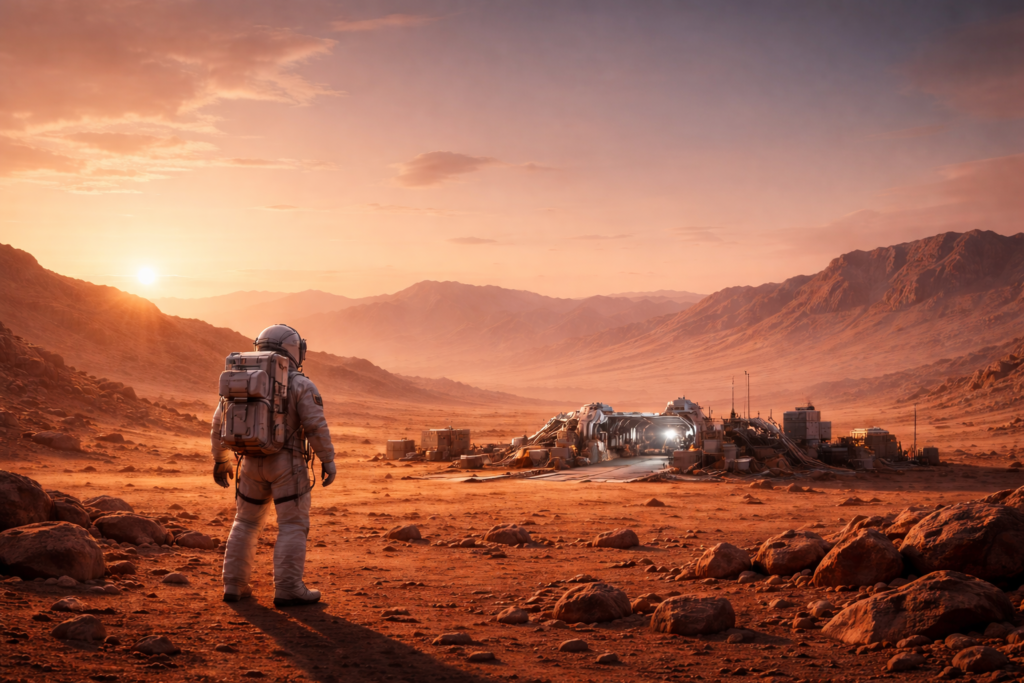
Why Anyone Who Sets Foot on Mars Will Likely Never Return to Earth

The journey outward may quietly close the door behind.

©Image PetsnPals/ChatGPT

Mars is often described as the next destination, a place humanity is preparing to visit and eventually settle. What is discussed far less is what happens after arrival. Recent mission planning has quietly shifted its tone, raising questions that do not fit neatly into launch timelines or return windows. Engineers, doctors, and mission designers are circling the same unresolved problem from different angles. The concern is not a single obstacle, but a chain of uncertainties that only becomes clear once someone actually steps onto the surface.

Read more

Scientist Just Discovered Unlimited Energy that Could Change Everything

The claim sounds impossible, but the details are unsettling.

©Image PetsnPals/ChatGPT

The announcement did not come with celebration or certainty. It arrived quietly, wrapped in caveats and careful language, yet it carried implications that ripple far beyond the lab. A new scientific result suggests energy limits long treated as fixed may not be as firm as once believed. If the finding holds, it could reshape how power is generated, stored, and controlled. The discovery is early, the risks are real, and scientists themselves are urging caution while admitting the implications are hard to ignore.

Read more

The Threat From Above Could Wipe Out GPS, Flights, and Internet in an Instant

Modern life depends on fragile systems orbiting overhead.

©Image license via Canva

Everyday conveniences rely on technologies suspended far above Earth, where control is limited and reaction time is short. GPS navigation, global aviation, financial timing, and internet traffic all depend on space based systems vulnerable to forces humans cannot stop once triggered. Scientists and defense agencies track threats ranging from solar storms to orbital debris, yet mitigation options remain narrow. When disruption comes, it would unfold faster than governments or industries could respond. Understanding how these threats operate reveals why preparedness remains uneven and consequences could cascade globally.

Read more