Tutankhamun’s Identity Is Being Questioned After New DNA Analysis

Old assumptions about Egypt’s boy king are starting to unravel.
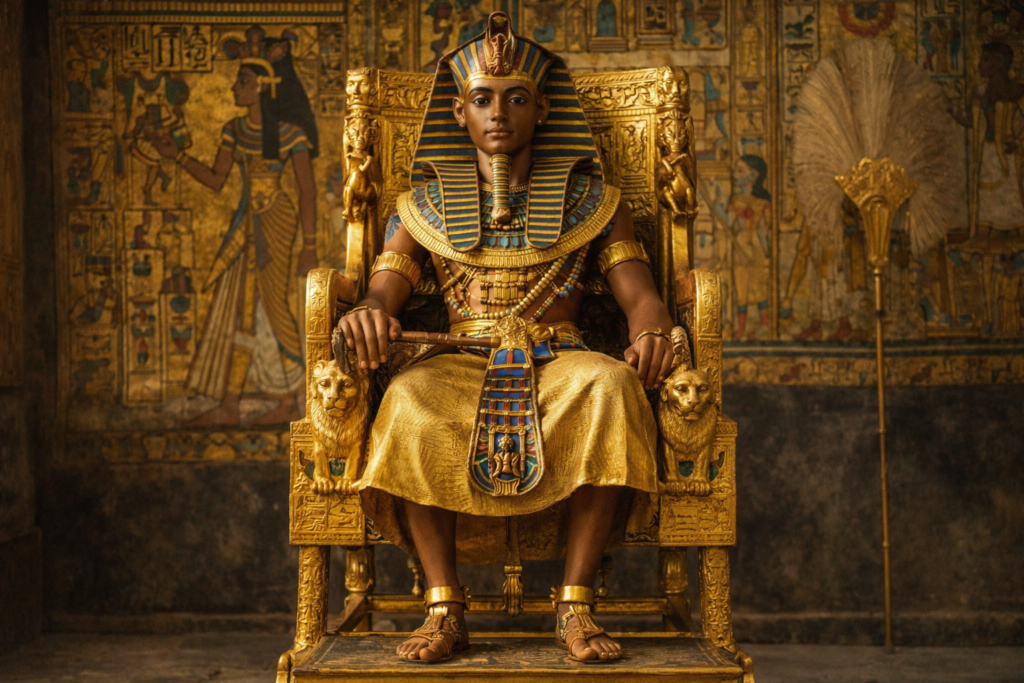
©Image PetsnPals/AI generated image

New DNA work on Tutankhamun is reshaping long standing ideas about Egypt’s most famous young ruler. For decades, his story has leaned heavily on inscriptions, statues and tomb artifacts, yet many parts of his lineage remained uncertain. Genetic research finally offers a clearer lens that cuts through the ambiguities surrounding his ancestry. The results complicate earlier explanations and introduce new possibilities that affect everything from royal politics to the identity of those closest to him. The emerging picture is more intricate than the one historians relied on for generations.

Read more

Something About This 110 Million Year Old Dinosaur Mummy Isn’t Lining Up

This discovery showcases preservation far beyond typical fossils.

©Image PetsnPals/AI generated image

At first, it did not look like something that should be possible. Fossils are supposed to leave behind fragments, impressions, pieces that hint at what once existed, not something that appears almost intact. But this discovery did not follow those expectations. What emerged looked preserved in a way that seemed to resist time itself, holding onto details that should have disappeared millions of years ago. Scientists immediately recognized that this was not just another fossil, but something that did not fit comfortably within existing explanations. The more closely it was examined, the harder it became to explain how so much had remained.

Read more

800 Iron Age Artifacts Unearthed in Yorkshire Reveal a Forgotten Power

An astonishing record of power, ceremony, and identity.

It was not the number of objects that stopped archaeologists in their tracks. It was the condition they were in. Bent, burned, and broken before they ever touched the ground, the pieces told a story that did not fit simple loss or abandonment. This was not a cache hidden in haste or a collection forgotten over time. Something deliberate happened here. As more of the site was uncovered, the pattern became harder to ignore. Whoever buried these objects was not preserving them. They were doing something else entirely, something tied to power, ritual, and a moment that no one intended to be understood easily.

Read more

Scientists Detect DNA Patterns in Martian Rock That Shouldn’t Exist

Traces that raise questions about humans beyond Earth.

©Image PetsnPals/AI generated image

It is the kind of claim that spreads before anyone can fully examine it. A fragment of rock, older than most life on Earth, suddenly linked to something unmistakably human. At first glance, it sounds like a breakthrough that would rewrite everything we know about life and its origins. But almost immediately, scientists began pushing back. The details did not line up, the biology made no sense, and the timeline raised more questions than answers. What started as a stunning discovery quickly turned into something else entirely, a test of how quickly extraordinary claims can outrun the science meant to verify them.

Read more

The Map Said Empty, the Evidence Says Otherwise

These places still carry the imprint of human touch.

©Image PetsnPals/AI generated image

For centuries, maps left wide spaces blank and historians filled them with silence. Deserts were too harsh, tundra too cold, forests too dense, and mountains too unforgiving. Yet each decade peels back another layer of certainty. Footprints emerge where no one expected them. Tools surface in places written off as impossible. The story unfolding now is not about isolated discoveries. It is about a growing realization that humans adapted earlier, traveled farther, and stayed longer than we ever assumed.

Read more