Taal Volcano Erupts in the Philippines, Blasting Ash Over a Mile High

A powerful ash plume rises above Lake Taal.
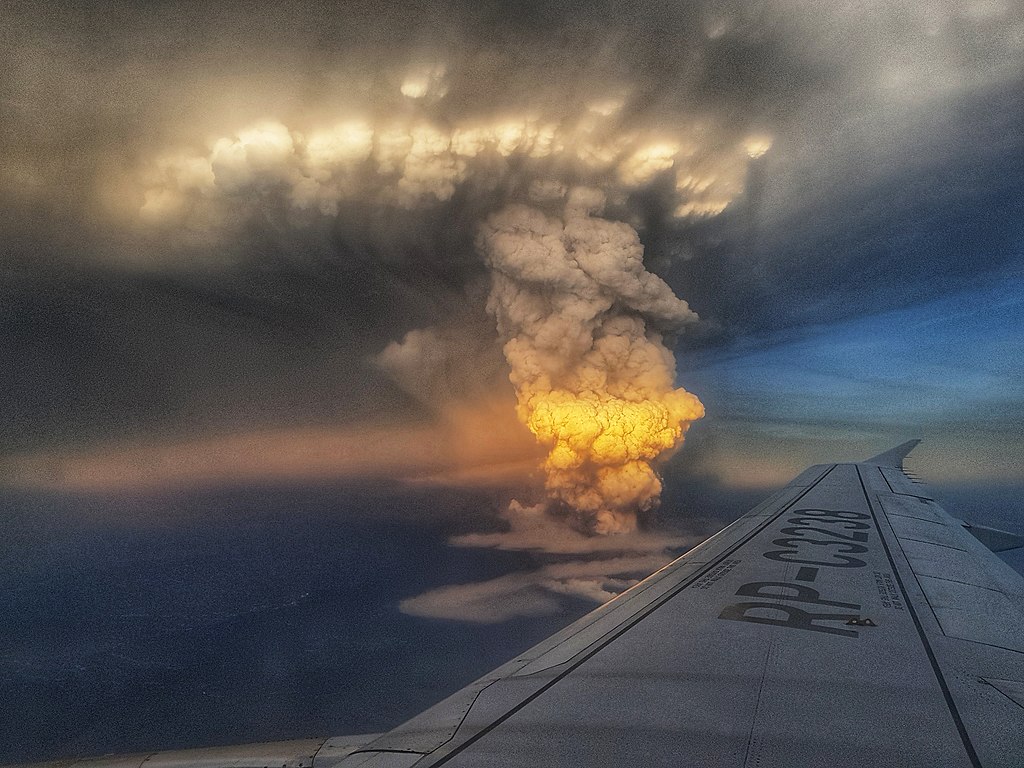
©Image license via Wikimedia Commons/Adisidis

Late last night, Taal Volcano, one of the most active in the Philippines, erupted, sending a dense column of ash and steam more than a mile high above Batangas province. The eruption was short but intense, marked by multiple phreatomagmatic bursts and low-frequency tremors. The Philippine Institute of Volcanology and Seismology (PHIVOLCS) confirmed that the activity was centered within the Main Crater and warned residents to stay cautious as sulfuric gases and fine ash spread to nearby towns. While the alert level remains low, scientists say the event highlights how quickly Taal can shift from calm to dangerous.
Read more

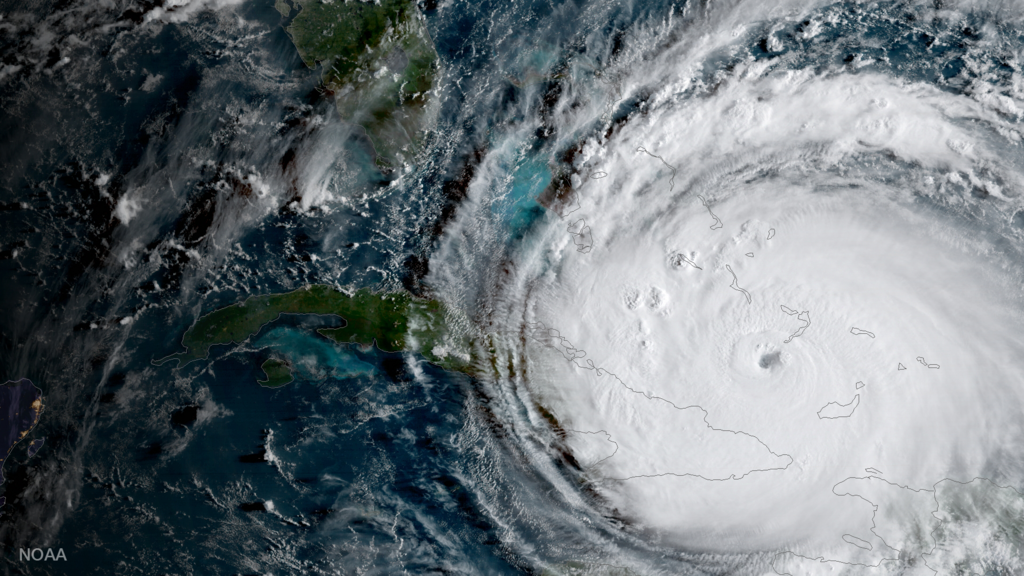
Hurricane Melissa Explodes With 150 MPH Winds Aiming Straight for Jamaica

The Caribbean braces for a record-shattering storm.

©Image license via Wikimedia Commons/NOAA and NESDIS

A massive storm is taking aim at Jamaica with a frightening intensity that demands attention. As a friend telling you the hard truth, here’s the deal: the hurricane known as Hurricane Melissa has rapidly strengthened and is expected to make landfall with destructive potential in the coming days. Residents are being told to move fast, secure property and be ready for coastal flooding, torrential rain and sustained extreme winds. Conditions could evolve quickly, and waiting until the last minute is no longer an option.

Read more

Once-Stable Perito Moreno Glacier Now Retreating at a Disturbing Rate

The glacier’s calm is giving way to rapid shifts.

©Image license via Wikimedia Commons/Luca Galuzzi

For decades, the Perito Moreno Glacier in southern Argentina stood as a rare symbol of balance in a warming world. While most glaciers worldwide retreated, Perito Moreno held steady—its mass losses and gains nearly equal. That narrative has now changed. Satellite data and field observations show significant thinning and retreat in key sections of the ice front. Scientists say the shift marks the end of one of Earth’s last “stable giants,” and for Patagonia, it’s another sign of how quickly even resilient ice is responding to global climate and hydrological shifts.

Read more

Forecast Fail? Alaska’s Storm Warning System Crippled by DOGE Reductions

The storm that tore through western Alaska wasn’t supposed to be this bad.

©Image license via Canva

When the remnants of Typhoon Halong slammed into Alaska’s Yukon-Kuskokwim Delta in mid-October 2025, residents had little warning that it would become one of the state’s most destructive fall storms in years. Winds exceeding 90 miles per hour ripped across coastal villages, sending houses adrift and knocking out communications. For many, the alerts came too late. What unfolded wasn’t just a meteorological surprise, it was a wake-up call about how fragile Alaska’s storm warning system has become under years of cuts and neglect.

Read more

NASA Just Announced When Astronauts Will Finally Walk on the Moon Again

The countdown to humanity’s return is officially underway.

©Image license via Canva

For the first time in 50 years, NASA has confirmed when humans will once again set foot on the Moon. The mission, known as Artemis III, represents the next step in a new era of exploration—one that blends ambition, technology, and international cooperation. The last time an astronaut left a bootprint on lunar soil was in 1972, during Apollo 17. Now, the long wait is finally ending.

This isn’t just another space launch—it’s a statement about what humanity still dreams of. With new spacecraft, upgraded suits, and advanced landing systems, NASA’s next Moonwalkers will explore regions no human has ever seen before. And this time, they won’t just visit—they’ll prepare for the future of deep space travel.

Read more