
Startle reflexes reveal ancient survival wiring.
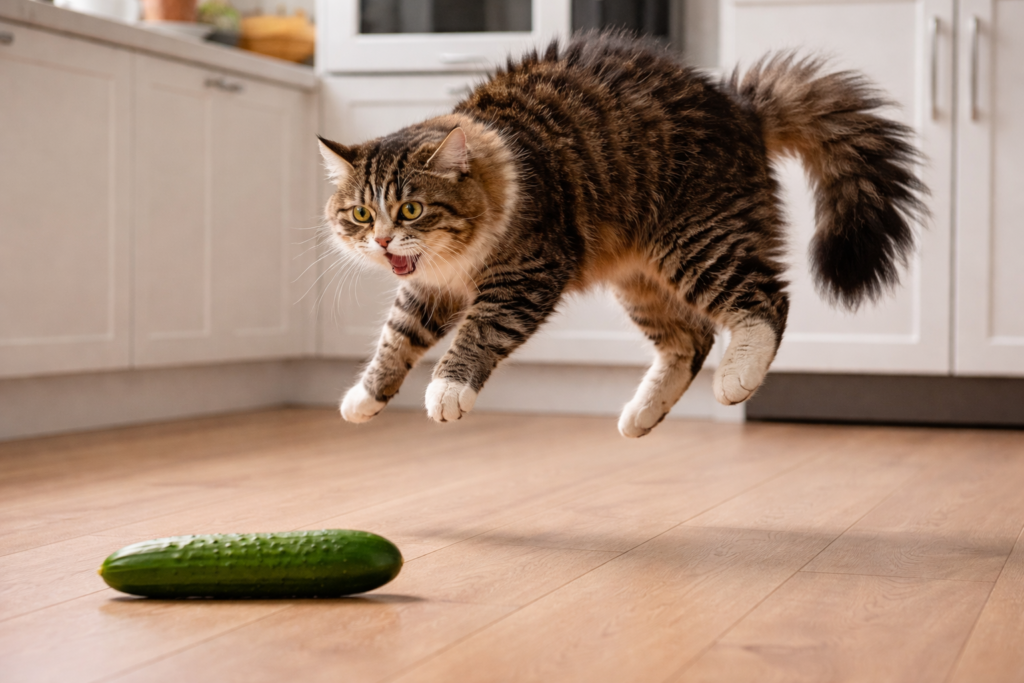
Cats reacting to cucumbers looks humorous on screen, but the behavior reflects a real neurological alarm. These reactions occur most often in kitchens and feeding areas, where cats are relaxed and focused. What seems like comedy is actually a rapid fear response shaped by evolution, sensory processing, and environmental expectation. Veterinarians began addressing this trend publicly after viral videos spread in the mid 2010s. The behavior reveals how quickly a calm domestic setting can flip into perceived danger inside a cat’s brain.
1. Sudden object placement triggers a powerful startle reflex.
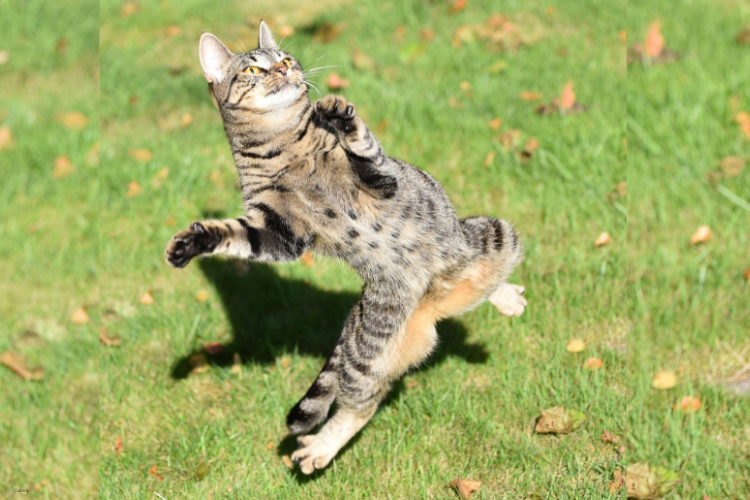
Cats build detailed mental maps of their surroundings and rely on predictability to feel safe. When an unfamiliar object appears suddenly behind them, especially during eating, the brain interprets it as a possible threat. The reaction is automatic and bypasses conscious thought, prioritizing escape over assessment.
Studies on feline startle responses show exaggerated reactions occur when visual novelty enters peripheral vision during moments of distraction, according to National Geographic. The jump itself is not fear driven panic, but a survival reflex designed to create distance before danger is identified.
2. The shape loosely resembles a natural predator.

Elongated objects placed low to the ground activate ancient visual threat templates in the feline brain. Snakes remain a significant evolutionary pressure in many regions where wild cats evolved. Domestic cats retain this wiring even without direct exposure.
Behavior research shows cats react more strongly to curved or cylindrical shapes introduced unexpectedly, as reported by Scientific American. The object does not need to be realistic. A vague resemblance is enough to activate avoidance circuits before rational recognition occurs.
3. Context determines whether fear escalates or fades.
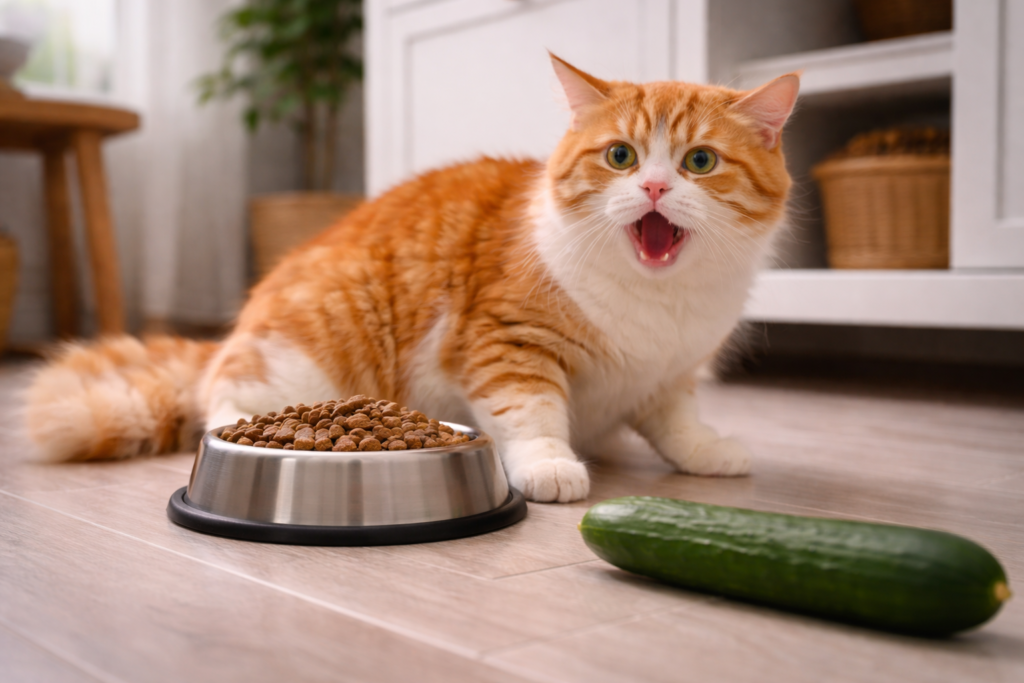
Cats often ignore cucumbers placed openly in a room. Fear spikes when the object appears during vulnerable moments such as eating or grooming. These moments reduce situational awareness and increase perceived risk.
Observational studies on feline stress show environmental context outweighs object identity, as stated by the American Association of Feline Practitioners. When escape routes feel limited or attention is divided, the nervous system responds more intensely to any unexpected change.
4. Environmental predictability is central to feline security.
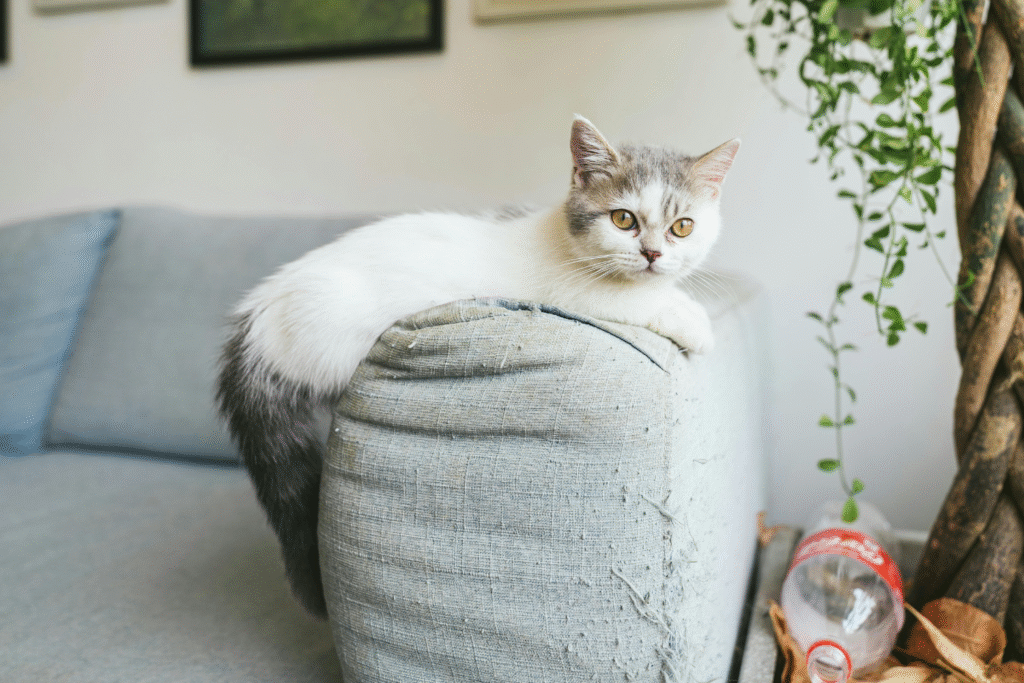
Cats depend heavily on stable surroundings. Indoor cats especially expect consistency in object placement. When that consistency breaks suddenly, it triggers a rapid reassessment of safety. The reaction is not curiosity, but immediate loss of control.
This explains why cats in highly structured homes often react more dramatically than outdoor cats. Predictability becomes a form of safety. Sudden disruption feels abnormal and potentially dangerous, prompting fast escape behaviors.
5. Peripheral vision amplifies surprise responses dramatically.

Cats are exceptional at detecting motion at the edges of their vision. This adaptation helps them hunt and avoid predators. When a new object enters that zone unexpectedly, motion detection fires before object recognition.
By the time the brain identifies the item, the body has already reacted. This neurological delay explains why cats leap first and analyze later. The response reflects sensory prioritization, not irrational fear or confusion.
6. Past stress history shapes how intensely cats react.

A cat’s previous experiences strongly influence how dramatic the cucumber reaction becomes. Cats that have lived through instability, frequent moves, shelter stays, or medical trauma often operate with a heightened baseline of vigilance. Their nervous systems are already scanning for threat, even in calm homes.
When a cucumber appears unexpectedly, it stacks onto existing stress rather than acting alone. The reaction is sharper, faster, and more explosive. This is why two cats in the same house can respond completely differently. The jump reflects accumulated stress history, not personality flaws or playfulness.
7. Human reactions can unintentionally reinforce fear responses.
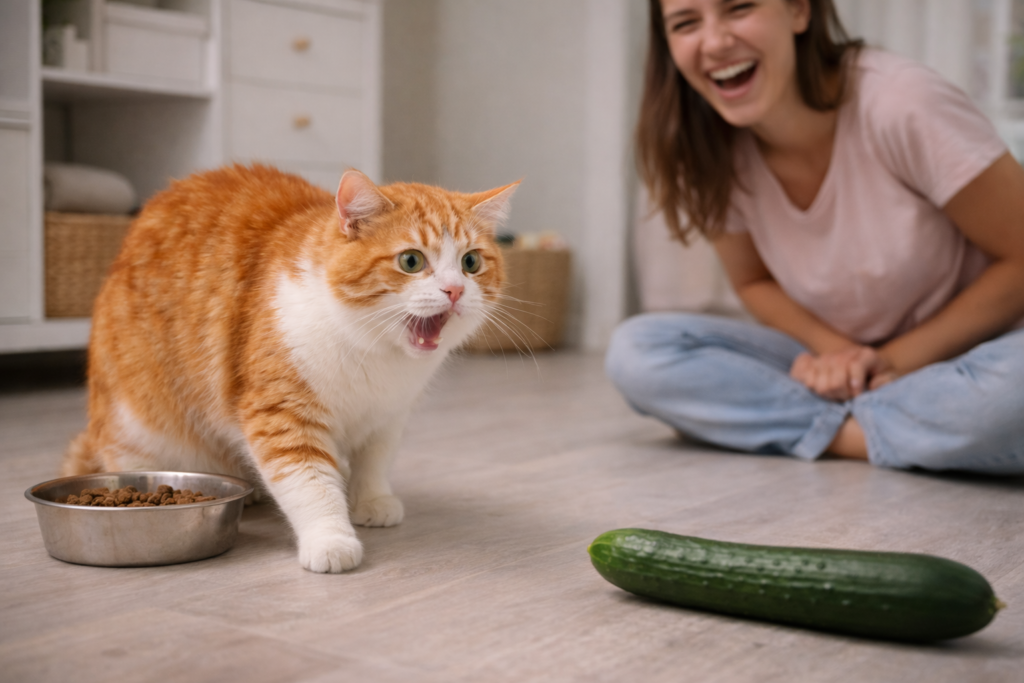
When people laugh, gasp, or move suddenly after the cat jumps, the cat processes that noise and motion as confirmation of danger. Cats rely on social cues less than dogs, but sudden human reactions still matter. They amplify uncertainty and prolong fear.
Over time, this pairing teaches the cat that surprise plus human excitement equals threat. The cat may begin scanning feeding areas or avoiding certain rooms. What began as a one time scare can quietly reshape behavior patterns, increasing anxiety around routine activities like eating.
8. Repeated scares disrupt stress hormones and behavior.
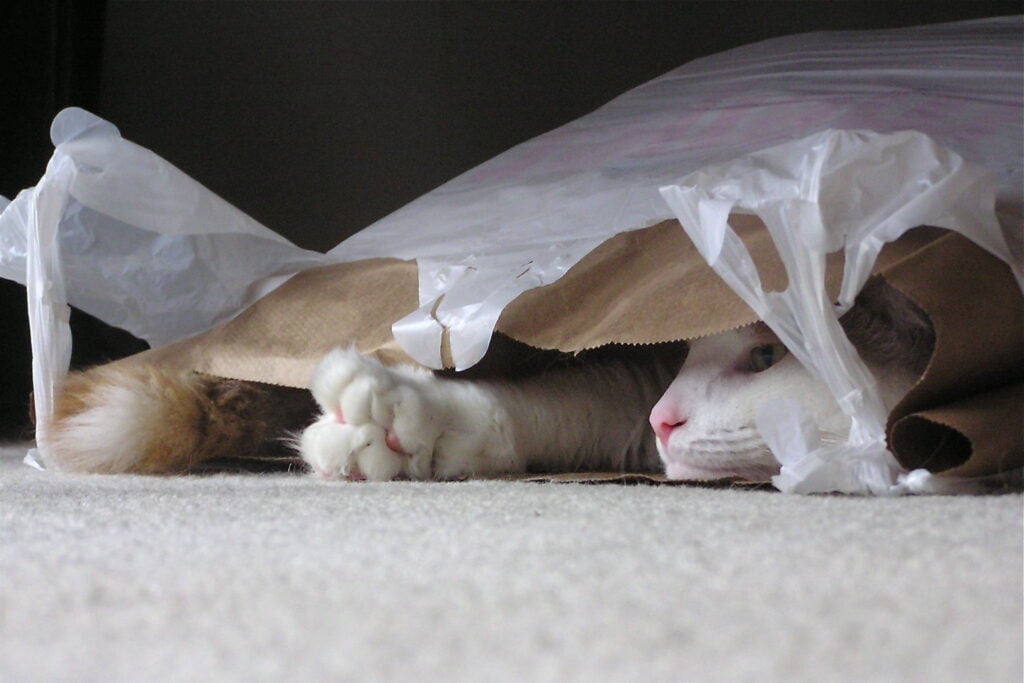
Fear triggers cortisol and adrenaline release. When these hormones spike repeatedly, they affect digestion, immune response, and emotional regulation. Cats do not habituate well to unpredictable fear stimuli. Instead, they become more alert and defensive.
Veterinary behaviorists caution that repeated startle events can contribute to hiding, aggression, or inappropriate elimination. The cat is not learning that the cucumber is harmless. It is learning that its environment cannot be trusted. That loss of security carries real health consequences over time.
9. Curiosity only returns once control feels restored.

After the initial leap, many cats slowly return to investigate the cucumber. This moment often gets misunderstood as proof the fear was fake. In reality, it signals a shift from reflexive survival mode back to cognitive assessment.
Once distance and escape routes feel secure, the brain allows curiosity to reengage. Sniffing or pawing reflects regained control, not bravery. The sequence highlights how feline fear is situational and adaptive. The reaction protects first, evaluates later, and settles only when safety is reestablished.