
The soil gave up something unexpected.
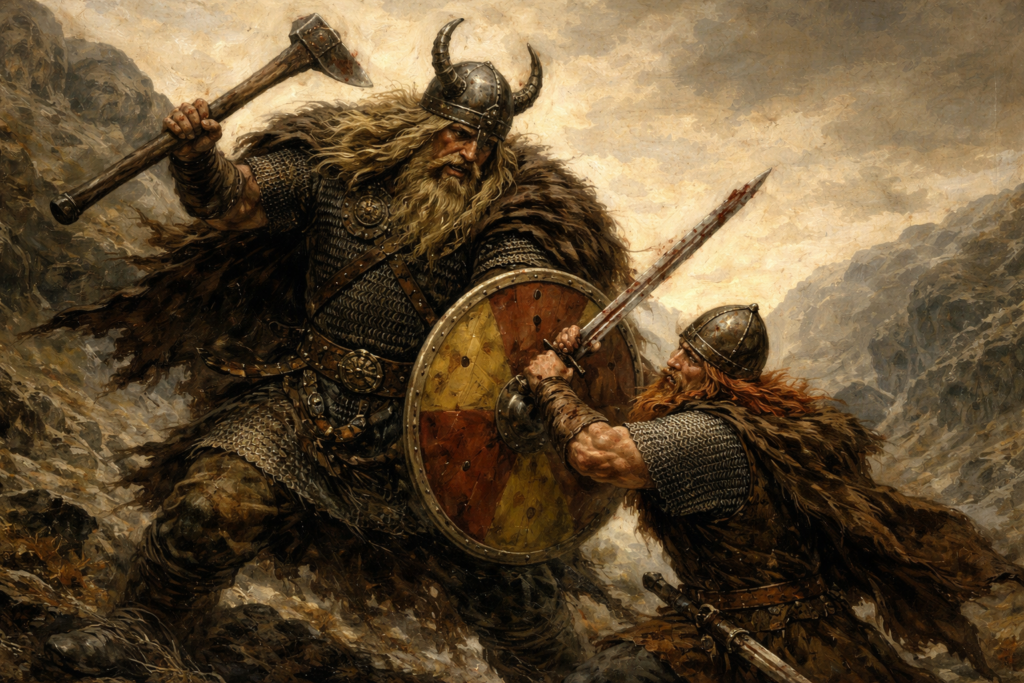
Beneath a quiet stretch of grassland south of Cambridge, archaeologists began cutting into soil that had been walked for centuries without suspicion. The site had layers of history, but nothing prepared the team for what surfaced first. Bone fragments appeared where no formal grave markers stood. Patterns formed that did not look accidental. The arrangement felt deliberate, but not ceremonial. As more of the pit was exposed, it became clear this was not an ordinary burial.
1. Excavation began at Wandlebury Country Park.
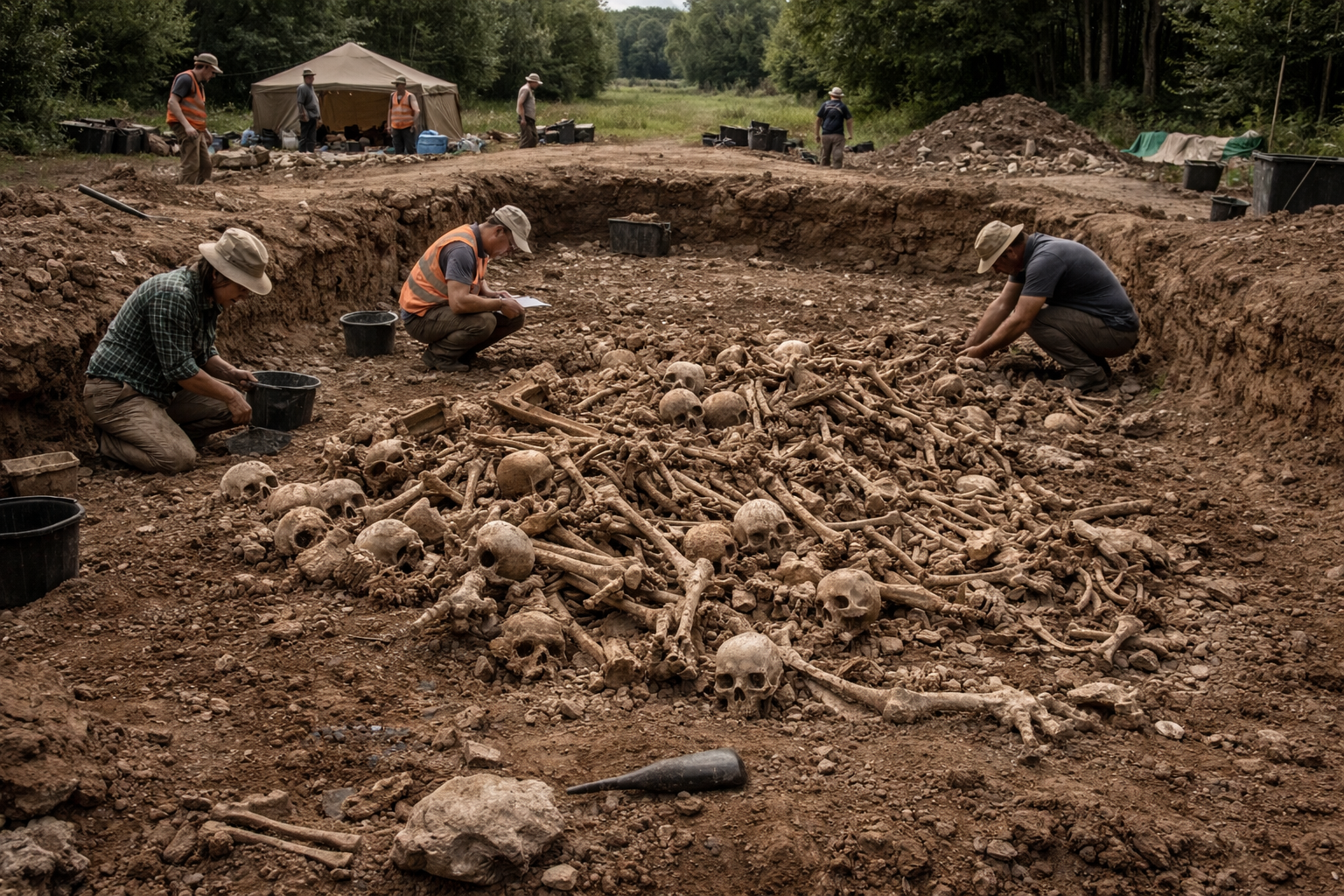
The excavation took place in June 2025 at Wandlebury Country Park in Cambridgeshire, a site overseen by Cambridge Past Present and Future. The dig was led by professional archaeologists alongside university students conducting field training within the Iron Age hillfort enclosure on the Gog Magog Hills.
While investigating a pit identified during earlier surveys, the team uncovered a tightly packed burial containing ten individuals. The discovery shifted the project immediately. What began as routine excavation within a known prehistoric landscape became a focused investigation into early medieval violence and burial practice.
2. The remains were dismembered before burial.
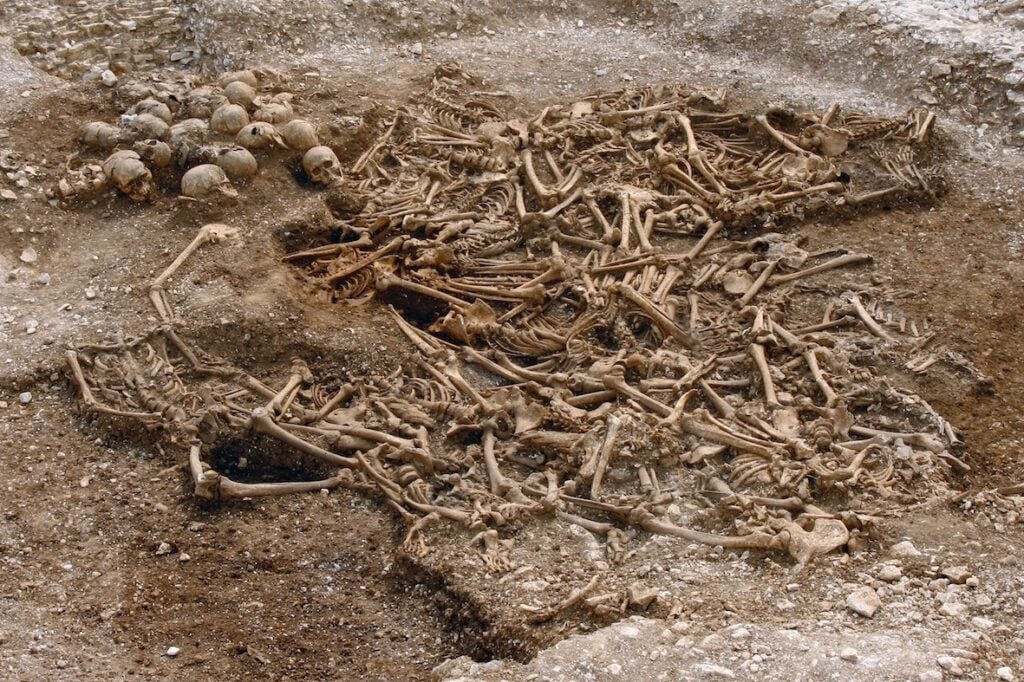
As excavation progressed, archaeologists documented that the bones were not arranged anatomically. Arms were separated from torsos. Skulls were placed apart from bodies. Several long bones showed sharp cut marks consistent with bladed tools.
The pattern suggests deliberate post mortem dismemberment rather than disturbance by animals or soil movement. Such treatment aligns with known execution cemeteries from early medieval England, where decapitation and dismemberment were sometimes used as punitive measures or as responses to conflict during the Viking Age.
3. Radiocarbon dating points to Viking era.
Samples taken from the remains were submitted for radiocarbon analysis shortly after recovery. Preliminary results place the burial between the late ninth and early tenth centuries, a period marked by Scandinavian activity across eastern England.
During this era, the region fell within the Danelaw, where Viking settlers and Anglo Saxon communities coexisted and clashed. The dating situates the burial within a volatile historical window that included raids, territorial disputes, and political upheaval.
4. One individual stood nearly seven feet tall.
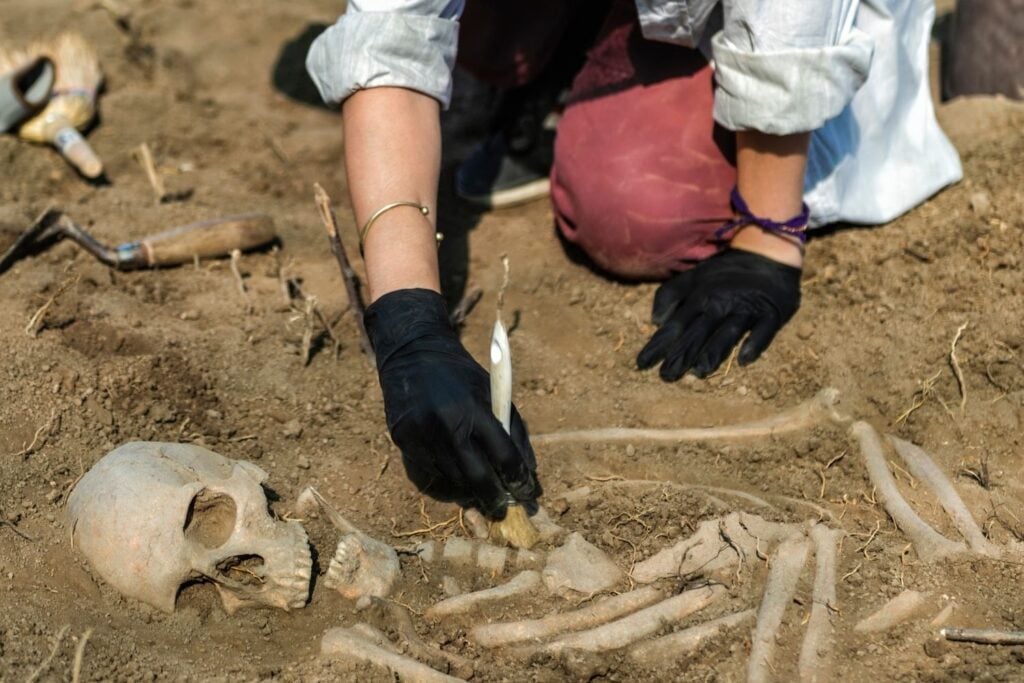
Among the ten individuals, one male skeleton measured significantly taller than the others. Osteologists estimated his height at approximately six feet ten inches to seven feet, extraordinary for the period when average male height was closer to five feet six inches.
His femur and tibia lengths confirmed the estimate, and muscle attachment sites suggest he was physically powerful. The contrast between his stature and that of the others immediately marked him as distinct within the burial group.
5. A healed cranial surgery stunned researchers.
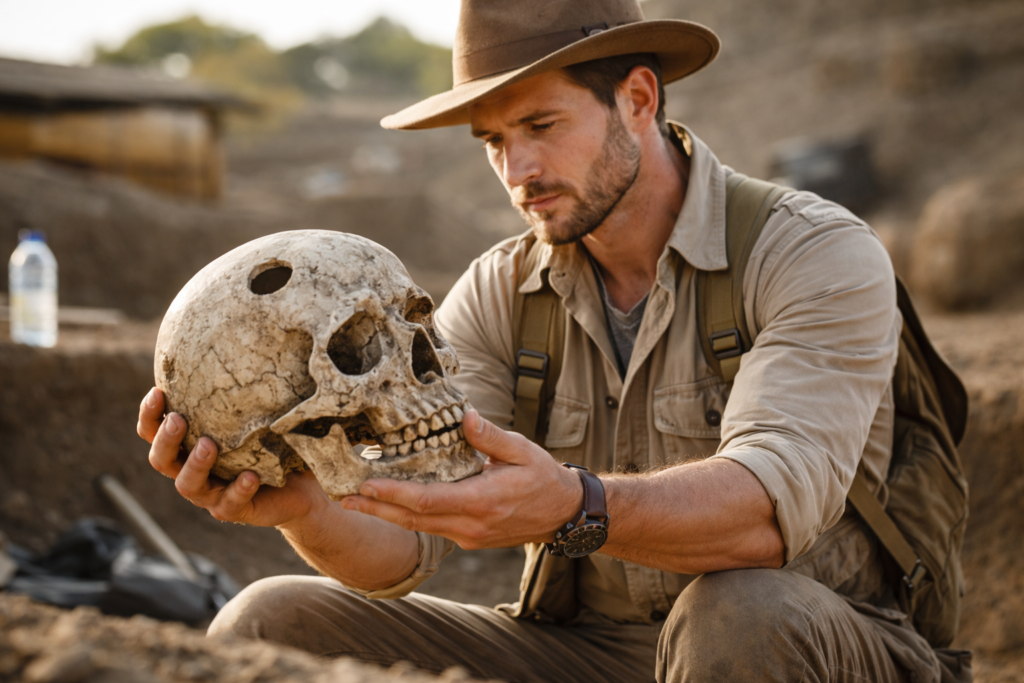
Examination of the tall individual’s skull revealed a circular opening consistent with trepanation. The edges of the cranial defect displayed clear signs of bone remodeling, indicating survival after the procedure.
Trepanation involves cutting or scraping through the skull, often to relieve pressure from trauma or infection. Evidence of healing shows the man lived weeks, months, or possibly years following the intervention, suggesting access to surgical skill and post operative care during the Viking Age.
6. The procedure required remarkable precision.
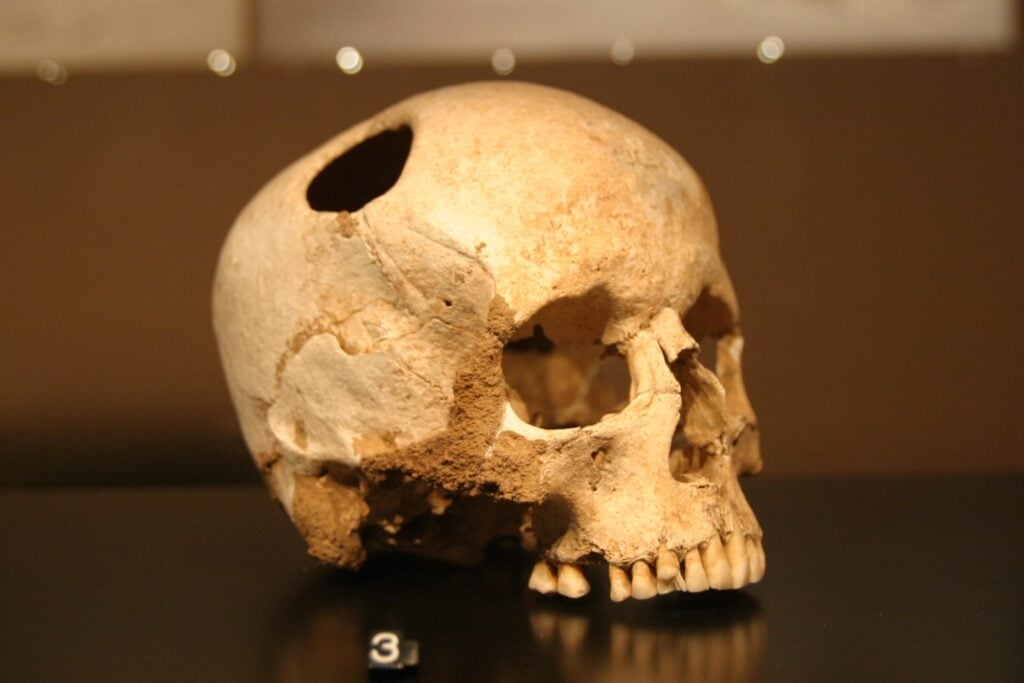
The cranial opening appears controlled and deliberate rather than the result of blunt trauma. The margins are relatively smooth, consistent with careful cutting rather than chaotic injury.
Performing trepanation without modern anesthesia or antiseptic conditions would have required knowledge of skull thickness and restraint of bleeding. Survival implies not only surgical competence but also an understanding of wound care, raising questions about medical traditions in ninth century England.
7. Isotope analysis may reveal geographic origins.
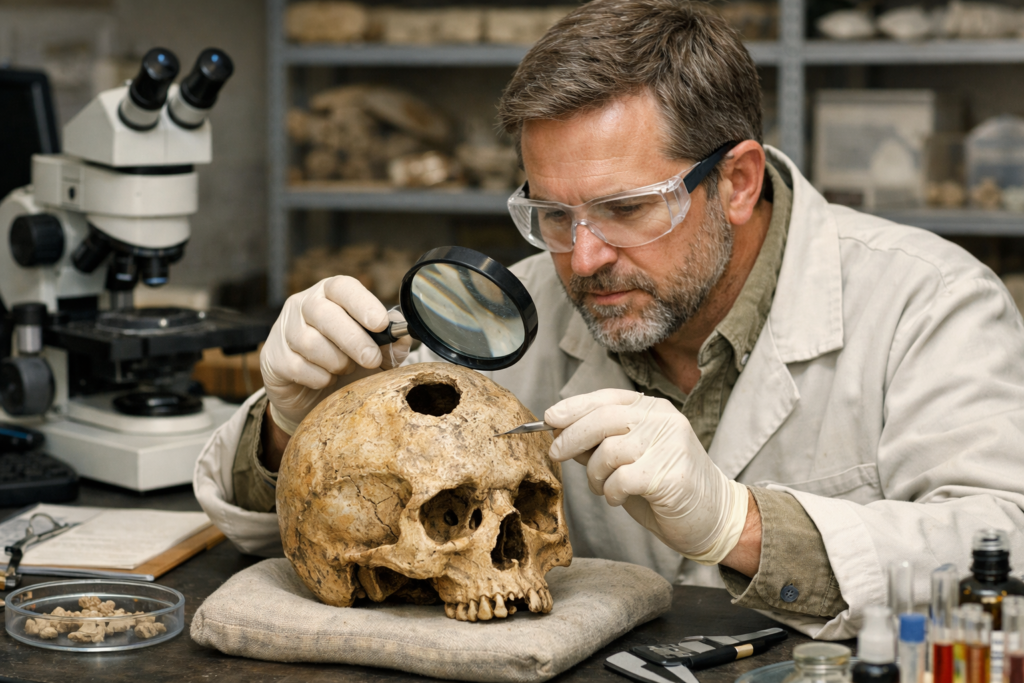
Researchers plan to conduct strontium and oxygen isotope analysis on dental enamel from the individuals. These tests can indicate whether a person grew up locally or in a different geological region.
If the tall man spent childhood outside Cambridgeshire, isotope signatures could reflect Scandinavian bedrock patterns or other distinct regions. This analysis may clarify whether the burial group consisted of local inhabitants, foreign warriors, or a mixed population during the Viking presence in eastern England.
8. The burial pit suggests violent end.
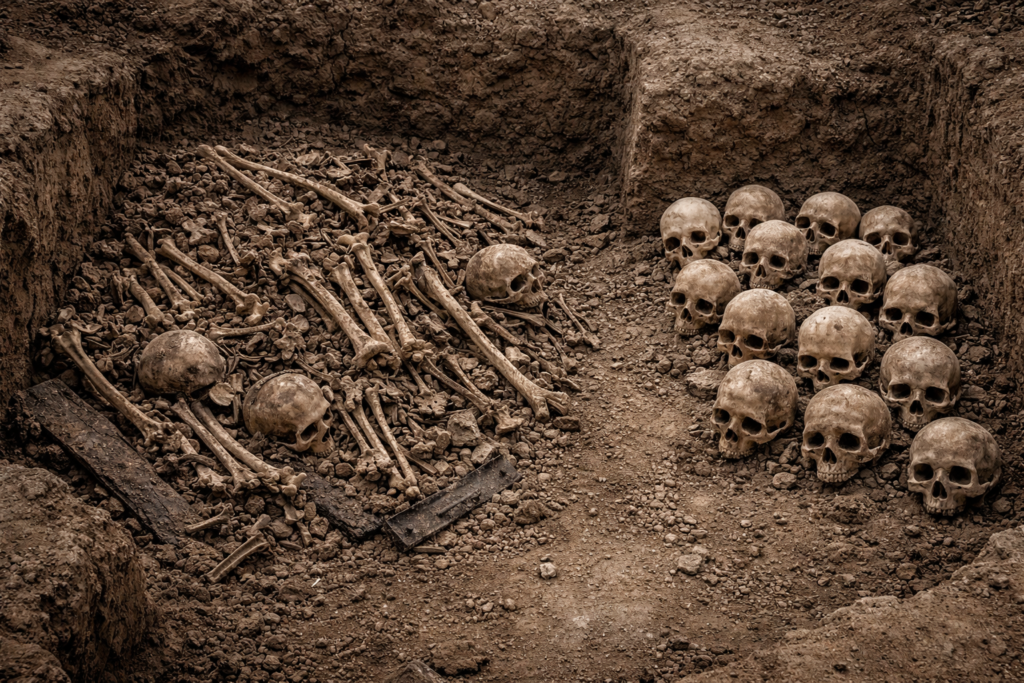
The disarticulation of remains, absence of grave goods, and lack of formal burial orientation contrast sharply with Christian funerary practices that were spreading across England at the time.
Similar execution style burials have been identified at sites such as Ridgeway Hill in Dorset, where decapitated individuals were linked to Viking era conflict. The Wandlebury pit may represent a comparable episode of violence tied to political instability.
9. The hillfort context adds historical tension.
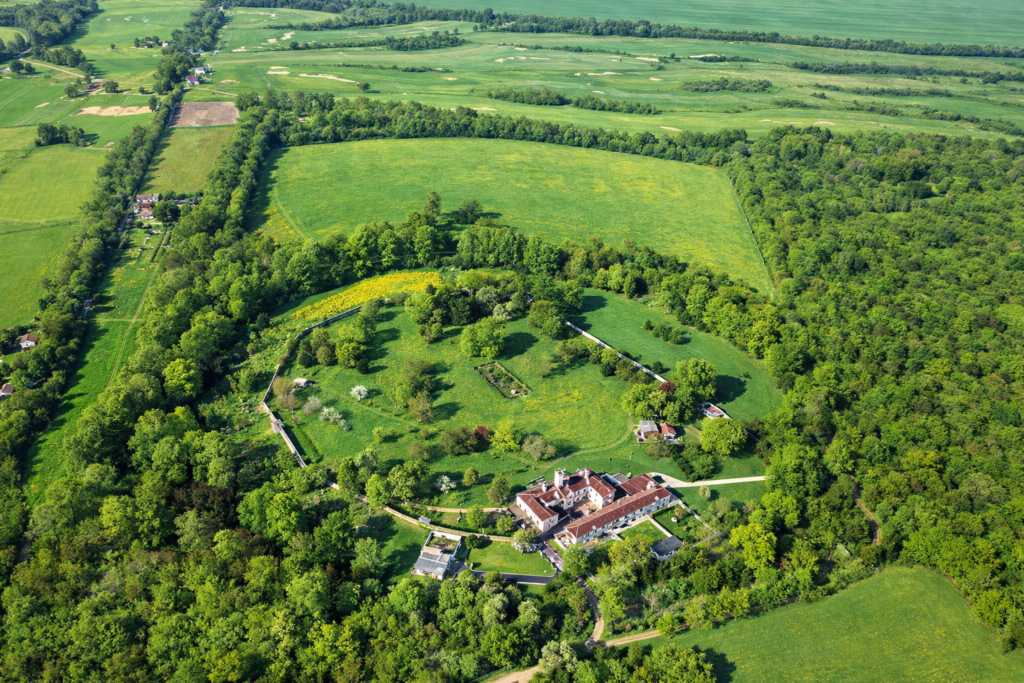
Wandlebury’s Iron Age hillfort dates back more than two thousand years before the Viking Age. By the ninth century, its defensive function had long ceased.
The reuse of this ancient enclosure as a burial site suggests that later communities repurposed older landscapes. Such locations may have carried symbolic weight or served as convenient isolated grounds for punitive burial outside settlement centers.
10. Further study could reshape local history.
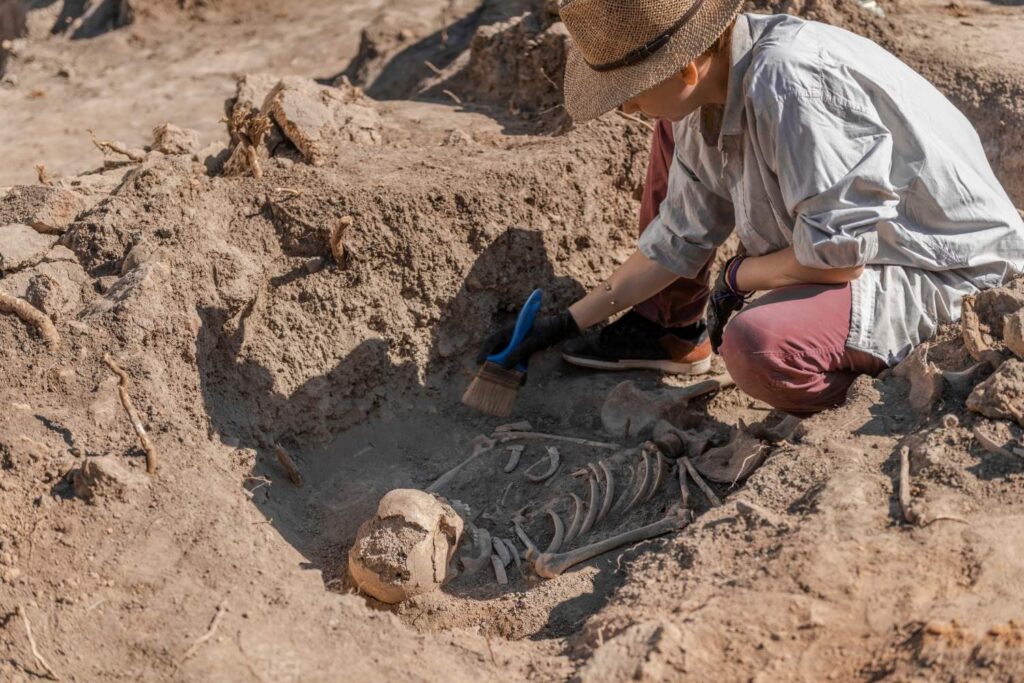
Detailed osteological analysis continues, including trauma assessment and potential DNA testing to determine kinship among the individuals. Researchers aim to identify cause of death, health history, and possible familial relationships.
The findings from Wandlebury add direct physical evidence to historical accounts of violence during the Viking period in Cambridgeshire. The towering man who survived cranial surgery stands as a rare testament to resilience within a burial that reflects a brutal chapter of early medieval England.