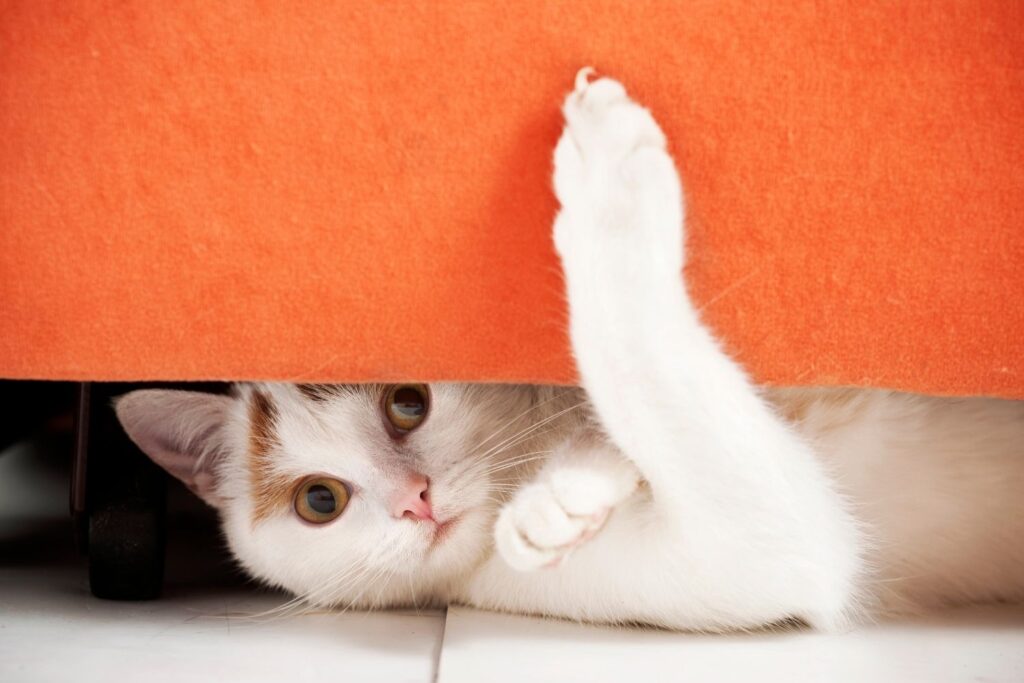
Cats Choose Favorites, and It’s Not for the Reason You Think

Trust forms slowly through patterns cats never ignore.

©Image license via Pixabay/Andy_Eneses

In homes with more than one person, many cats make a clear, quiet choice. One human becomes the preferred presence, the one a cat seeks during rest, stress, or routine moments. This choice is not random and it is rarely about who tries the hardest. Cats assess humans the way they assess environments, through predictability, safety, and emotional regulation. Trust develops gradually through repeated interactions, not single gestures. What looks like favoritism is usually a long record of small, consistent signals that taught the cat where safety truly lives.

Read more

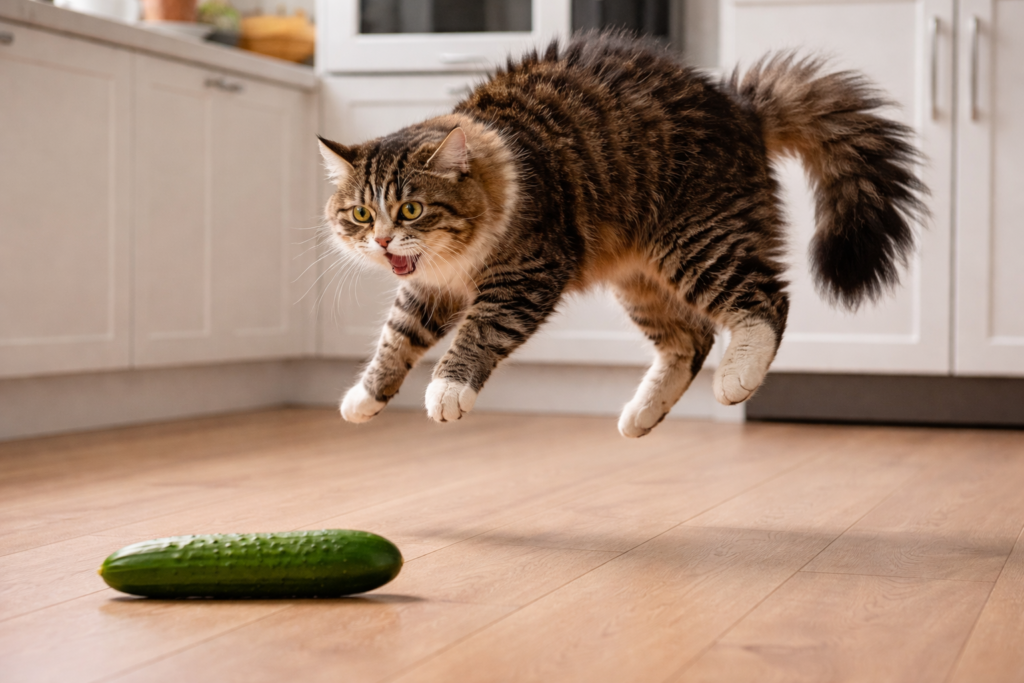
Why Cucumbers Trigger Extreme Reactions in Some Cats

Startle reflexes reveal ancient survival wiring.

©Image license via PetsnPals/ChatGPT, illustration of startled cat and cucumber

Cats reacting to cucumbers looks humorous on screen, but the behavior reflects a real neurological alarm. These reactions occur most often in kitchens and feeding areas, where cats are relaxed and focused. What seems like comedy is actually a rapid fear response shaped by evolution, sensory processing, and environmental expectation. Veterinarians began addressing this trend publicly after viral videos spread in the mid 2010s. The behavior reveals how quickly a calm domestic setting can flip into perceived danger inside a cat’s brain.

Read more

Why Some Dogs Develop Acute Kidney Disease Without Warning and What to Do

Sudden organ failure often begins quietly.

©Image license via Pizabay/guvo59

Dogs can seem completely fine, then suddenly stop eating, vomit, or collapse within days. Acute kidney disease moves fast because kidneys handle blood filtration every minute. When something disrupts that flow, damage compounds quickly. Emergency veterinarians across the U.S. see spikes after heat waves, storms, and seasonal toxin exposure. The danger is not drama, it is silence. Early signs look minor, but the internal damage accelerates. Knowing how these failures start helps owners act before the window for recovery closes.

Read more

How Household Noise Slowly Changes A Cat’s Personality

Everyday sounds shape behavior more than owners realize.

©Image license via Canva

Inside modern homes, sound rarely stops. Televisions hum, appliances cycle, phones buzz, and traffic leaks through windows day and night. Cats experience this soundscape very differently than humans do. Their hearing is far more sensitive, and their stress systems are designed for environments where silence is common and noise signals danger. When sound becomes constant, cats adapt in subtle ways that unfold over months or years. These changes often look like personality shifts, but they are learned responses to living in spaces that never fully quiet down.

Read more

What It Means When a Dog Stares at Nothing, According to Animal Behaviorists

That empty gaze usually has a real cause.

©Image license via PetsnPals/ChatGPT, Golden retriever staring at owner

Dog owners notice this behavior everywhere, from living rooms late at night to quiet sidewalks during walks. A dog suddenly stops, locks its eyes on a blank space, and seems fully absorbed. No sound, no movement, nothing obvious to explain it. The moment can feel eerie, but it is usually rooted in how dogs process information. Their senses, memory systems, and emotional regulation work very differently from ours. What looks like nothing to a human is often a meaningful signal to a dog’s brain.

Read more